Curiosity Rover Optimizes Power for Ongoing Mars Discoveries
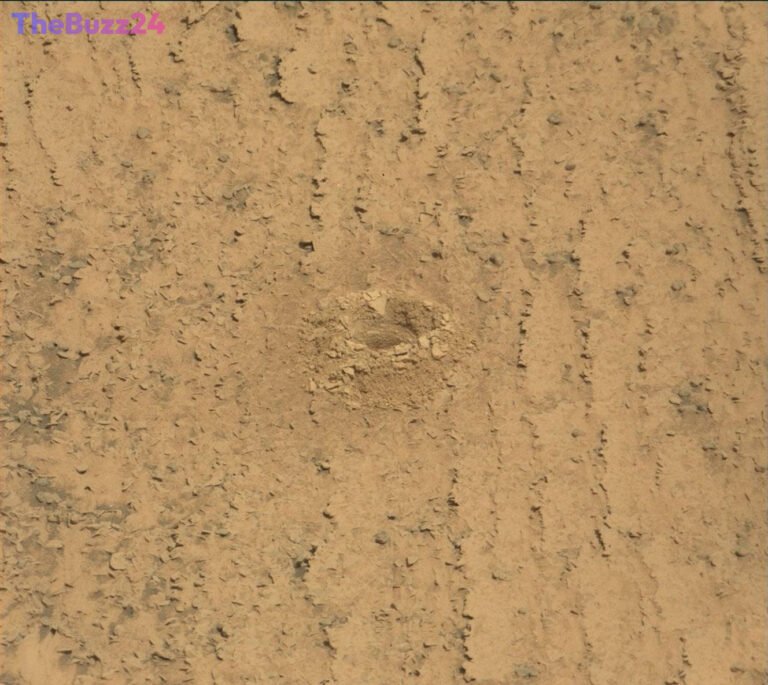
NASA’s Curiosity rover recently entered a strategic power-recharging phase on Mars, a necessary pause in its intensive drilling campaign at the “Nazca” target. This period, spanning Sols 5056-5062, allows the venerable explorer to accumulate energy reserves before tackling the final, power-demanding stages of its current scientific endeavor. The rover has already successfully drilled into the Martian surface, characterized the resulting tailings with its ChemCam instrument, and delivered multiple samples to its internal SAM and CheMin instruments for detailed analysis.
The remaining tasks for the Nazca campaign are crucial and energy-intensive. These include an additional sample drop-off to SAM for a different analytical process and comprehensive drill cleanup activities. Among these is a procedure known as “RAGE” (Rotate to Agitate for Granule Expulsion), designed to dislodge any residual sample material from the drill mechanism. Extensive imaging will also be conducted to thoroughly document the drill hole and its surrounding debris, providing valuable context for the collected data.
Despite the primary focus on power replenishment, Curiosity remained scientifically active. During these sols, the rover performed remote sensing observations, utilizing its ChemCam and Remote Micro-Imager to capture mosaics of intriguing targets such as “Titicaca,” “Pampas,” and “Salta.” Mastcam imaging focused on calibration targets and the drill site, while Navcam conducted dust devil studies and Mastcam performed tau observations. A significant engineering milestone occurred on Sol 5061 with the successful execution of a novel test for parallelism. This experiment involved simultaneously running the CheMin “Get Data” activity, which transfers high-CPU science data, alongside a communication downlink to an orbiting spacecraft. This innovative approach aims to conserve power by reducing the total “awake” time for the rover, a critical strategy as Curiosity continues its extended mission and its power output naturally diminishes over time.
The successful completion of this recharging and testing period paves the way for Curiosity to resume its full drilling operations. The engineering team is now analyzing the results of the parallelism test, which could inform future power-saving strategies for the aging rover. This meticulous balance between scientific exploration and operational efficiency ensures Curiosity can continue delivering groundbreaking insights into the geology and potential habitability of Mars.
Key Takeaways
- The Curiosity rover is undergoing a power-recharging phase to prepare for the final, energy-intensive stages of its "Nazca" drilling campaign on Mars.
- During this period, the rover conducted remote science observations and successfully tested a new power-saving technique called parallelism, running two activities simultaneously.
- Optimizing power usage and testing new operational efficiencies are crucial strategies for extending the lifespan and maximizing the scientific output of the aging Mars rover.
Editor’s Analysis & Impact
This update from the Curiosity rover highlights the critical balance between ambitious scientific exploration and the practicalities of long-duration space missions. The strategic power-recharging and the innovative parallelism test underscore the ongoing engineering ingenuity required to maintain and extend the operational life of aging assets like Curiosity. This approach sets a precedent for future deep-space missions, emphasizing the importance of adaptive power management and efficient resource utilization. The continuous stream of data from Curiosity, even during “downtime,” reinforces the value of sustained planetary exploration. As humanity looks towards crewed missions to Mars, the lessons learned from optimizing robotic operations, particularly concerning power and longevity, will be invaluable for designing robust and sustainable human outposts. This news reinforces the long-term commitment to understanding Mars’s geological history and potential for life.
Frequently Asked Questions
Q: Why does the Curiosity rover need to recharge its power?
A: The rover's scientific activities, especially drilling and sample analysis, are very power-intensive. Strategic recharging periods allow Curiosity to build up sufficient energy reserves to complete these demanding tasks and ensure the longevity of its mission.
Q: What is "parallelism" in the context of the Curiosity rover's operations?
A: Parallelism is an engineering technique being tested to save power by executing two activities simultaneously. By having the rover perform multiple tasks during a single "awake" period, it reduces the overall time it needs to be powered on, thereby conserving energy as its power output naturally decreases with age.
Q: What is the "Nazca" target?
A: "Nazca" is the name given to a specific geological target on Mars where the Curiosity rover is currently conducting a drilling campaign. Scientists are studying this site to gather samples and analyze its composition, contributing to our understanding of Mars's geological history.
AI Disclosure: This article is based on verified data and official reports. Our Team and AI have cross-referenced every financial detail with primary sources to ensure total accuracy.
More from this Category