Curiosity Rover Overcomes Martian Drill Jam, Resumes Scientific Exploration
NASA’s Curiosity rover has successfully resumed its scientific endeavors on Mars after a week-long mechanical issue that temporarily halted its operations. The complication arose on April 25, 2026, when a fragment of Martian rock became lodged in the rover’s drill bit following a standard sampling procedure. This obstruction prevented the robotic arm from continuing its geological survey, a critical component of the mission’s objectives.
Mission control teams on Earth engaged in a meticulous recovery process, spanning several days. The strategy involved carefully maneuvering the rover’s robotic arm and employing the drill’s internal vibration systems. This delicate remote troubleshooting was essential to dislodge the offending rock, unofficially named “Atacama,” without causing damage to the rover’s sophisticated instruments.
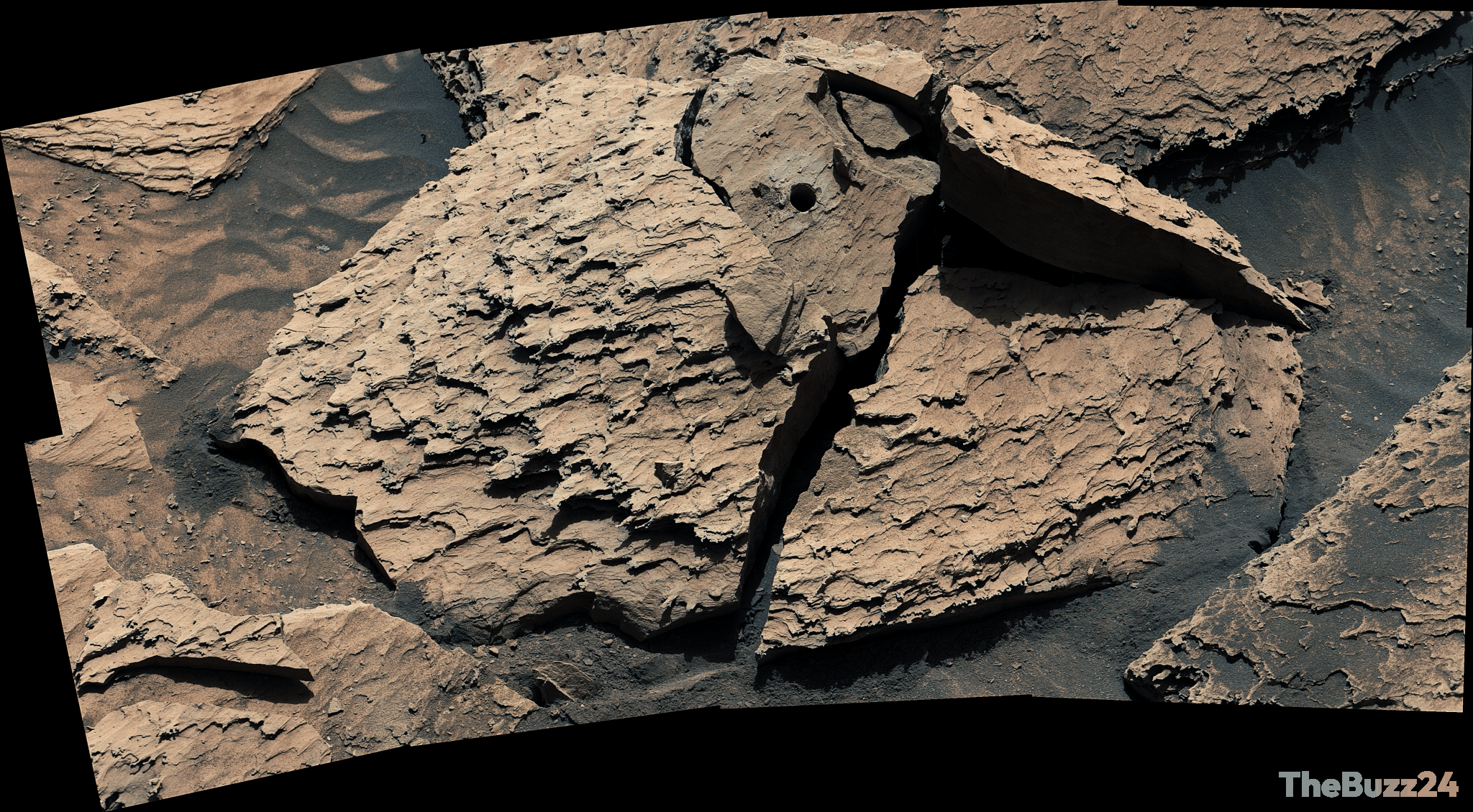
The persistent efforts paid off on May 1, when the rock fragment finally detached from the drill bit, breaking into smaller pieces as it fell. Subsequent high-resolution imagery captured by the rover’s Mastcam confirmed the successful resolution, showing a clear, circular drill hole at the sampling site. With the mechanical impediment removed, Curiosity is now fully operational and continuing its primary mission to investigate the geological history of the Red Planet, showcasing the enduring resilience of this long-running exploration program.
Key Takeaways
- The Curiosity rover successfully resolved a drill jam caused by a lodged rock fragment after nearly a week.
- Engineers utilized precise robotic arm movements and controlled vibrations to safely dislodge the obstruction.
- The rover has resumed its scientific mission to analyze Mars' geological history.
Editor’s Analysis & Impact
The successful resolution of the Curiosity rover’s drill jam underscores the ingenuity and adaptability required for deep-space exploration. This incident highlights the challenges posed by unpredictable Martian geology and the critical reliance on sophisticated remote engineering capabilities. The ability of mission controllers to diagnose and rectify such complex mechanical issues from millions of miles away is a testament to the robustness of the mission’s design and the expertise of the ground teams. Such events not only extend the operational life of valuable assets like Curiosity but also provide invaluable lessons for future missions, including those involving sample return or eventual human exploration, reinforcing the importance of continued investment in robotic planetary science.
Frequently Asked Questions
Q: What caused the Curiosity rover's drill to get stuck?
A: A piece of Martian rock became lodged in the rover's drill bit during a routine sampling operation, preventing the robotic arm from functioning normally.
Q: How was the obstruction removed?
A: Engineers on Earth used a combination of precise repositioning of the robotic arm and controlled vibrations of the drill mechanism to dislodge the rock fragment over several days.
Q: What is the significance of this event for the Curiosity mission?
A: The successful resolution allowed the Curiosity rover to resume its scientific mission, continuing its analysis of Mars' geological history and demonstrating the mission's resilience.
AI Disclosure: This article is based on verified data and official reports. Our Team and AI have cross-referenced every financial detail with primary sources to ensure total accuracy.
More from this Category