Danish Authorities Prepare for Disposal of Stranded Humpback Whale
A humpback whale, which had been the subject of an extensive and ultimately unsuccessful rescue mission, has been towed ashore on the Danish island of Anholt. The carcass, which measures between 12 and 15 meters in length, was brought onto the beach using an industrial winch. Danish environmental officials are now coordinating a post-mortem examination, scheduled for Thursday, to determine the factors leading to the animal’s death.
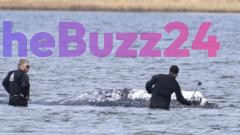
The whale, which had been colloquially referred to as ‘Timmy’ or ‘Hope,’ first garnered international attention in March after becoming stranded in the Baltic Sea. Despite multiple intervention efforts, including a complex operation involving inflatable cushions and a floating platform to transport the mammal toward the North Sea, the whale remained in a severely weakened state. Experts noted that the animal had suffered skin damage due to the lower salinity levels of the Baltic waters, which likely contributed to its decline.
Currently, the primary concern for local officials is the safe disposal of the decomposing carcass. As the body breaks down, the buildup of internal gases poses a risk of rupture, a phenomenon occasionally observed with stranded marine mammals. Morten Abildstrøm of the Danish Environmental Agency confirmed that once researchers have collected necessary biological samples, the whale will be dismantled into smaller sections to be transported off the island for final disposal. The operation has been complicated by the whale’s location on a popular public beach and recent adverse weather conditions that hindered earlier attempts to move the remains to the mainland.
Key Takeaways
- A humpback whale that underwent a failed rescue mission in the Baltic Sea has washed up on the Danish island of Anholt.
- Danish environmental officials are planning a post-mortem examination before the carcass is dismantled for disposal.
- The decomposing whale poses a potential safety risk due to the buildup of internal gases, necessitating urgent removal from the public beach.
Editor’s Analysis & Impact
The tragic end of this humpback whale highlights the immense logistical and biological challenges involved in marine mammal rescue operations. While public interest in such ‘high-profile’ strandings is high, the success rate for re-floating large cetaceans in shallow, low-salinity environments remains statistically low. From an industry perspective, this event underscores the need for standardized international protocols regarding the handling of large marine carcasses, which present significant public health and environmental hazards. As climate change continues to alter marine ecosystems and migration patterns, coastal authorities may face an increase in such incidents. Future efforts will likely focus on balancing the ethical imperative to intervene with the practical realities of animal welfare and the safety of local coastal communities.
Frequently Asked Questions
Q: Why is the whale being dismantled instead of buried or towed back to sea?
A: The whale is being dismantled because it is located on a popular public beach, and the buildup of gases during decomposition poses a risk of the carcass rupturing. Dismantling allows for safe transport and disposal of the remains.
Q: How did the whale end up in the Baltic Sea?
A: The whale originally became stranded in Lübeck Bay after becoming entangled in netting. Despite being freed by environmental workers, it swam further into the Baltic Sea, where it became stuck in shallow waters and suffered from the environment's low salinity.
AI Disclosure: This article is based on verified data and official reports. Our Team and AI have cross-referenced every financial detail with primary sources to ensure total accuracy.
More from this Category