Daring Midwinter Rescue: Aviation Crew Braves Pitch Black and -43°C in Historic Antarctic Evacuation
An extraordinary medical evacuation has been successfully executed in the depths of the Antarctic winter, marking a historic milestone in polar aviation. An Australian flight crew braved total darkness and bone-chilling temperatures of -43°C (-45.4°F) to rescue an ailing member of the United States Antarctic Program from McMurdo Station on Ross Island. The high-stakes mission, completed under extreme environmental pressures, represents the first-ever medical evacuation of its kind conducted in the month of July in complete darkness.
The complex operation utilized a specially configured Airbus A319, known as Snowbird 1, operated by the aviation company Skytraders. After receiving an urgent assistance request from the US Antarctic Program via the Australian Antarctic Division, engineers and design teams worked around the clock for 24 hours to install a medical stretcher in the aircraft. A severe snowstorm initially delayed the flight from Hobart, Tasmania, by 12 hours, forcing the crew to wait for a viable weather window. Meanwhile, ground crews at Antarctica’s Phoenix Airfield worked tirelessly in brutal winds to groom and grade a three-kilometer runway made of compacted snow.
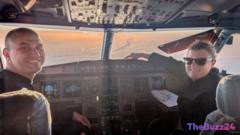
The flight was piloted by a highly skilled team, including husband-and-wife captains Rod and Louise Robertson, alongside Captain Al Wallach. Louise Robertson described the mission as the most complex of her 25-year piloting career, noting that the landing was executed by her husband in the left seat. Upon landing on the ice, the crew spent exactly one hour on the ground to safely transfer the patient before taking off for Christchurch, New Zealand. The patient is now recovering well in a hospital, and officials have praised the seamless international cooperation and technical precision that made the life-saving flight possible.
Key Takeaways
- An Australian aviation crew successfully evacuated a sick US expedition member from McMurdo Station in Antarctica during the pitch-black midwinter.
- The mission was executed in extreme conditions, including temperatures plunging to -43°C and a 3km runway prepared on compacted snow.
- This marks the first-ever medical evacuation flight to Antarctica completed in the month of July under total darkness.
Editor’s Analysis & Impact
This daring rescue underscores the critical importance of international cooperation and advanced aviation capabilities in the world’s most hostile environments. Operating an Airbus A319 at the absolute limit of its technical specifications in -43°C temperatures demonstrates how far polar aviation technology has progressed. Historically, Antarctica was virtually inaccessible during the dark winter months, leaving research crews isolated in medical emergencies. The success of this mission, facilitated by the collaboration between Australian and American polar programs, sets a new benchmark for emergency response capabilities. As scientific activity in polar regions continues to expand, the ability to execute precise, rapid-response evacuations in extreme conditions will become increasingly vital. This event will likely influence future safety protocols and aircraft design requirements for extreme-cold operations.
Frequently Asked Questions
Q: Why was this Antarctic rescue mission considered historic?
A: It was the first-ever medical evacuation flight to Antarctica successfully completed in the month of July, requiring the crew to land and take off in total winter darkness and extreme temperatures of -43°C.
Q: What aircraft was used for the evacuation, and how was it prepared?
A: The mission utilized an Airbus A319 named Snowbird 1. Before takeoff, engineers and designers spent 24 hours modifying the cabin to fit a specialized medical stretcher for the patient.
Q: Where was the patient taken after being evacuated?
A: After a brief one-hour turnaround at Phoenix Airfield in Antarctica, the aircraft flew directly to Christchurch, New Zealand, where the patient received medical treatment and is now recovering.
AI Disclosure: This article is based on verified data and official reports. Our Team and AI have cross-referenced every financial detail with primary sources to ensure total accuracy.
More from this Category