Deadly Wildfire Ravages Northern Greece, Claims Lives and Forces Evacuations
A devastating and uncontrolled wildfire is sweeping through northern Greece, resulting in at least two confirmed fatalities and prompting the urgent evacuation of local communities. The inferno, which ignited on Tuesday afternoon, has rapidly consumed vast areas, posing a severe threat to residents and property.
The body of a man was discovered in a scorched landscape near Liti, a village situated about 15 kilometers northwest of Thessaloniki. Later, a second unidentified body was found within a house in a forested zone close to the village. Amidst the tragedy, a woman rescued from near the house sustained burn injuries but is now reported to be in stable condition at a hospital. Authorities are also searching for a 12-year-old child, believed to be the son of the deceased man and the injured woman.
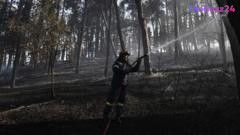
More than 100 firefighters, supported by dozens of fire engines and at least seven aircraft, are engaged in a relentless battle against the blaze. They face a formidable challenge, with reports indicating a wall of flame stretching approximately 5 kilometers and continuing to spread. The cause of the fire, which quickly engulfed a nearby forest, remains under investigation.
The region had been under a high wildfire risk warning, with prevailing dry conditions and strong winds significantly hindering containment efforts and causing repeated flare-ups. Residents of Liti were compelled to flee their homes, and Greek broadcaster ERT reported that a number of properties had already sustained damage as the fire advanced towards the nearby village of Melissochori. This incident marks the latest in a series of wildfires to strike Greece as it approaches its peak tourist season, a country that frequently grapples with such blazes during summers characterized by droughts and heatwaves.
Key Takeaways
- A severe wildfire in northern Greece has claimed at least two lives and led to the evacuation of villages near Thessaloniki.
- Over 100 firefighters, supported by multiple aircraft, are struggling to contain a rapidly spreading blaze exacerbated by dry, windy conditions.
- The incident underscores Greece's recurring challenge with intense wildfires during its summer months, often linked to climate-induced droughts and heatwaves.
Editor’s Analysis & Impact
This devastating wildfire in northern Greece highlights the escalating environmental challenges faced by Mediterranean countries. The immediate impact is tragic, with loss of life and displacement, directly affecting local communities and potentially disrupting regional tourism, a vital economic sector. Looking ahead, the frequency and intensity of such events are projected to increase due to climate change, necessitating more robust national and international emergency response strategies. This includes enhanced early warning systems, improved forest management, and significant investment in firefighting resources. The broader implication is a stark reminder of the human and economic cost of extreme weather, urging policymakers to prioritize climate resilience and adaptation measures to protect vulnerable populations and ecosystems.
Frequently Asked Questions
Q: Where is the wildfire currently active?
A: The wildfire is burning in northern Greece, specifically near Liti, approximately 15 kilometers northwest of Thessaloniki, and has been spreading towards the nearby village of Melissochori.
Q: What are the main challenges faced by firefighters?
A: Firefighters are contending with a wall of flame reportedly 5 kilometers long, exacerbated by extremely dry conditions and high winds, which are causing rapid spread and repeated flare-ups, making containment very difficult.
Q: Is this a common occurrence in Greece?
A: Yes, wildfires have become a frequent and severe challenge for Greece during its summer months. The country regularly experiences droughts and heatwaves, which create ideal conditions for large-scale blazes, especially as it approaches its peak tourist season.
AI Disclosure: This article is based on verified data and official reports. Our Team and AI have cross-referenced every financial detail with primary sources to ensure total accuracy.
More from this Category