Decomposing Humpback Whale on Danish Island Raises Health Alarms
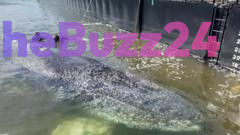
Danish environmental authorities are grappling with the challenge of removing a humpback whale carcass that has washed ashore on the island of Anholt. The discovery comes after a high-profile private rescue attempt in Germany failed to save the marine mammal.
Officials have issued a strong advisory, urging residents and visitors to keep a significant distance from the decomposing whale due to considerable health risks. The animal had previously garnered public attention after becoming stranded in Germany’s Lübeck Bay. Despite a large-scale effort by private individuals to rescue it, experts had expressed doubts about its survival due to its weakened state. A GPS tracker, attached during the initial rescue, confirmed the whale’s identity.
Concerns are growing on the island about the potential for the whale’s body to rupture as decomposition gases build up. The Danish environmental protection agency is actively planning a safe removal operation. This operation seeks to balance the immediate need for public safety with the scientific value of performing a post-mortem examination and collecting samples for future research.
The journey of the whale’s carcass from its release point in the North Sea to the Kattegat strait remains somewhat of a mystery. Nevertheless, the unusual event has attracted curious onlookers to Anholt. Authorities are closely monitoring the situation to ensure public safety and are expected to provide updates on the removal timeline soon.
Key Takeaways
- A decomposing humpback whale carcass has washed ashore on the Danish island of Anholt, posing health risks.
- Authorities are planning a removal operation while balancing public safety and scientific research needs.
- The whale was previously the subject of a failed private rescue attempt in Germany.
Editor’s Analysis & Impact
The stranding of the humpback whale on Anholt highlights the complex challenges in managing marine mammal carcasses. Beyond the immediate health concerns and the logistical difficulties of removal, this incident underscores the fragility of marine ecosystems and the impact of human intervention, even when well-intentioned. The scientific opportunity presented by the post-mortem examination could yield valuable data on whale health, migration patterns, or causes of death, contributing to conservation efforts. The event also draws attention to the increasing public engagement with wildlife conservation issues, sometimes leading to ambitious private rescue attempts that, while commendable, may not always align with expert ecological assessments.
Frequently Asked Questions
Q: What are the health risks associated with the decomposing whale?
A: Decomposing animal carcasses can harbor bacteria and pathogens, posing risks of infection if people come into close contact. The buildup of gases within the whale's body also presents a potential rupture hazard.
Q: Why was the whale moved after the initial rescue attempt?
A: After the failed rescue attempt in Germany, the whale was transported by barge and released into the North Sea, presumably in an effort to give it a chance to recover or return to its natural habitat, though experts had deemed it too weak.
Q: Will a post-mortem examination be conducted?
A: Yes, Danish environmental authorities plan to conduct a post-mortem examination and collect biological samples for scientific research as part of the removal operation.
AI Disclosure: This article is based on verified data and official reports. Our Team and AI have cross-referenced every financial detail with primary sources to ensure total accuracy.
More from this Category