Deep Space Awakening: New Horizons Emerges from Record-Breaking Hibernation in the Outer Solar System
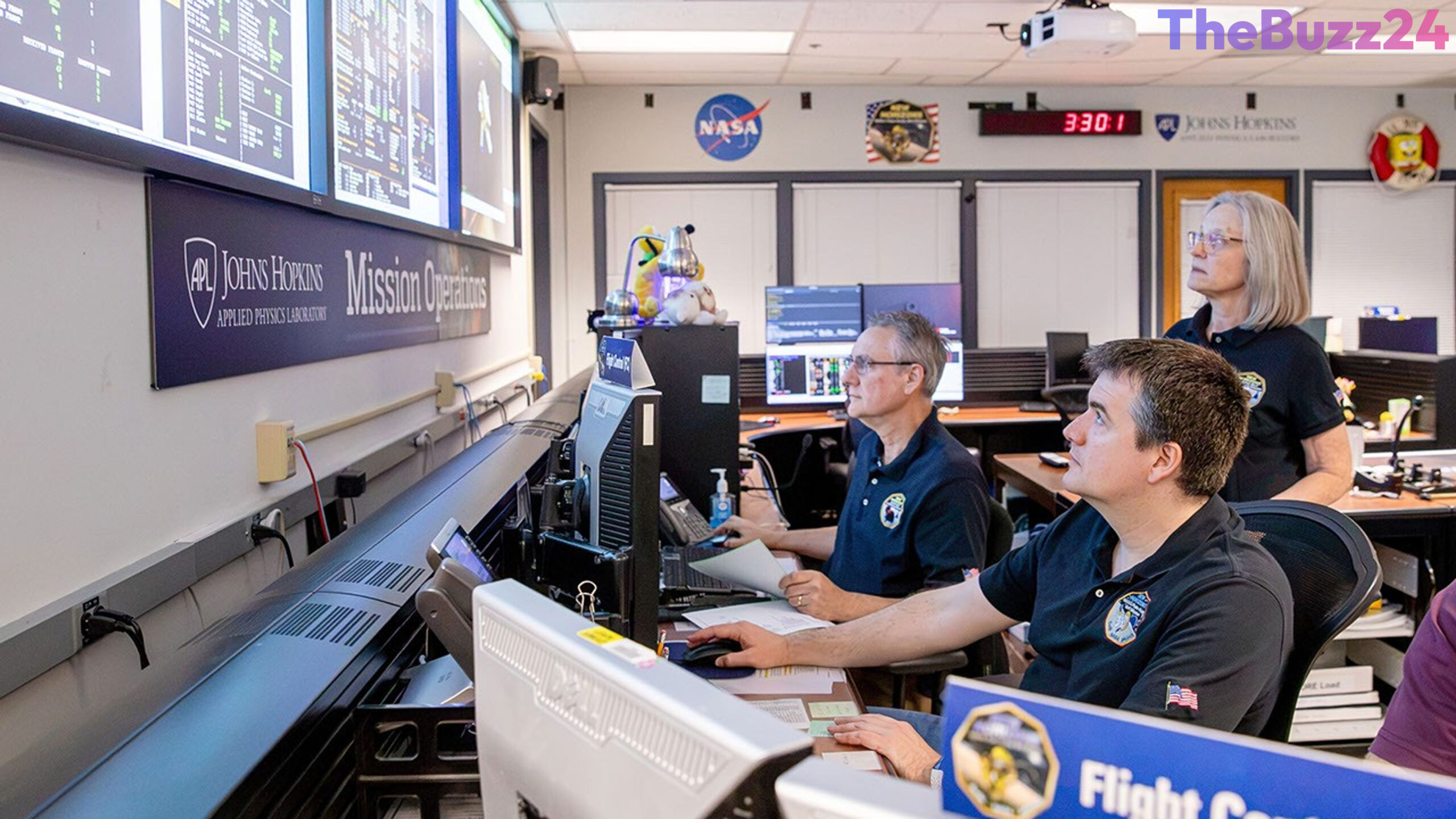
NASA’s New Horizons spacecraft has successfully awakened from its longest hibernation period to date, marking a major milestone in its ongoing journey through the outer reaches of our solar system. On June 23, flight controllers at the Johns Hopkins Applied Physics Laboratory (APL) in Maryland confirmed that the spacecraft had safely exited its 321-day slumber, which began in August of last year. Operating on pre-programmed commands, the probe sent a confirmation signal that traveled approximately 5.9 billion miles (9.5 billion kilometers) to reach Earth, taking nearly nine hours to arrive via the Deep Space Network.
During its nearly year-long rest, New Horizons was not entirely dormant. The spacecraft continued to collect and store data using its onboard instruments, including heliospheric plasma sensors and a specialized space dust detector. Mission Operations Manager Alice Bowman confirmed that weekly status beacons sent during the hibernation period remained consistently “green,” indicating that all systems functioned perfectly throughout the extended downtime.
With active operations now resumed, the mission team is preparing to downlink the stored scientific data and perform comprehensive system checkouts. Over the coming weeks, the spacecraft’s Alice ultraviolet spectrograph will analyze hydrogen gas distribution in the outer heliosphere, while other instruments continue their environmental measurements. Additionally, engineers on Earth are implementing ground-system software upgrades to streamline future operations as the spacecraft travels even further into the deep cosmos.
Launched in January 2006, New Horizons has compiled an extraordinary resume of deep-space exploration. The probe executed a high-speed flyby of Jupiter in 2007, conducted the historic first-ever close flyby of Pluto in 2015, and explored the distant Kuiper Belt object Arrokoth in 2019. This latest awakening positions the spacecraft to continue its pioneering study of the solar system’s outermost frontier.
Key Takeaways
- New Horizons successfully woke up from a record 321-day hibernation period on June 23, while located 5.9 billion miles from Earth.
- Despite being in a resource-saving sleep mode, the spacecraft's passive sensors continued to collect valuable data on space dust and solar wind.
- The mission team is currently downlinking data and preparing the spacecraft's ultraviolet spectrograph to study hydrogen distribution in the outer heliosphere.
Editor’s Analysis & Impact
The successful awakening of New Horizons from its longest hibernation to date highlights the incredible engineering resilience of deep-space probes. Operating nearly six billion miles from Earth, the spacecraft must navigate extreme thermal environments, declining power levels, and significant communication latency—with signals taking almost nine hours one way. This milestone is highly significant for the planetary science community, as the Kuiper Belt remains one of the least explored regions of our solar system. The data gathered by New Horizons during its passive cruise, combined with upcoming active observations, will provide unprecedented insights into the heliosphere’s boundary and the distribution of interstellar dust. Furthermore, the successful deployment of updated autonomy logic on the spacecraft serves as a vital proof of concept for future long-duration missions to the outer planets and interstellar space, proving that autonomous systems can reliably manage complex operations without real-time human intervention.
Frequently Asked Questions
AI Disclosure: This article is based on verified data and official reports. Our Team and AI have cross-referenced every financial detail with primary sources to ensure total accuracy.
More from this Category