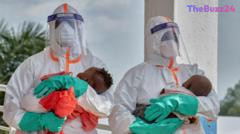
Democratic Republic of Congo Faces Deadliest Ebola Crisis in Its History
The Democratic Republic of Congo is currently grappling with the largest and most severe Ebola outbreak ever recorded within its borders. Public health authorities report that confirmed cases have surged past 3,600, accompanied by a staggering death toll that highlights the lethal nature of the current strain. This unprecedented surge officially surpasses the devastating epidemic that struck the region between 2018 and 2020, making it a critical public health emergency on the African continent.
Driving this crisis is the specific Bundibugyo strain of the virus, for which there is currently no broadly approved commercial vaccine or definitive treatment. While experimental vaccines are actively undergoing development and clinical trials in facilities located in the United Kingdom and Singapore, frontline medical workers face immense hurdles in containing the pathogen. Transmission rates have recently hit record weekly highs, propelled by exceptional viral pacing and persistent regional instability.
Compounding the medical challenge are severe logistical and security obstacles on the ground. The epicenter remains concentrated in the northeastern Ituri province, sharing porous borders with South Sudan and Uganda, while the virus has also infiltrated regions impacted by armed conflict and mass population displacement. These compounding factors—alongside international travel and cross-border movement—have severely hampered containment operations and elevated the ongoing risk of broader international transmission.
Key Takeaways
- The current Ebola outbreak in the Democratic Republic of Congo is the largest in the nation's history, exceeding previous records.
- The crisis is driven by the Bundibugyo strain, which currently lacks an approved commercial vaccine or specific treatment.
- Regional insecurity, population displacement, and cross-border movement are severely complicating containment efforts and accelerating transmission.
Editor’s Analysis & Impact
The escalation of the Ebola outbreak in the Democratic Republic of Congo serves as a stark reminder of the fragile state of public health infrastructure in conflict-affected regions. Beyond the immediate human tragedy, this crisis underscores the urgent need to accelerate clinical trials for novel vaccines targeting specific strains like Bundibugyo. Economically and logistically, sustained transmission in cross-border trade and transit hubs threatens regional stability and places immense pressure on international health organizations. Moving forward, global health authorities must adopt more agile, security-adaptive intervention strategies to prevent localized epidemics from metastasizing into broader international health emergencies.
Frequently Asked Questions
Q: Which strain of the virus is causing the current outbreak in the Democratic Republic of Congo?
A: The current outbreak is being driven by the Bundibugyo strain of the Ebola virus.
Q: Are there approved vaccines or treatments available for this specific strain?
A: Currently, there is no approved vaccine or definitive treatment for the Bundibugyo strain, though experimental vaccines are being developed and tested in the UK and Singapore.
Q: What are the primary factors hindering the containment response?
A: Response efforts are heavily impeded by regional insecurity, population displacement, cross-border movement, and armed conflict in parts of the affected provinces.
AI Disclosure: This article is based on verified data and official reports. Our Team and AI have cross-referenced every financial detail with primary sources to ensure total accuracy.
More from this Category