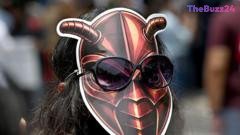
Digital Backlash: Female Protestors Face Severe Doxxing and Abuse in India
In recent major anti-government demonstrations across India, youth-led movements effectively utilized digital platforms and social media networks to mobilize citizens and challenge political leadership. While these demonstrations successfully captured national attention and sparked widespread political discourse, many young women who participated and documented the events online have encountered a severe wave of digital harassment, doxxing, and targeted abuse.
The protests, spearheaded by youth coalitions like the Cockroach Janta Party, relied heavily on Instagram reels, satirical memes, and viral videos to broadcast rallies, police responses, and clashes with law enforcement. However, as this digital content gained massive traction, the female creators and student participants behind the posts found themselves subjected to coordinated online attacks. Victims have reported receiving explicit rape threats, experiencing severe slut-shaming, and watching their personal images manipulated and circulated maliciously across various platforms.
Unlike their male counterparts, who largely escaped gender-specific targeting, these young women experienced intense scrutiny aimed directly at their sexuality, character, and families. Anonymous actors sifted through personal histories to expose college affiliations and home addresses, prompting profound fears for physical safety among the protesters and their relatives. Despite locking social media accounts, deleting posts, and restricting communication channels, the psychological toll on these female activists highlights a deeply entrenched gender bias within online political engagement.
Civil rights advocates and digital safety experts note that this targeted harassment serves as a chilling deterrent for women wishing to participate in civic discourse. Although many of the affected individuals have chosen to retreat into private digital spaces to shield themselves and their loved ones from further harm, several remain steadfast in their commitment to political activism, arguing that the right to free expression must be protected regardless of the personal cost.
Key Takeaways
- Young female protesters and content creators involved in recent anti-government demonstrations in India have faced severe online doxxing and targeted abuse.
- Unlike male participants, female activists were disproportionately targeted with gender-specific insults, doctored images, and explicit threats of violence.
- The relentless harassment has forced many women to lock down their social media accounts, delete viral protest content, and live in constant fear for their safety and that of their families.
Editor’s Analysis & Impact
The intersection of digital activism and political dissent frequently exposes vulnerabilities, particularly for marginalized groups and women in highly polarized societies. This situation underscores the dark side of social media mobilization, where algorithmic amplification can rapidly turn a localized protest into a global spectacle, often weaponizing anonymity against visible participants. The systemic misogyny embedded in online harassment acts as a formidable barrier, threatening to suppress female political participation by imposing an exceptionally high personal cost. Moving forward, digital platforms, civil society organizations, and law enforcement agencies face mounting pressure to establish more robust mechanisms to combat doxxing, gender-based cyber violence, and targeted intimidation, ensuring that democratic participation remains safe and accessible for all citizens.
Frequently Asked Questions
Q: What triggered the recent protests in India?
A: The protests were youth-led movements, notably involving groups like the Cockroach Janta Party, expressing widespread anti-government sentiment and demanding political accountability.
Q: Why were women disproportionately targeted during the online backlash?
A: Female participants faced gender-specific attacks, including slut-shaming, sexually explicit threats, and doctored images, which male protesters largely avoided despite sharing similar political views.
Q: How did the targeted women attempt to protect themselves?
A: Many victims deleted or archived their protest-related content, changed their social media names, restricted their accounts to private settings, and blocked unknown numbers to evade further harassment.
AI Disclosure: This article is based on verified data and official reports. Our Team and AI have cross-referenced every financial detail with primary sources to ensure total accuracy.
More from this Category