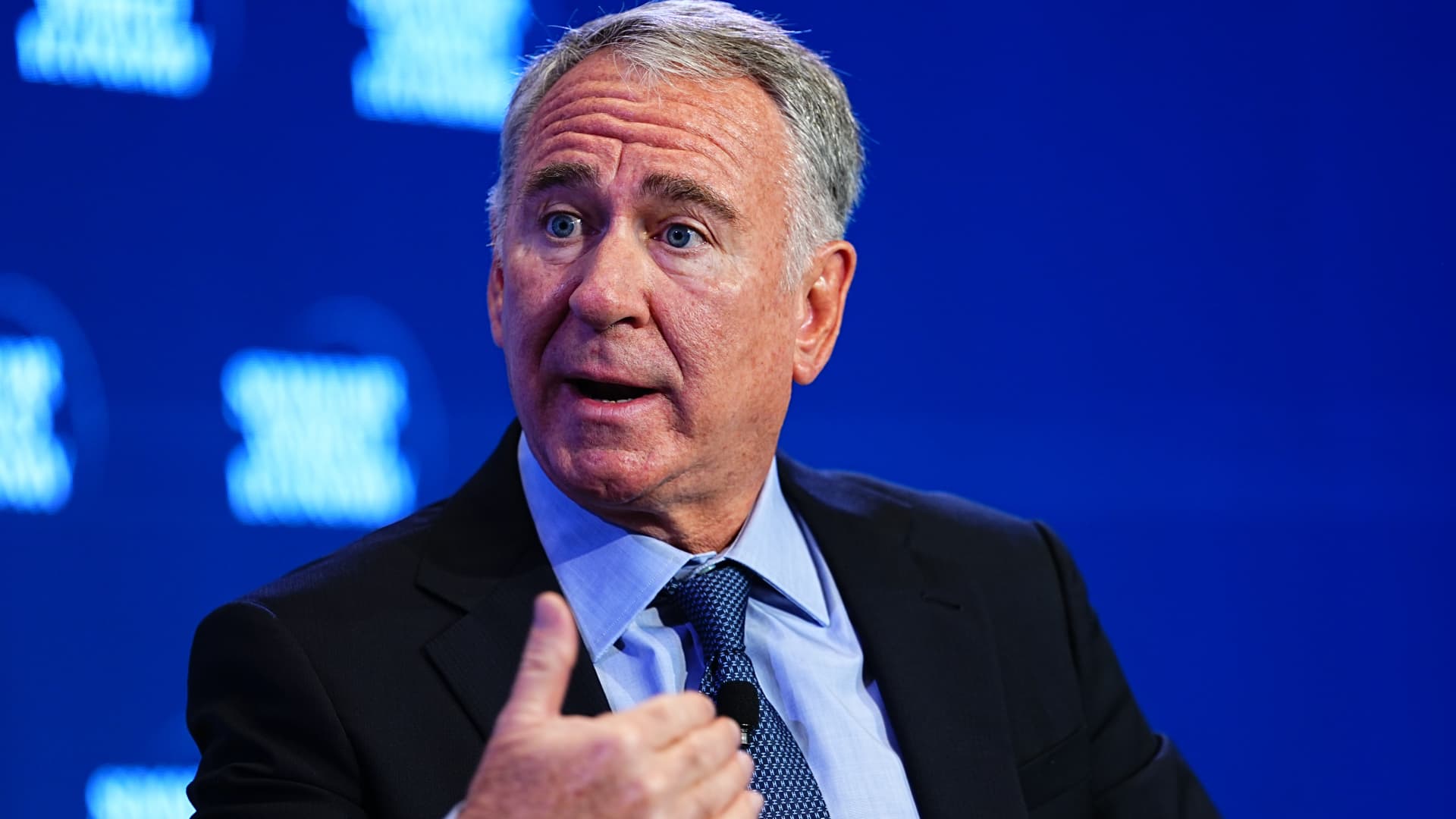
Citadel CEO Warns of Global Recession Risk Amid Strait of Hormuz Tensions
Ken Griffin, the CEO of hedge fund giant Citadel, has issued a sobering forecast regarding the stability of the global economy, highlighting the Strait of Hormuz as a critical vulnerability. During a recent economic conference in Washington, D.C., Griffin emphasized that a prolonged closure of this vital maritime oil transit route—spanning six to twelve months—would almost certainly trigger a worldwide recession.
The Strait of Hormuz serves as one of the most significant energy choke points on the planet. A sustained disruption would force a radical and immediate reorientation of global energy strategies. According to Griffin, such a scenario would likely accelerate the transition toward alternative energy sources, including nuclear, solar, and wind power, as nations prioritize energy security and attempt to insulate their supply chains from geopolitical volatility. Currently, global oil prices hover near $100 per barrel, a sharp increase from pre-conflict levels, placing immense pressure on Asian economies and other energy-dependent regions.
While stock markets have shown resilience, recovering to levels observed prior to the U.S. military strikes in February, market sentiment remains precarious. Many financial analysts argue that current economic models fail to fully account for the potential escalation of hostilities between the U.S. and Iran. Griffin noted that while the current situation is fraught with risk, the broader geopolitical consequences could have been significantly worse had the U.S. delayed its response, potentially allowing for a more dangerous expansion of Iran’s military capabilities.
Key Takeaways
- A closure of the Strait of Hormuz lasting six to twelve months would likely trigger a global recession, according to Citadel CEO Ken Griffin.
- Geopolitical instability in the region is driving a push for energy independence and a faster transition to alternative power sources like nuclear and renewables.
- Current market optimism may be misplaced, as many investors have not fully priced in the risks of a potential escalation between the U.S. and Iran.
Editor’s Analysis & Impact
The warning from Ken Griffin underscores the fragility of the modern globalized economy when faced with concentrated geopolitical risks. The Strait of Hormuz is not merely a shipping lane; it is a fundamental pillar of global energy pricing. Should this artery be severed, the resulting supply shock would likely lead to stagflationary pressures, forcing central banks into a difficult position between curbing inflation and supporting growth. Furthermore, this situation highlights a structural shift in energy policy: the transition to renewables is no longer just an environmental imperative but a national security necessity. Investors should remain cautious, as the current market recovery appears to rely on a ‘status quo’ bias that ignores the potential for rapid, high-impact escalation in the Middle East.
Frequently Asked Questions
Q: Why is the Strait of Hormuz so important to the global economy?
A: The Strait of Hormuz is a critical maritime choke point through which a significant portion of the world's oil supply passes. Any disruption here directly impacts global energy prices and supply chain stability.
Q: How would a closure of the Strait affect the transition to green energy?
A: A prolonged closure would likely force nations to accelerate their shift toward alternative energy sources like wind, solar, and nuclear power to reduce their reliance on volatile oil imports and secure energy independence.
AI Disclosure: This article is based on verified data and official reports. Our Team and AI have cross-referenced every financial detail with primary sources to ensure total accuracy.
More from this Category