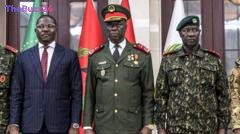
Guinea-Bissau Junta Extends Military Rule, Postpones Elections to 2028
Military leaders in Guinea-Bissau have announced a significant delay in the nation’s transition back to civilian governance, pushing scheduled elections back by two years. The presidential and parliamentary polls, initially slated for December 6th, are now officially rescheduled for November 26, 2028, according to a decree issued by Transitional President Gen. Horta N’Tam.
This postponement arrives precisely one year after the military seized control of the government, having pledged to restore democratic rule within a 12-month timeframe. The presidency cited a lack of adequate “technical, material and financial conditions” to conduct the elections as planned, following an assessment of electoral preparations. The extended timeline, the statement explained, is intended to ensure that future elections are conducted with greater credibility, transparency, and inclusivity, offering all candidates equitable opportunities.
While the transitional government also reaffirmed its commitment to holding Guinea-Bissau’s inaugural local government elections, no specific date has been provided for this vote. Gen. N’Tam assumed the role of transitional president shortly after the military overthrew President Umaro Sissoco Embaló in November 2025. This coup occurred just days after general elections and a day before provisional results were expected. Notably, former President Embaló, who has been residing in exile in Morocco, was recently denied permission to return to Guinea-Bissau despite his expressed interest in participating in the upcoming elections.
Guinea-Bissau, which gained independence from Portugal in 1974, has a long history marked by numerous coups and attempted overthrows of power, underscoring the persistent political instability in the West African nation.
Key Takeaways
- Guinea-Bissau's military junta has postponed national elections from next week to November 2028.
- The delay is attributed to insufficient 'technical, material and financial conditions' for credible elections.
- The postponement extends military rule by two years, despite an initial promise of a 12-month transition.
Editor’s Analysis & Impact
The decision by Guinea-Bissau’s military leadership to postpone elections until 2028 signals a significant setback for democratic aspirations in the region. This move not only extends the period of military rule but also raises concerns about the stability and commitment to democratic principles within the country. The justification of insufficient electoral conditions, while plausible, is often a pretext for consolidating power. This protracted transition could deter foreign investment, strain international relations, and potentially fuel internal dissent. The broader implication for West Africa, a region grappling with increasing political instability and military interventions, is a worrying precedent that may embolden similar actions elsewhere.
Frequently Asked Questions
Q: Why were the elections in Guinea-Bissau postponed?
A: The military rulers cited insufficient 'technical, material and financial conditions' to hold the elections as planned, stating the delay is necessary to ensure future polls are credible, transparent, and inclusive.
Q: When is the new date for the elections?
A: The presidential and parliamentary elections are now scheduled to take place on November 26, 2028.
Q: What is the history of political stability in Guinea-Bissau?
A: Guinea-Bissau has a history of political instability since gaining independence in 1974, experiencing numerous coups and attempted coups.
AI Disclosure: This article is based on verified data and official reports. Our Team and AI have cross-referenced every financial detail with primary sources to ensure total accuracy.
More from this Category