Wave of Fan Violence Disrupts European Football Matches
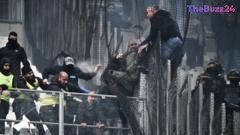
A series of violent incidents marred several European football matches this week, prompting high-level political condemnation and raising serious concerns regarding stadium security. The most severe confrontation occurred at the Stade Velodrome in Marseille, where home supporters breached a section designated for visiting Levski Sofia fans. The clash resulted in multiple injuries, with five individuals requiring hospitalization for head trauma, eye injuries, and a dislocated shoulder, while others received on-site treatment for various wounds.
French President Emmanuel Macron addressed the situation directly, speaking with Bulgarian Prime Minister Rumen Radev to condemn the violence and assure that those responsible would face consequences. The incident, which involved the throwing of flares and projectiles, has been widely criticized by officials as a desecration of the sport. Marseille officials have launched an internal investigation to determine how the security perimeter was compromised, though no arrests have been reported at this stage.
Simultaneously, tensions flared in Batumi, Georgia, during a Europa League match between Besiktas and Hapoel Be’er-Sheva. The game was briefly suspended after clashes erupted between Turkish supporters and local police, reportedly triggered by the use of pepper spray against fans who displayed a pro-Palestinian banner. The Turkish Football Federation has since lodged a formal complaint with UEFA, citing the disproportionate use of force by authorities. Meanwhile, in England, Sunderland faced security challenges after Jagiellonia Bialystok supporters gained entry to the Stadium of Light despite a pre-existing UEFA ban on away fans, leading to localized disturbances that required police intervention.
Key Takeaways
- Violent clashes at the Marseille vs. Levski Sofia match resulted in multiple hospitalizations and drew condemnation from French and Bulgarian leadership.
- A Europa League match in Georgia between Besiktas and Hapoel Be'er-Sheva was suspended following confrontations between fans and police over political banners.
- Sunderland faced security breaches after visiting Jagiellonia Bialystok fans entered the stadium despite an official UEFA ban on away supporters.
Editor’s Analysis & Impact
The recent surge in stadium violence across Europe highlights a growing challenge for football governing bodies and local law enforcement. These incidents, which blend sporting rivalry with broader geopolitical tensions, threaten the safety of the match-day experience and place immense pressure on clubs to overhaul security protocols. The involvement of heads of state in these matters underscores the severity of the situation; when football matches become flashpoints for international diplomatic friction, the sport risks losing its status as a neutral ground for competition. Moving forward, UEFA will likely face increased scrutiny regarding its ability to enforce bans and manage high-risk fixtures. Clubs must now invest more heavily in intelligence-led security and cross-border cooperation to prevent stadiums from becoming arenas for civil unrest, or risk facing stricter sanctions, including empty-stadium mandates or total exclusion from European competitions.
Frequently Asked Questions
Q: What caused the match suspension in Georgia?
A: The match between Besiktas and Hapoel Be'er-Sheva was suspended after clashes broke out between Turkish fans and local police, reportedly involving the use of pepper spray following the display of a political banner.
Q: Why were there Jagiellonia Bialystok fans at the Sunderland match despite a ban?
A: Although UEFA had imposed an away supporter ban for the fixture, visiting fans managed to gain entry to the Stadium of Light, leading to disturbances that the club is currently investigating.
AI Disclosure: This article is based on verified data and official reports. Our Team and AI have cross-referenced every financial detail with primary sources to ensure total accuracy.
More from this Category