Hubble Space Telescope Hits 200,000 Orbit Milestone While Hunting Rare Supernova
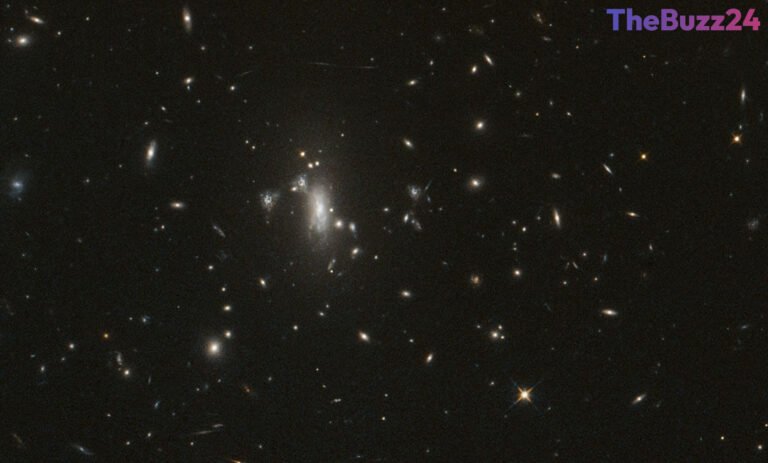
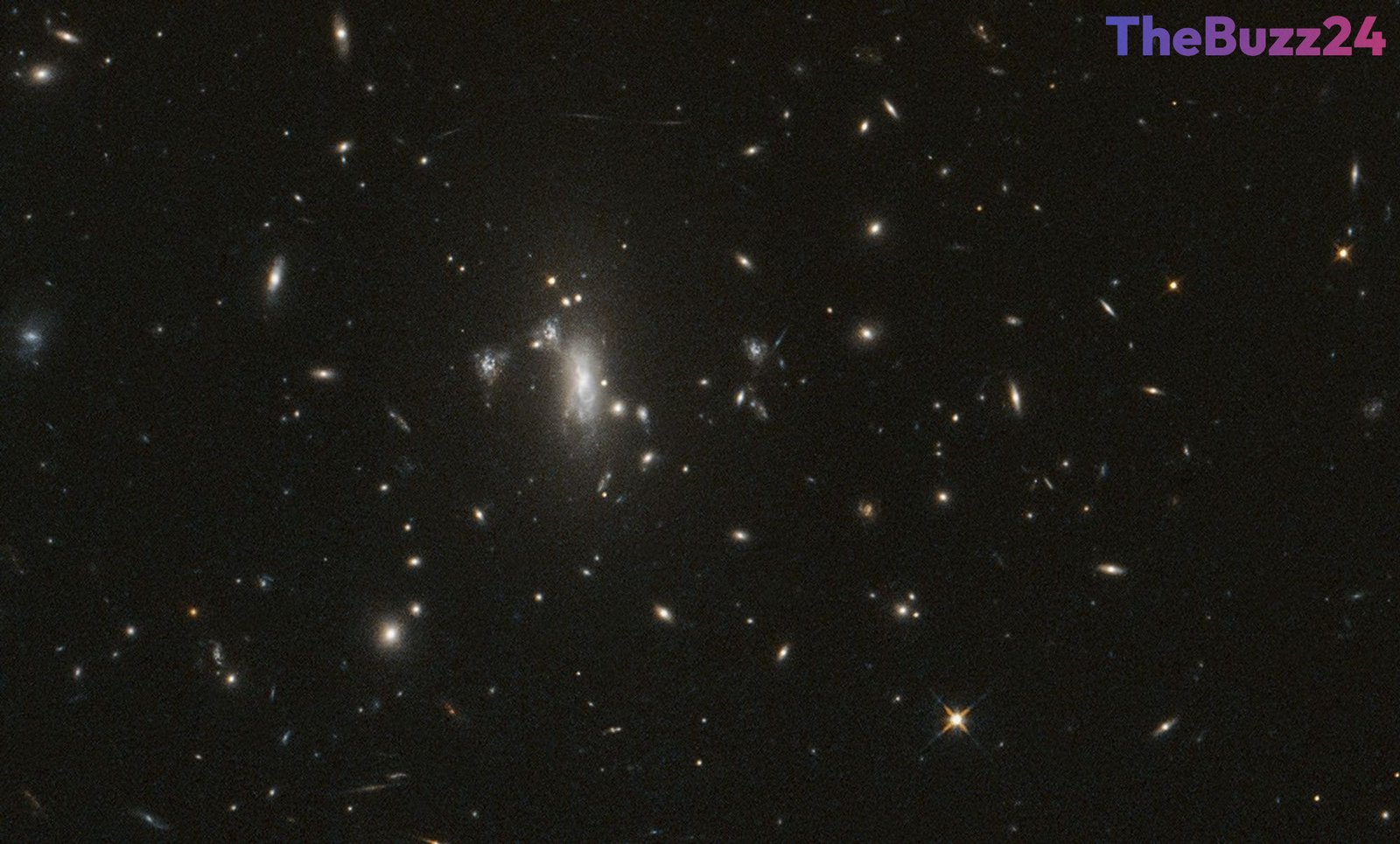
The Hubble Space Telescope has officially reached a historic milestone, completing its 200,000th orbit around Earth. Over its 36-year tenure in space, the observatory has traveled more than 5 billion miles and conducted over 1.7 million individual observations, cementing its status as one of the most productive scientific instruments in history. This latest achievement coincides with a critical mission to monitor the galaxy cluster MACS J0417, which serves as a natural gravitational lens for distant cosmic events.
As part of its ongoing research into the expansion rate of the universe—often referred to as the Hubble Constant—the telescope is currently tracking the anticipated reappearance of a supernova known as Athena. Because the massive galaxy cluster MACS J0417 bends and magnifies light from objects positioned behind it, light from the same stellar explosion can reach Earth along multiple paths at different times. Astronomers expect Athena to reappear between now and early 2027, providing a unique opportunity to map the mass of the foreground cluster and refine cosmological measurements.
Despite its age, Hubble remains in high demand, with researchers requesting seven times more observation time than is currently available. Its specialized ability to analyze ultraviolet and visible light wavelengths allows it to work in tandem with newer observatories like the James Webb Space Telescope and the Roman Space Telescope. By continuing to provide high-resolution data across all areas of astronomy, Hubble ensures its legacy as a cornerstone of modern space exploration for years to come.
Key Takeaways
- The Hubble Space Telescope has successfully completed 200,000 orbits, covering over 5 billion miles since its 1990 launch.
- Hubble is currently monitoring the galaxy cluster MACS J0417 to observe the predicted reappearance of supernova Athena.
- Data from the recurring supernova will help scientists map the mass of galaxy clusters and improve calculations regarding the universe's expansion rate.
Editor’s Analysis & Impact
The longevity of the Hubble Space Telescope is a testament to the success of modular space engineering and the enduring value of multi-wavelength observation. While newer telescopes like the James Webb Space Telescope offer unprecedented infrared capabilities, Hubble’s continued relevance in the ultraviolet and visible spectrums highlights the necessity of a diverse orbital fleet. The focus on gravitational lensing to measure the Hubble Constant remains a high-stakes area of astrophysics, as current discrepancies in expansion rate measurements—the ‘Hubble Tension’—remain one of the biggest mysteries in modern science. By leveraging gravitational lenses as natural telescopes, researchers are finding ways to extend the utility of existing hardware, ensuring that even aging assets remain at the cutting edge of cosmological discovery and data-driven research.
Frequently Asked Questions
Q: What is a gravitational lens?
A: A gravitational lens occurs when a massive object, like a galaxy cluster, bends the light from a more distant object behind it. This acts like a magnifying glass, allowing astronomers to see objects that would otherwise be too faint or distant to observe.
Q: Why is the Hubble Constant important?
A: The Hubble Constant is the unit of measurement used to describe how fast the universe is expanding. Refining this number is essential for understanding the age, size, and ultimate fate of the universe.
AI Disclosure: This article is based on verified data and official reports. Our Team and AI have cross-referenced every financial detail with primary sources to ensure total accuracy.
More from this Category