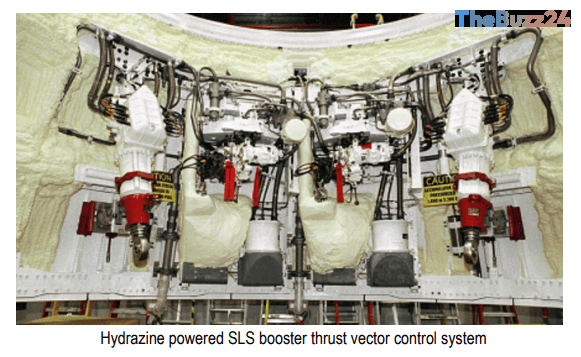
Mitigating Critical Propulsion Hazards: The Hidden Dangers of Hydrazine Freeze-Thaw Cycles
Propulsion and auxiliary systems utilizing hydrazine monopropellant face substantial engineering and safety challenges when subjected to freeze-thaw cycles. With a freezing point near 1.6°C, hydrazine undergoes phase transitions that can critically compromise flight hardware, structural integrity, and mission success. Historical space exploration missions have repeatedly encountered these vulnerabilities, demonstrating that temperature fluctuations in propellant lines can lead to severe mechanical stress, hazardous leaks, and catastrophic system failures.
When hydrazine freezes, the resulting contraction permits additional propellant to pack tightly into confined lines. Upon thawing, this ‘superpacked’ condition frequently generates extreme over-pressurization capable of rupturing metal plumbing, valves, and fittings. Furthermore, elastomeric components and precision seals are highly susceptible to cracking and distortion from differential thermal expansion. Partially thawed hydrazine can also form a slushy consistency that severely restricts fluid dynamics, resulting in thruster misfires or dangerous hard starts. These compounding risks not only degrade the overall reliability of the propulsion architecture but also introduce toxic exposure hazards for ground personnel.
To safeguard flight hardware and ensure mission viability, aerospace engineers emphasize strict preventative measures alongside comprehensive post-exposure protocols. Maintaining hydrazine systems above their freezing threshold through advanced heaters, thermal blankets, and accurate high-fidelity modeling remains the primary defense. In the event that a freeze-thaw cycle cannot be ruled out, operations must be immediately suspended pending rigorous structural assessments, pressure decay testing, and carefully controlled, uniform thawing procedures. By treating every thermal anomaly as a life-limiting event, technical teams can successfully mitigate structural risks and preserve the safety of future aerospace missions.
Key Takeaways
- Hydrazine freezes near 1.6°C, causing dangerous volume contractions and subsequent over-expansion pressures during thaw cycles.
- Phase transitions can lead to structural line ruptures, compromised valve seals, slush blockages, and hazardous toxic leaks.
- Rigorous thermal modeling, strict preventative heating, and formal post-freeze engineering evaluations are vital to maintain system reliability.
Editor’s Analysis & Impact
The management of hypergolic propellants like hydrazine remains a cornerstone of reliable spacecraft design and launch operations. As commercial space flight accelerates and missions venture into longer, more thermally variable deep-space environments, the fidelity of thermal modeling and fluid management becomes increasingly critical. The historical data from legacy programs like Voyager and the Space Shuttle underscore that simple bulk temperature monitoring is no longer sufficient for modern high-performance propulsion systems. Industry stakeholders must invest in advanced, high-resolution thermal sensors and automated mitigation protocols to prevent mission-ending hardware degradation. Looking forward, adherence to strict life-limiting tracking for propellant components will likely become a mandatory standard across commercial and governmental aerospace manufacturing, significantly influencing hardware certification processes and reducing operational risk.
Frequently Asked Questions
Q: At what temperature does hydrazine freeze?
A: Hydrazine (N2H4) freezes at approximately 1.6°C (34.9°F), making it vulnerable to phase transitions in cold operational environments.
Q: What causes line ruptures during hydrazine thaw cycles?
A: When hydrazine freezes, the contraction allows additional propellant to enter confined lines. Upon thawing, this 'superpacked' state creates massive over-pressure that can burst pipes and fittings.
Q: What is the recommended response if a hydrazine system experiences a freeze?
A: Operations should be immediately suspended. Engineers must conduct static and fatigue assessments, perform pressure decay tests, and apply slow, uniform warming to prevent pressure spikes.
AI Disclosure: This article is based on verified data and official reports. Our Team and AI have cross-referenced every financial detail with primary sources to ensure total accuracy.
More from this Category