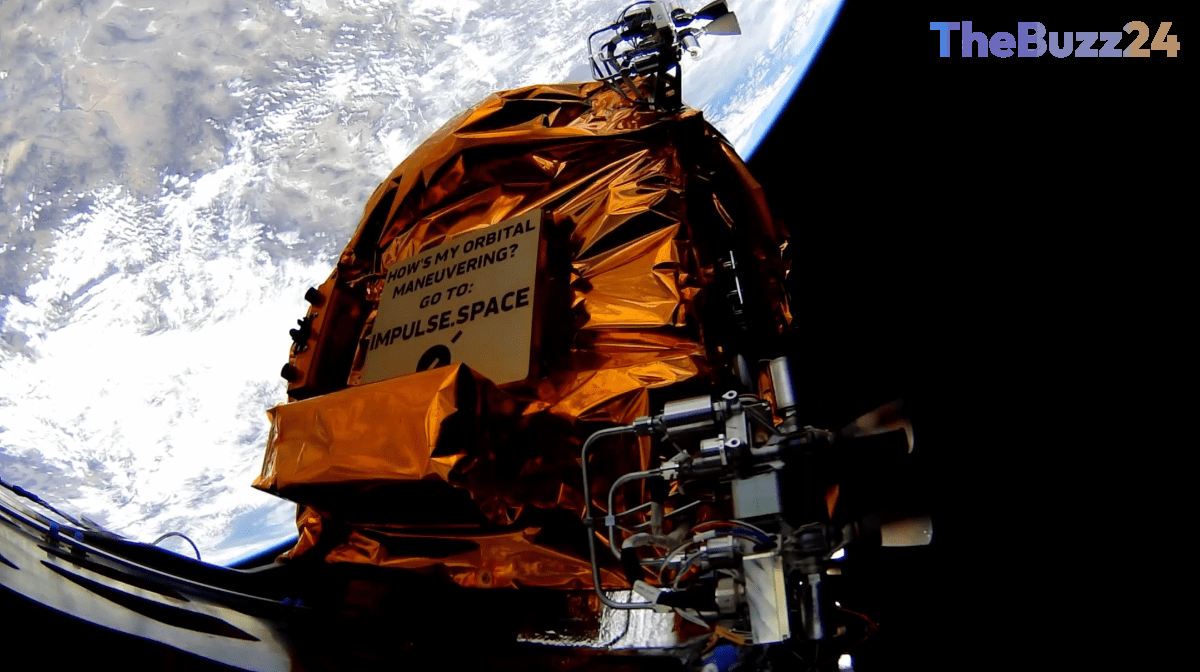
Impulse Space Secures $500 Million to Expand Workforce and Advance Orbital Maneuverability
Impulse Space, the aerospace startup founded by former SpaceX propulsion expert Tom Mueller, has successfully closed a $500 million Series D funding round. The capital injection, led by 137 Ventures and BANNER VC with support from Founders Fund, Lux Capital, and Linse Capital, is earmarked primarily for aggressive talent acquisition. The company plans to hire approximately 200 new employees to bolster its engineering and operational capabilities as it scales its production of in-space mobility vehicles.
The startup is carving out a niche in the defense and commercial sectors with its Mira platform, a highly maneuverable spacecraft designed for U.S. Space Force requirements. Additionally, the company is developing Helios, a vehicle engineered to transport satellites rapidly to higher orbits after initial deployment. By expanding its physical footprint with a new office in Colorado, Impulse aims to tap into a broader pool of aerospace talent beyond traditional hubs like Los Angeles.
Despite the current industry-wide fervor surrounding artificial intelligence, Impulse leadership remains focused on traditional engineering rigor. President and COO Eric Romo noted that while AI tools are utilized for software tasks, they are not yet a substitute for the physical design, testing, and validation required for complex hardware like turbo pump seals. The company emphasizes that the scarcity of specialized, proprietary training data for aerospace hardware makes human-led engineering and physical test-stand validation indispensable to their mission success.
Looking ahead, the company is preparing for its next Mira mission, scheduled for launch before the end of the year. This follows a previous flight that encountered navigation challenges, providing the team with critical data to refine their systems. As the company matures, the focus remains on building robust flight computers and vehicle structures to meet the increasing demand for rapid, reliable orbital logistics.
Key Takeaways
- Impulse Space raised $500 million to hire 200 new staff members and accelerate the development of its Mira and Helios spacecraft.
- The company is prioritizing human engineering expertise over AI-driven design, citing a lack of high-quality training data for specialized aerospace hardware.
- Impulse is expanding its geographic presence to Colorado to compete for top-tier aerospace talent in a tightening labor market.
Editor’s Analysis & Impact
The $500 million funding round for Impulse Space underscores a significant shift in the aerospace sector, where investors are increasingly prioritizing ‘in-space mobility’ and logistics over simple launch services. As the U.S. government ramps up spending on national security and space-based defense, companies that can provide maneuverability—the ability to change orbits or reposition assets—are becoming critical infrastructure. Impulse’s skepticism toward AI for hardware design is a refreshing, grounded perspective in a market often dominated by automation hype. By focusing on physical testing and specialized human talent, the company is positioning itself to solve the ‘last mile’ problem of space logistics. The success of their upcoming Mira mission will be a pivotal indicator of whether they can translate this massive capital influx into reliable, repeatable flight performance in a competitive, high-stakes industry.
Frequently Asked Questions
Q: What is the primary focus of Impulse Space?
A: Impulse Space focuses on in-space mobility, developing platforms like Mira and Helios that allow for rapid and maneuverable satellite transport and orbital adjustments.
Q: Why is Impulse Space hiring 200 new employees instead of relying on AI?
A: The company believes that current AI models lack the specialized training data required to design complex aerospace hardware, such as turbo pump seals, making human engineering and physical testing essential for success.
AI Disclosure: This article is based on verified data and official reports. Our Team and AI have cross-referenced every financial detail with primary sources to ensure total accuracy.
More from this Category