Pacific Fusion Hits Major Milestone with High-Power Prototype as Demo Facility Construction Looms
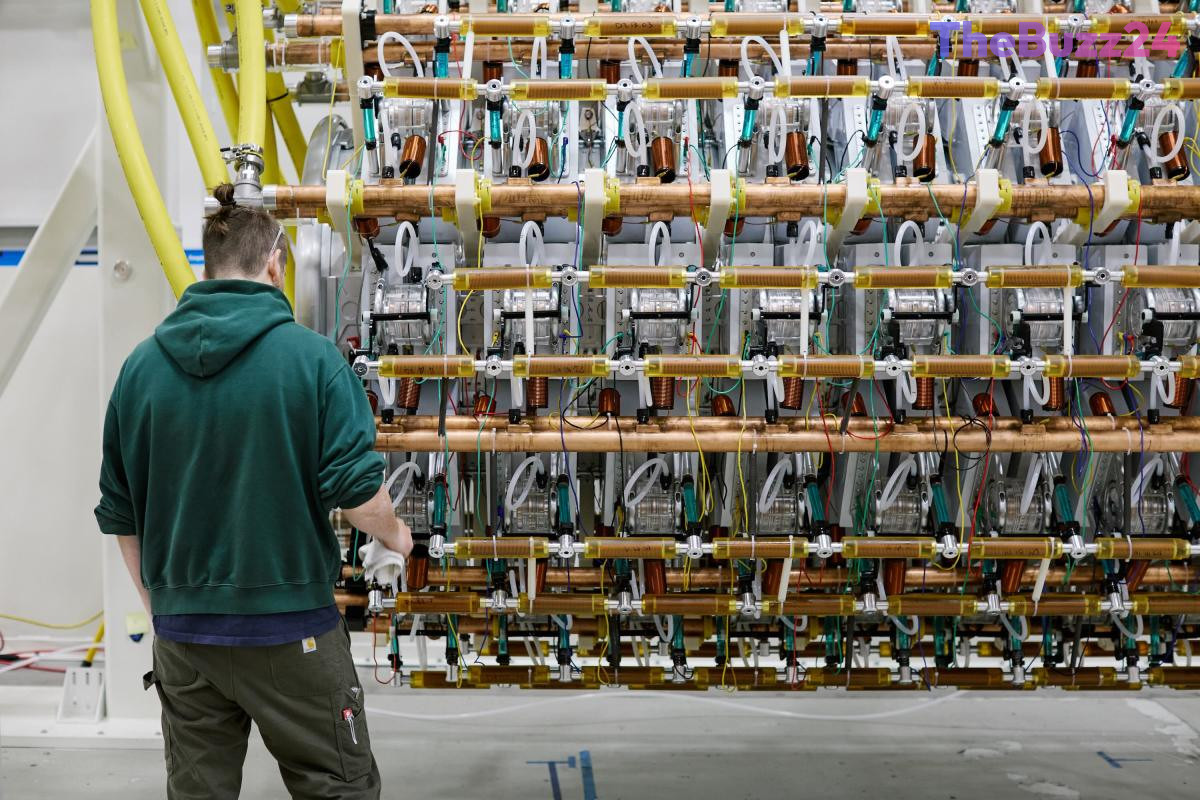
Pacific Fusion has successfully tested a new pulser module prototype, marking a significant step forward in the company’s quest to achieve commercial fusion energy. The prototype, which is roughly the size of a shipping container, demonstrated the ability to deliver a 440-gigawatt burst of power in just 80 nanoseconds. This technical achievement has triggered a new tranche of funding from the company’s Series A round, which has now surpassed $1 billion in total capital.
The company is utilizing an inertial confinement approach, which relies on precisely timed electrical pulses to compress fuel pellets until fusion occurs. Unlike other methods that depend on massive, expensive laser arrays, Pacific Fusion’s design employs a network of capacitors and switches to generate the necessary energy. The successful test of the subscale module confirms that the company’s engineering strategy is viable for scaling up to the 156-module configuration required for its upcoming demonstration facility.
Construction on the demonstration site is scheduled to begin this summer. While the facility will not include a steam turbine and therefore will not function as a traditional power plant, its primary goal is to reach ‘facility breakeven’—a state where the system generates more energy than it consumes to operate. By securing funding through a tranche-based model, the startup aims to maintain its focus on these critical technical milestones without the constant distraction of traditional fundraising cycles.
Key Takeaways
- Pacific Fusion successfully tested a prototype capable of a 440-gigawatt burst, securing additional funding for its Series A round, which now exceeds $1 billion.
- The company is pioneering an inertial confinement method that uses electrical pulses rather than lasers to trigger fusion reactions.
- Construction of a demonstration facility is set to begin this summer, with the ultimate goal of achieving facility-wide energy breakeven.
Editor’s Analysis & Impact
Pacific Fusion’s progress highlights a shift in the fusion energy sector toward more modular, cost-effective engineering solutions. By moving away from the massive, laser-based infrastructure seen at national laboratories and toward a scalable, capacitor-driven architecture, the company is attempting to lower the barrier to entry for commercial fusion. The use of a tranche-based funding model is a strategic move that mirrors biotech industry practices, allowing the firm to prioritize R&D velocity over capital acquisition. If the upcoming demonstration facility successfully achieves energy breakeven, it would represent a tectonic shift in the industry, proving that fusion can be achieved through repeatable, industrial-scale electrical engineering. However, the challenge remains in the extreme precision required for the timing of these pulses, which will be the ultimate test of the company’s hardware reliability at full scale.
Frequently Asked Questions
Q: What is inertial confinement fusion?
A: Inertial confinement is a method of fusion where a small fuel pellet is compressed by intense energy pulses—in this case, electrical—to create a magnetic field that forces atoms to fuse and release energy.
Q: What does 'facility breakeven' mean for Pacific Fusion?
A: Facility breakeven occurs when the fusion device produces more electricity than is required to power the entire facility's operations, a critical milestone for proving the viability of fusion as a future energy source.
AI Disclosure: This article is based on verified data and official reports. Our Team and AI have cross-referenced every financial detail with primary sources to ensure total accuracy.
More from this Category