Industrial Next Deploys AI-Powered Robotics to Revolutionize Factory Reconfiguration
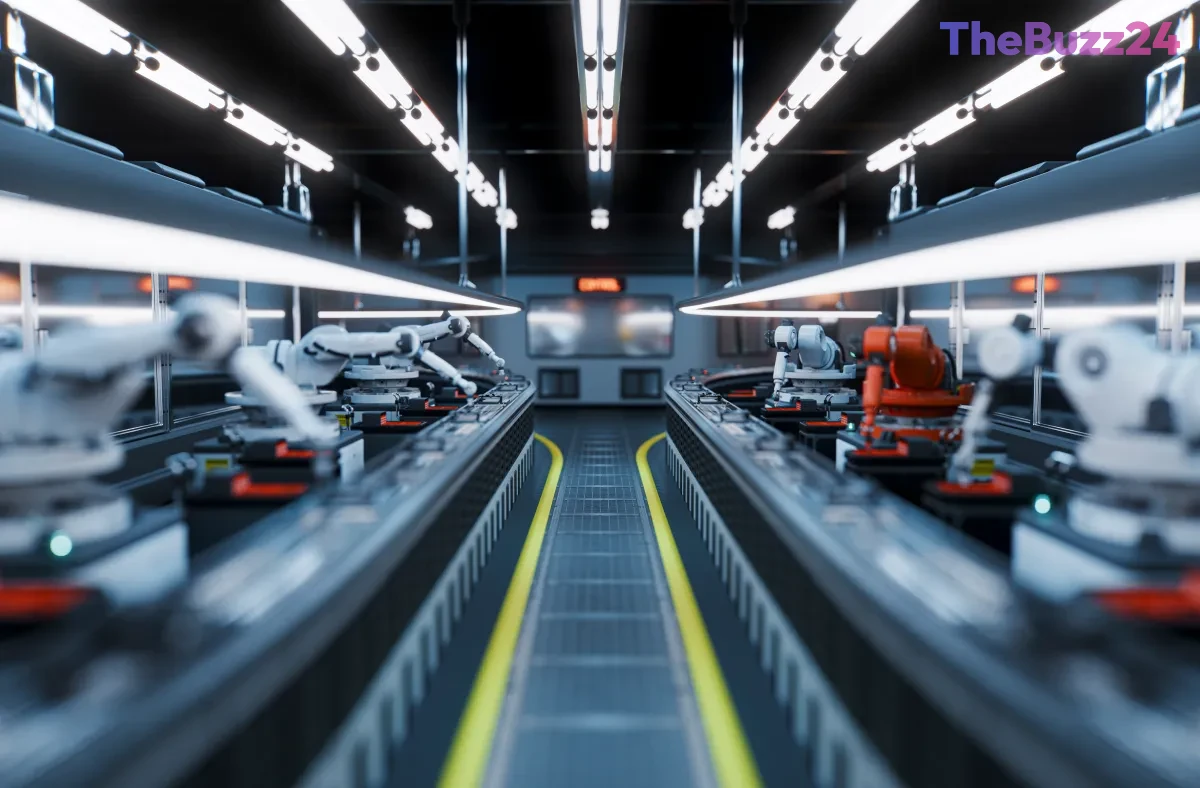
Modern manufacturing has long been constrained by rigid automation, where industrial robots are hard-coded to perform single, repetitive tasks. Modifying a production line to accommodate new product designs often demands extensive physical retooling and weeks or months of reprogramming. However, a San Francisco-based startup called Industrial Next is looking to upend this dynamic with autonomous, self-contained robotic workstations driven by proprietary foundation models that seamlessly integrate vision, task context, and physical motion.
Founded in 2021 by former Tesla engineers Lukas Pankau and Allen Pan, the company aims to eliminate the traditional boundaries of factory automation. Drawing on their collective experience at Tesla, Waymo, and other advanced technology firms, the founders recognized a persistent industry paradox: while engineers could design complex vehicles and utilize sophisticated machine learning algorithms, they remained stymied by industrial machinery that often lagged behind modern software capabilities. Industrial Next addresses this gap by utilizing high-fidelity simulation engines that allow robots to practice high-precision tasks in detailed virtual environments before deployment.
By teaching robots through simulation and demonstration rather than traditional scripts, Industrial Next enables manufacturing lines to be reconfigured in minutes rather than weeks. The startup’s technology is already seeing real-world implementation; its workstations are currently deployed in the production of a major global smartphone, successfully executing delicate maneuvers like threading flex cables and peeling protective films at human speeds. Building on this momentum, the company recently announced a strategic partnership with BMW Group Technology Office to evaluate its AI-driven dexterous manipulation capabilities for automotive manufacturing, moving closer to the ultimate vision of fully automated, end-to-end vehicle production.
Key Takeaways
- Industrial Next has developed AI-driven robotic stations that can be reconfigured in minutes instead of weeks.
- The startup was founded by former Tesla engineers Lukas Pankau and Allen Pan, who utilized high-fidelity simulation engines to train robots on high-precision tasks.
- The company has partnered with BMW Group Technology Office to evaluate its dexterous manipulation technology for automotive manufacturing.
Editor’s Analysis & Impact
The introduction of agile, AI-driven robotics into manufacturing marks a pivotal shift in industrial automation. For decades, the high cost and downtime associated with retooling assembly lines have forced manufacturers to prioritize product standardization over rapid innovation. By leveraging advanced simulation engines to train robots on complex physical tasks without extensive manual programming, startups like Industrial Next are lowering the barrier to flexible automation. If successful at scale, this technology could dramatically shorten product lifecycles, reduce capital expenditure for factory overhauls, and accelerate the transition toward fully autonomous manufacturing environments across multiple industries, most notably automotive and consumer electronics.
Frequently Asked Questions
Q: What makes Industrial Next's robots different from traditional industrial machines?
A: Traditional industrial robots are programmed for single, fixed tasks and require extensive physical retooling and reprogramming to change. Industrial Next uses AI-driven foundation models and high-fidelity simulation engines, allowing robots to learn and adapt to new tasks in minutes without traditional hard-coded scripts.
Q: Who founded Industrial Next?
A: The company was founded in 2021 by Lukas Pankau and Allen Pan, both of whom previously worked on automation and engineering efforts at Tesla.
Q: Which major automotive company is currently partnering with Industrial Next?
A: Industrial Next is partnering with BMW Group Technology Office to evaluate its AI-powered dexterous manipulation technology for manufacturing applications.
AI Disclosure: This article is based on verified data and official reports. Our Team and AI have cross-referenced every financial detail with primary sources to ensure total accuracy.
More from this Category