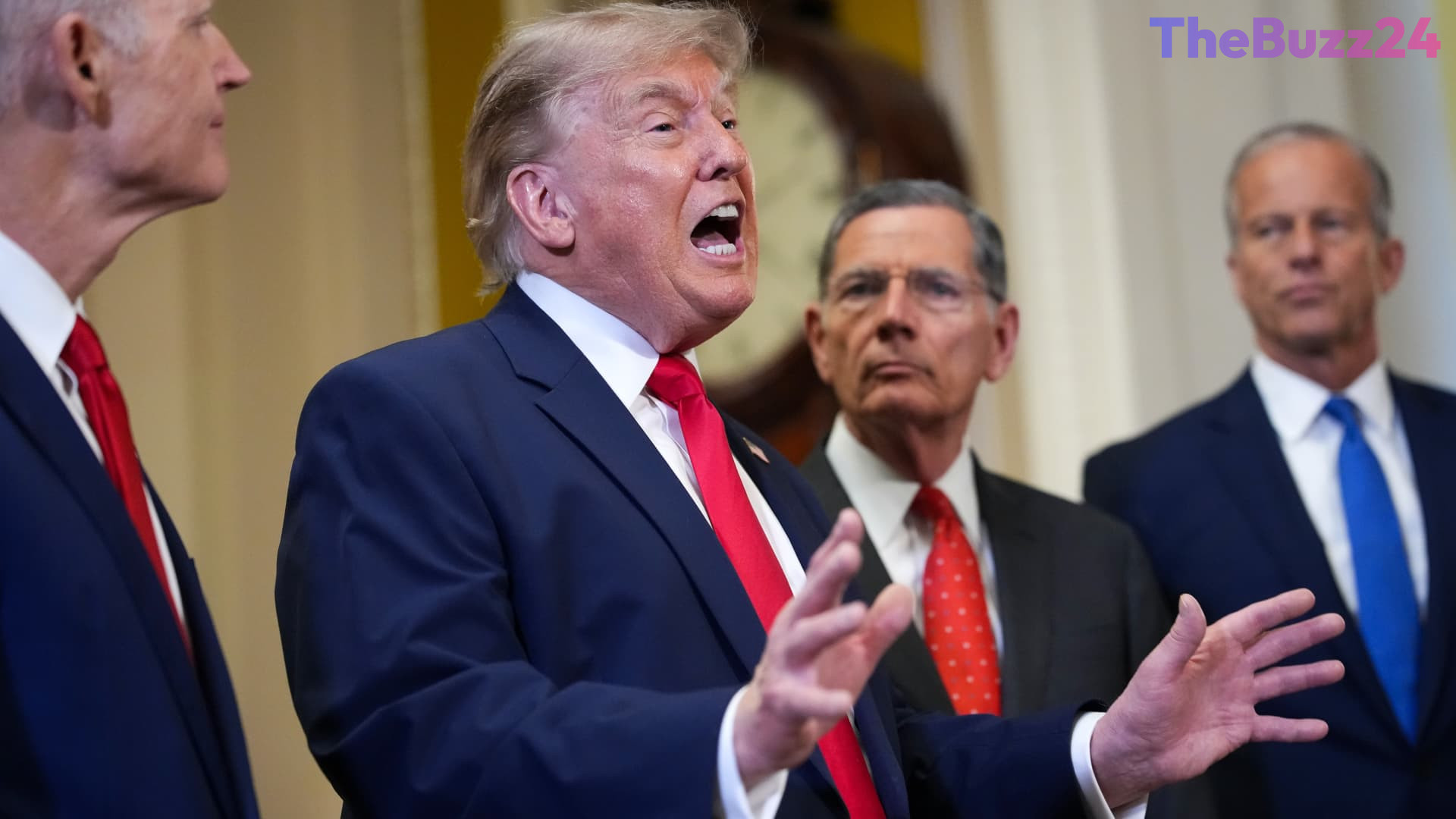
Internal Friction: Trump’s Loyalty Tests Complicate GOP Legislative Agenda
President Donald Trump is increasingly transforming potential Republican legislative victories into political liabilities, creating significant friction within his own party. In recent weeks, the administration has stalled progress on key priorities, including housing affordability and national security, by conditioning support on unrelated demands. This strategy has left many congressional Republicans frustrated, as they struggle to demonstrate a cohesive governing agenda ahead of the upcoming legislative recess.
One of the most prominent examples of this tension involved a bipartisan housing bill designed to curb private equity influence and increase housing supply. Despite overwhelming support from both chambers of Congress, the planned signing ceremony was abruptly scrapped by the President. This move has drawn sharp criticism from lawmakers like Rep. Don Bacon and Rep. Brian Fitzpatrick, who argue that the administration is employing aggressive real estate negotiation tactics to extract concessions on the SAVE America Act, a controversial election bill that currently lacks the necessary votes to pass.
The fallout from these maneuvers has paralyzed legislative momentum on Capitol Hill. Hardline conservatives, aligning with the President’s demands, have threatened to withhold support for any further legislation until the election bill is addressed. This internal blockade has complicated critical negotiations, including the renewal of foreign surveillance programs under the Foreign Intelligence Surveillance Act (FISA) and the confirmation of a new director of national intelligence. As the party grapples with these self-imposed obstacles, Democrats are positioning the chaos as evidence of a lack of focus on the economic issues most pressing to voters.
Beyond legislative gridlock, the administration has faced scrutiny over high-profile infrastructure projects, such as the renovation of the Lincoln Memorial reflecting pool. The project, which faced significant cost overruns and maintenance issues, has become a symbol of the broader administrative challenges currently facing the party. As Republicans attempt to maintain their narrow majorities, the ongoing infighting threatens to distract from their core messaging, potentially jeopardizing their standing with the electorate in the lead-up to the 2026 midterm elections.
Key Takeaways
- President Trump is leveraging bipartisan legislation as a bargaining chip to force passage of the SAVE America Act, causing significant friction within the GOP.
- Congressional Republicans are divided, with some lawmakers publicly criticizing the administration's 'spur of the moment' tactics while others support the blockade of legislative priorities.
- The internal conflict has stalled critical national security and housing initiatives, providing political ammunition for Democrats ahead of the 2026 midterms.
Editor’s Analysis & Impact
The current legislative gridlock highlights a shift in the modern conservative movement where executive loyalty tests are increasingly prioritized over traditional legislative wins. By treating bipartisan successes as leverage, the administration is effectively narrowing the party’s ability to present a unified front on economic issues like housing affordability. This strategy carries significant risk; if the GOP fails to deliver on tangible policy goals, they risk alienating moderate voters who prioritize governance over ideological purity. Furthermore, the focus on internal disputes rather than national security or economic stability may weaken the party’s brand as a competent steward of the economy. Looking ahead, the ability of House and Senate leadership to manage these internal fissures will be the primary determinant of whether the party can regain its momentum before the next election cycle.
Frequently Asked Questions
Q: Why are some Republicans frustrated with the President's recent actions?
A: Many Republicans are frustrated because the President is stalling popular, bipartisan legislation—such as a housing affordability bill—to force the passage of the SAVE America Act, which currently lacks sufficient support to pass.
Q: What is the SAVE America Act?
A: The SAVE America Act is a conservative election bill that requires proof of citizenship for voting; it has become a central point of contention and a prerequisite for the President's support on other legislative matters.
Q: How has the internal conflict affected the legislative calendar?
A: The infighting has led to a paralyzed House of Representatives, with some members refusing to vote on any legislation until the election bill is addressed, and has contributed to the Senate starting its recess early due to the lack of progress.
AI Disclosure: This article is based on verified data and official reports. Our Team and AI have cross-referenced every financial detail with primary sources to ensure total accuracy.
More from this Category