Australia Faces Prolonged Economic Headwinds as Global Energy Costs Surge
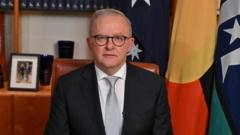
Prime Minister Anthony Albanese has issued a sobering assessment of Australia’s economic outlook, warning that the nation should prepare for several months of financial strain driven by escalating geopolitical tensions in the Middle East. In a direct address to the public, the Prime Minister highlighted that while Australia is not a direct participant in the conflict, the country remains highly vulnerable to the volatility of global energy markets.
The primary catalyst for this economic pressure is the disruption of the Strait of Hormuz, a critical maritime artery responsible for the transit of roughly 20% of the world’s oil and natural gas. As global energy prices climb, Australian households are already experiencing the ripple effects through sharp increases in the cost of petrol and diesel. This situation has drawn comparisons to previous global crises, prompting the government to take immediate action to stabilize the domestic market.
To mitigate the impact on citizens, the government has introduced a series of emergency measures, including a temporary 50% reduction in fuel excise and a three-month waiver on road user charges for heavy transport vehicles. These steps are part of a broader National Fuel Security Plan designed to diversify import sources and strengthen domestic reserves. Despite these interventions, officials have cautioned that the government cannot entirely shield the economy from international market forces.
In his address, Prime Minister Albanese called for national cooperation, urging citizens to reduce non-essential travel and utilize public transportation to manage fuel demand. While acknowledging the difficulty of the months ahead, the government expressed confidence that collective efforts and strategic planning will allow the nation to navigate the current instability.
Key Takeaways
- Australia is bracing for a multi-month period of economic pressure caused by rising global fuel costs linked to Middle Eastern conflict.
- The government has implemented a 50% cut to fuel excise and waived road user charges for heavy vehicles to provide immediate relief.
- Officials are urging citizens to practice fuel conservation and rely on public transit to help manage the supply-demand imbalance.
Editor’s Analysis & Impact
The current economic situation in Australia serves as a stark reminder of the fragility of global supply chains in an interconnected world. By relying on the Strait of Hormuz for a significant portion of energy transit, the nation is inherently exposed to geopolitical volatility far beyond its borders. The government’s decision to utilize fiscal levers like excise cuts is a necessary short-term palliative, but it highlights the urgent need for long-term energy independence and infrastructure diversification. Moving forward, the focus will likely shift toward accelerating the transition to renewable energy sources and strengthening regional trade partnerships to insulate the economy from future shocks. The success of these measures will depend on both government policy execution and the public’s willingness to adapt consumption habits during this period of transition.
Frequently Asked Questions
Q: Why are fuel prices rising in Australia if the country is not involved in the conflict?
A: Australia's fuel prices are tied to global oil markets. The conflict has disrupted the Strait of Hormuz, a major global shipping route, causing a worldwide supply shortage that drives up costs for all importing nations.
Q: What specific measures has the Australian government taken to help households?
A: The government has halved the fuel excise tax and temporarily waived road user charges for heavy vehicles for a period of three months to help lower costs for consumers and businesses.
AI Disclosure: This article is based on verified data and official reports. Our Team and AI have cross-referenced every financial detail with primary sources to ensure total accuracy.
More from this Category