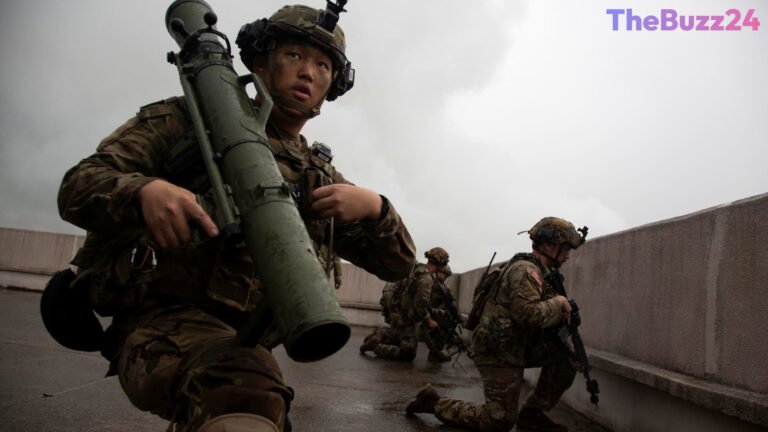
Japan Defends Military Modernization Amid Rising Tensions with China
Japan’s defense leadership has formally rejected accusations from Beijing regarding a resurgence of militarism, instead pointing to China’s own rapid military expansion as the primary source of regional instability. During a high-level defense summit in Singapore, Japanese officials emphasized that their recent efforts to bolster national security are a necessary response to evolving geopolitical threats rather than an aggressive shift in policy.
For twelve consecutive years, Japan has increased its defense spending, with the most recent budget exceeding 9 trillion yen. This trajectory aims to reach a target of 2% of GDP allocated to military capabilities, including the development of advanced surface-to-ship missiles and unmanned aerial and underwater systems. While critics, including Chinese officials, have labeled these moves as a return to historical militarism, Tokyo maintains that its actions are transparent and strictly defensive in nature.
Addressing the international community, Japanese representatives highlighted the disparity between Japan’s defensive posture and China’s possession of nuclear weapons and strategic bombers. The Japanese government continues to advocate for open dialogue, even as it navigates domestic pushback. Prime Minister Sanae Takaichi’s administration faces significant internal debate, with large-scale protests reflecting public anxiety over the potential erosion of the nation’s long-standing pacifist identity and the constitutional constraints that have defined Japan since the end of World War II.
Despite the friction, Japan has signaled a willingness to engage in communication with Beijing, though it remains firm on its right to modernize its forces. As the administration moves to revise key security documents and relax export rules for lethal weaponry, the balance between maintaining regional peace and ensuring national security remains a central challenge for the current government.
Key Takeaways
- Japan has rejected claims of 'new militarism,' arguing that its defense budget increases are a transparent response to regional security challenges.
- The Japanese government is steadily moving toward a defense spending target of 2% of its GDP, focusing on advanced missile and drone technology.
- Domestic opposition remains high, with significant public protests questioning the shift away from Japan's post-war pacifist constitutional framework.
Editor’s Analysis & Impact
The escalating rhetoric between Tokyo and Beijing underscores a fundamental shift in the Indo-Pacific security architecture. Japan’s move to normalize its military capabilities represents a departure from the post-WWII pacifist consensus, driven by the perception of an increasingly assertive China. For the defense industry, this shift signals a lucrative market for high-tech weaponry and autonomous systems as Japan seeks to strengthen its industrial base. However, the broader implication is a heightened risk of a regional arms race. If Japan continues to revise its constitutional constraints, it may trigger further diplomatic friction with neighbors who remain sensitive to historical grievances. The long-term outlook suggests a more militarized East Asia, where the traditional reliance on diplomatic soft power is being rapidly replaced by hard-power deterrence strategies.
Frequently Asked Questions
Q: Why is Japan increasing its defense budget?
A: Japan states that the increases are necessary to address new regional security challenges and to modernize its forces to contribute to peace, citing concerns over China's military expansion.
Q: What is the controversy surrounding Japan's military expansion?
A: The controversy stems from Japan's post-war pacifist constitution, specifically Article 9, which renounces war. Critics and protesters fear that increasing military capabilities and spending could lead to a return to militarism and escalate regional tensions.
AI Disclosure: This article is based on verified data and official reports. Our Team and AI have cross-referenced every financial detail with primary sources to ensure total accuracy.
More from this Category