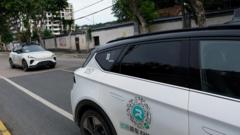
Widespread System Glitch Paralyzes Baidu’s Robotaxi Fleet in Wuhan
A massive operational failure recently brought approximately one hundred autonomous taxis to a sudden halt across Wuhan, China. The widespread disruption, which occurred on a Tuesday, was attributed to a significant system malfunction that caused the fleet to stop simultaneously. While the event caused significant confusion and was captured in numerous social media videos, local authorities confirmed that no passengers were injured and everyone was able to exit the stalled vehicles safely.
The incident involves Baidu’s Apollo Go service, one of the most prominent driverless taxi operations currently active. This technical failure comes at a pivotal moment for the company, as Baidu is aggressively pursuing global expansion. The tech giant has already established plans to pilot Apollo Go vehicles on United Kingdom roads starting in 2026, through strategic partnerships with ride-sharing leaders Uber and Lyft.
This mass stoppage has reignited the global debate regarding the reliability of autonomous transportation. While experts suggest that self-driving technology may offer higher safety averages than human drivers, the Wuhan event highlights a new category of risk: systemic failure. Unlike human error, which is typically isolated, software or network glitches can impact entire fleets at once, creating novel challenges for urban infrastructure and public safety policy.
This is not the first time the industry has faced such hurdles. Similar operational issues have been documented previously, including a city-wide stoppage of Waymo taxis in San Francisco following a power outage, and an Apollo Go vehicle incident in Chongqing. These recurring challenges underscore the complexities of transitioning from experimental testing to large-scale, reliable autonomous deployment.
Key Takeaways
- A system malfunction caused roughly 100 Baidu Apollo Go robotaxis to stall simultaneously in Wuhan.
- No injuries were reported, though the incident highlighted the unique risks of systemic software failures.
- The glitch occurs as Baidu prepares for planned UK expansion via Uber and Lyft in 2026.
Editor’s Analysis & Impact
The Wuhan incident serves as a critical reality check for the autonomous vehicle industry. While the technology promises to reduce human-driven accidents, the ‘systemic failure’ model—where an entire fleet fails simultaneously—presents a different, more concentrated risk profile than individual human errors. For companies like Baidu, these technical glitches are more than just operational nuisances; they are reputational hurdles that could delay regulatory approval in new markets like the United Kingdom. As the industry moves from controlled testing to mass deployment, the focus must shift from preventing single-vehicle accidents to ensuring the resilience of the entire network architecture. Investors and regulators will likely demand more robust fail-safes to prevent widespread urban paralysis.
Frequently Asked Questions
Q: Were any passengers injured during the robotaxi stoppage in Wuhan?
A: No, authorities confirmed that all passengers were able to exit the stalled vehicles safely and no injuries were reported.
Q: How will this incident impact Baidu's expansion into the UK?
A: While the glitch presents a challenge to public perception, Baidu's plans to pilot Apollo Go in the UK via Uber and Lyft in 2026 remain contingent on securing necessary regulatory approvals.
AI Disclosure: This article is based on verified data and official reports. Our Team and AI have cross-referenced every financial detail with primary sources to ensure total accuracy.
More from this Category