Millions Converge in Tehran for Khamenei’s Funeral Amidst Geopolitical Tensions
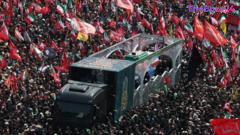
Massive crowds have filled the streets of Tehran for the funeral procession of Iran’s late supreme leader, Ayatollah Ali Khamenei, who was killed on the first day of the recent conflict with the United States and Israel. State television footage depicted tens of thousands, with state media reporting millions, of mourners lining a 10-kilometer route through the capital, watching Khamenei’s flag-draped coffin transported by a lorry through iconic locations like Enghelab Square.
The procession followed two days during which his body lay in state at Tehran’s Grand Mosalla mosque. Mourners displayed strong sentiments, waving Iranian flags and red banners symbolizing vengeance, alongside placards calling for the death of US President Donald Trump and throwing stones at a billboard displaying his image. A 22-year-old university student, Melika Nourian, expressed pride in showing the world their love for Khamenei and commitment to the Islamic Republic. Notable figures present included former President Mahmoud Ahmadinejad and current President Masoud Pezeshkian, along with Foreign Minister Abbas Araghchi and other senior officials. However, Mojtaba Khamenei, the late leader’s son and reported successor, was conspicuously absent, having reportedly been seriously wounded in the same Israeli air strike that claimed his father’s life.
Ayatollah Ali Khamenei, 86, had ruled Iran for 37 years since succeeding Ayatollah Ruhollah Khomeini in 1989. He maintained a firm grip on the nation’s politics and armed forces, often suppressing domestic challenges with force, and consistently adopted hard-line stances in foreign policy, particularly concerning the US and Israel. Israel’s Defence Minister Israel Katz confirmed their role in Khamenei’s elimination, stating it was due to threats against Israel’s existence and warning future Iranian leaders. The Iranian establishment aims for these funeral ceremonies to project an image of strength and unity following the recent war and widespread protests that swept the country earlier in the year.
These solemn events unfold as Iran and the US pursue a preliminary agreement to end the war and reopen the vital Strait of Hormuz, a crucial waterway for global oil and gas shipments. Both nations have set a two-month deadline to finalize a comprehensive deal addressing Iran’s nuclear program, US sanctions, and a permanent truce. Indirect talks in Doha have shown “positive progress,” with further meetings anticipated after the conclusion of Khamenei’s funeral rites, which will continue with processions and prayers in Qom, Karbala, Najaf, and culminate in his burial in Mashhad.
Key Takeaways
- Millions of mourners gathered in Tehran for the funeral procession of Ayatollah Ali Khamenei, demonstrating widespread public mourning and support for the Iranian system amidst geopolitical tensions.
- Khamenei's death resulted from an Israeli air strike, a key event in the recent conflict between Iran, the US, and Israel, with Israel's Defense Minister claiming responsibility for the action.
- The extensive funeral ceremonies are intended to project national unity and strength, occurring concurrently with ongoing peace negotiations between Iran and the US to end the war and address critical issues like the Strait of Hormuz and Iran's nuclear program.
Editor’s Analysis & Impact
The massive turnout for Ayatollah Ali Khamenei’s funeral underscores the enduring influence of the Islamic Republic’s leadership and its ability to mobilize public sentiment, even in the wake of a devastating war. This event serves as a critical moment for Iran, both internally and on the global stage. The transition of power, particularly the absence of Mojtaba Khamenei, will be closely watched for its implications on future domestic policies and the country’s stance on international relations. For global markets, the ongoing peace talks and the potential reopening of the Strait of Hormuz are paramount, promising stability in energy supplies. However, the deep-seated animosity expressed by mourners towards the US and Israel suggests that even with a peace agreement, regional tensions and the potential for future conflicts will remain a significant concern, shaping the geopolitical landscape for years to come.
Frequently Asked Questions
Q: Who was Ayatollah Ali Khamenei?
A: Ayatollah Ali Khamenei served as Iran's Supreme Leader for 37 years, from 1989 until his death. He succeeded Ayatollah Ruhollah Khomeini and held ultimate political and religious authority in the Islamic Republic, maintaining a hard-line stance on both domestic and foreign policy.
Q: How did Ayatollah Ali Khamenei die?
A: Ayatollah Ali Khamenei was killed in an Israeli air strike in Tehran on February 28. Israel's Defense Minister, Israel Katz, publicly confirmed Israel's responsibility for the strike, stating it was in response to threats against Israel's existence.
Q: What are the broader implications of his death for Iran and the region?
A: His death marks a significant leadership transition for Iran during a period of intense geopolitical activity, including a recent war and ongoing peace negotiations with the United States. The funeral ceremonies are being used by the Iranian establishment to project national unity and strength, while the country navigates complex challenges related to its nuclear program, international sanctions, and regional stability, particularly concerning its relations with the US and Israel.
AI Disclosure: This article is based on verified data and official reports. Our Team and AI have cross-referenced every financial detail with primary sources to ensure total accuracy.
More from this Category