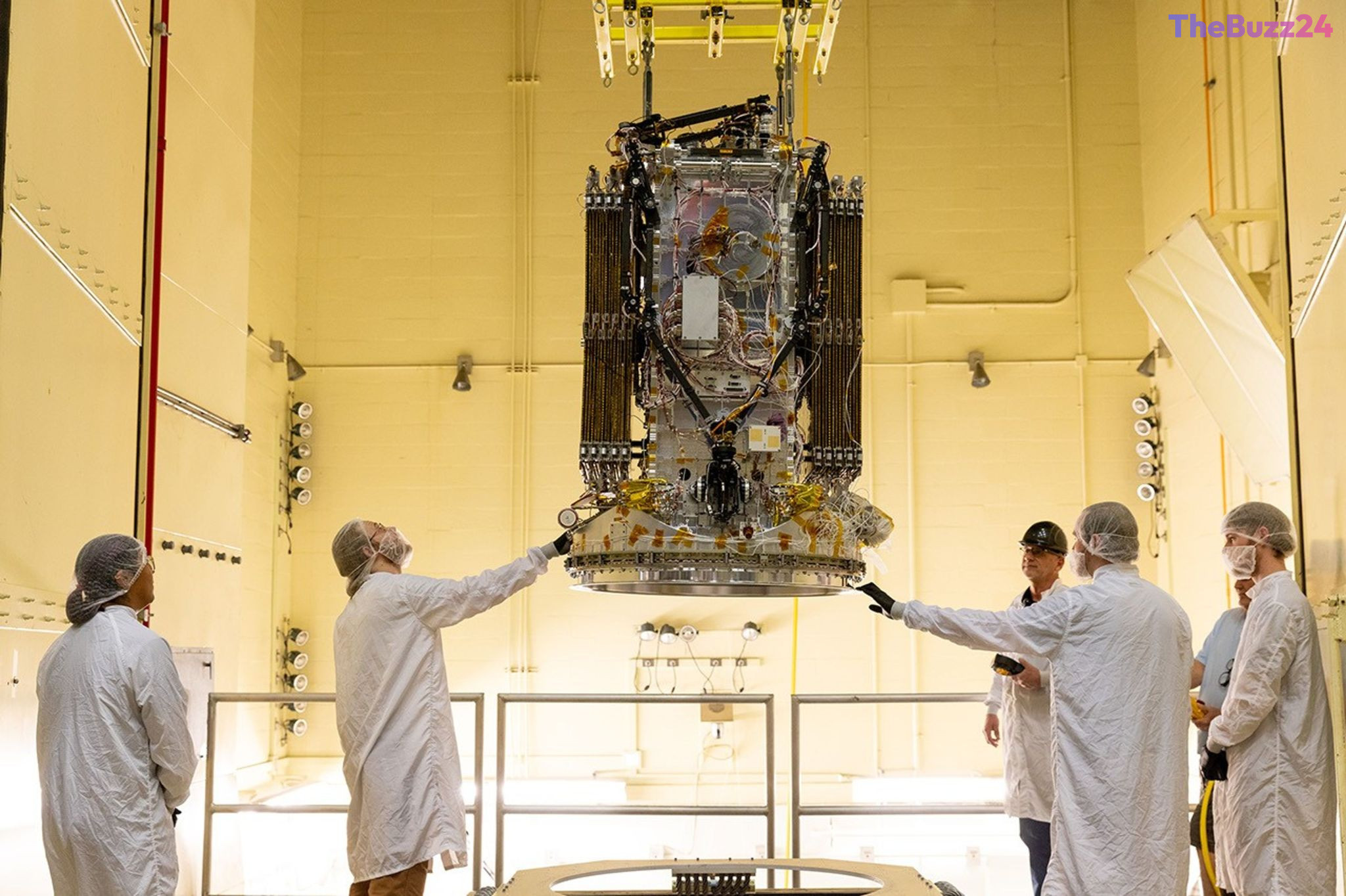
Robotic Mission Set to Extend Life of NASA’s Swift Space Observatory
NASA is partnering with Katalyst to launch a pioneering mission designed to extend the operational lifespan of the Neil Gehrels Swift Observatory. Since its deployment in 2004, the observatory has served as a cornerstone of high-energy astrophysics, providing critical data on gamma-ray bursts and other transient cosmic phenomena. To ensure its continued functionality, the mission will utilize a specialized robotic servicing spacecraft known as LINK to perform an orbital boost, effectively countering the natural orbital decay that threatens the telescope’s longevity.
The mission is slated for a late June launch, utilizing a Northrop Grumman Pegasus XL rocket. This launch vehicle will be deployed from an L-1011 Stargazer aircraft, a specialized air-launch method that offers the precision necessary for this delicate orbital maneuver. By increasing the observatory’s altitude, the LINK spacecraft will allow the telescope to continue its vital work in monitoring the universe’s most energetic events for years to come.
Ahead of the mission, officials are scheduled to host a media briefing at the Wallops Flight Facility in Virginia on June 17. This event will provide technical details regarding the Pegasus XL rocket and the mechanics of the LINK technology. The continued operation of the Swift observatory remains a high priority for the scientific community, as its ability to rapidly identify and coordinate follow-up observations of cosmic explosions remains unmatched in modern astronomy.
Key Takeaways
- NASA and Katalyst are deploying a robotic mission to boost the orbit of the Neil Gehrels Swift Observatory.
- The mission uses a Pegasus XL rocket launched from an L-1011 Stargazer aircraft to reach the observatory.
- Extending the telescope's life ensures the continued monitoring of gamma-ray bursts and other high-energy cosmic events.
Editor’s Analysis & Impact
The mission to service the Neil Gehrels Swift Observatory represents a fundamental shift in space exploration strategy, moving away from the traditional ‘launch and forget’ model toward active, in-orbit maintenance. By demonstrating the capability to perform orbital adjustments on existing assets, NASA and Katalyst are setting a vital precedent for the future of space infrastructure. This approach not only maximizes the return on investment for high-value scientific instruments but also addresses the growing need for sustainable space operations. If successful, this mission could catalyze a new industry sector focused on satellite servicing and life extension, ultimately reducing the accumulation of space debris and allowing for more efficient, long-term utilization of orbital assets. This is a significant milestone for the future of astronomical research and space sustainability.
Frequently Asked Questions
Q: What is the primary purpose of the Neil Gehrels Swift Observatory?
A: The observatory is designed to detect and monitor high-energy cosmic phenomena, specifically gamma-ray bursts, which are among the most powerful explosions in the universe.
Q: How does the LINK spacecraft plan to extend the observatory's life?
A: The LINK spacecraft will rendezvous with the observatory and perform an orbital boost, which increases the telescope's altitude to counteract the effects of orbital decay.
Q: Why is the air-launch method being used for this mission?
A: The Northrop Grumman Pegasus XL rocket is air-launched from an L-1011 Stargazer aircraft to provide the high level of precision required for the specific orbital insertion needed to reach the Swift Observatory.
AI Disclosure: This article is based on verified data and official reports. Our Team and AI have cross-referenced every financial detail with primary sources to ensure total accuracy.
More from this Category