Virginia Schools Leverage NASA Resources to Revolutionize STEM Education
A transformative educational initiative is currently reshaping science instruction across Virginia’s Tidewater region by merging NASA-developed curriculum with practical, field-based environmental research. By integrating the NASA eClips and GLOBE programs into local classrooms, thirty-eight educators from seven different school districts are successfully bridging the divide between abstract scientific theory and tangible, real-world application.
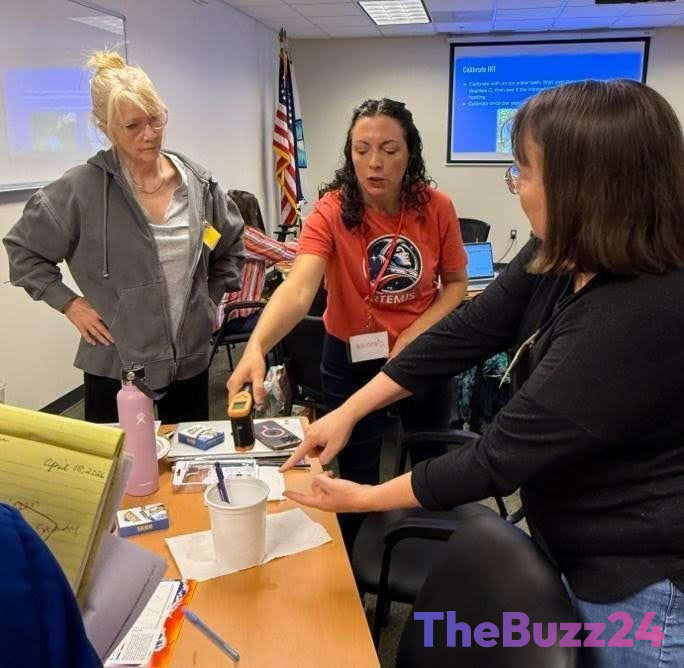
Recent professional development workshops hosted at the National Institute of Aerospace in Hampton provided teachers with intensive training in Earth systems science. Educators gained hands-on experience with professional-grade scientific instruments, including infrared thermometers, to analyze critical environmental issues such as soil composition, cloud opacity, and the urban heat island effect. These tools and methodologies have been meticulously aligned with Virginia’s Science Standards of Learning to ensure that complex topics like climate change and energy budgets are accessible and engaging for students.
Beyond the classroom, the initiative fosters a unique cross-sector collaboration that involves vocational students in the scientific process. Career and Technical Education students from Hampton and Norfolk public schools were tasked with constructing specialized weather instrument shelters that meet official GLOBE specifications. This hands-on involvement not only supports the scientific mission but also provides students with valuable vocational experience, creating a sustainable model for community-wide educational development.
Supported by funding from the Virginia General Assembly via the Coastal Virginia STEM Hub, this partnership between the National Institute of Aerospace and NASA Langley Research Center serves as a scalable blueprint for regional educational growth. By embedding authentic, data-driven inquiry into the local curriculum, the program ensures that students are better prepared for future careers in science, technology, engineering, and mathematics.
Key Takeaways
- Educators in Virginia are integrating NASA's eClips and GLOBE programs to provide students with authentic, data-driven scientific research experiences.
- The initiative features a unique cross-sector collaboration where vocational students build professional-grade weather instrument shelters for scientific use.
- The program is backed by the Virginia General Assembly and aims to serve as a scalable model for regional STEM education across the country.
Editor’s Analysis & Impact
This initiative represents a significant shift in how regional educational networks can leverage national scientific assets to improve local outcomes. By moving beyond traditional textbook learning and incorporating professional-grade instrumentation, the program addresses the critical need for STEM literacy in an increasingly data-driven economy. The inclusion of Career and Technical Education (CTE) students is particularly noteworthy, as it democratizes access to high-level research while providing practical, marketable skills. If successful, this model of ‘community-wide scientific inquiry’ could be replicated in other states, potentially narrowing the gap between academic preparation and the requirements of the modern workforce. The long-term implication is a more scientifically literate citizenry and a stronger pipeline of talent for the aerospace and environmental sectors, provided that funding remains consistent and the curriculum continues to evolve alongside technological advancements.
Frequently Asked Questions
Q: What is the primary goal of the NASA-backed STEM initiative in Virginia?
A: The goal is to bridge the gap between classroom theory and real-world scientific application by integrating NASA resources and hands-on environmental research into local school curricula.
Q: How are vocational students involved in this scientific program?
A: Career and Technical Education students from Hampton and Norfolk public schools are involved by building specialized weather instrument shelters that meet official GLOBE scientific specifications.
AI Disclosure: This article is based on verified data and official reports. Our Team and AI have cross-referenced every financial detail with primary sources to ensure total accuracy.
More from this Category