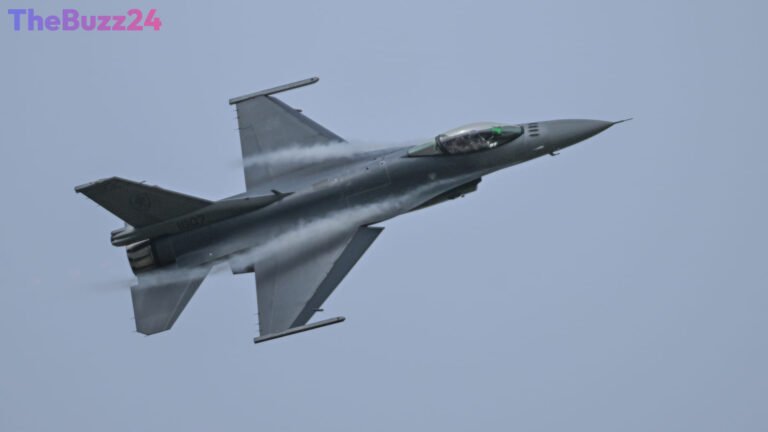
NASA Jets Soar Above Clouds to Unravel Solar Corona’s Fiery Mystery
During the recent total solar eclipse on August 12, 2026, NASA pilots embarked on a critical mission, flying specialized WB-57F high-altitude research aircraft from Houston, Texas, to Iceland. Their objective was to position themselves directly within the path of totality, offering scientists an unparalleled vantage point to study the Sun’s corona – the elusive outer atmosphere that remains significantly hotter than the Sun’s visible surface, a long-standing enigma in solar physics.
The unique alignment of a total solar eclipse provides a fleeting but invaluable window for researchers. As the Moon obscures the Sun’s brilliant disk, the fainter corona becomes visible, allowing for detailed observation. The data collected during these brief moments is crucial for understanding the complex mechanisms of energy and particle transfer within the corona and their outward propagation, which directly influences the space environment surrounding Earth and impacts space weather phenomena.
Operating at an altitude of approximately 50,000 feet, the WB-57F aircraft flew above the majority of atmospheric disturbances, including clouds, dust, and water vapor, which can impede ground-based observations. This elevated position not only minimized atmospheric interference but also enabled the aircraft’s sophisticated instruments to capture infrared wavelengths that are typically absorbed at lower altitudes. The success of this mission hinged on meticulous planning and execution, involving close collaboration between the science teams and the flight crew to precisely calculate the aircraft’s trajectory to remain within the Moon’s shadow as it traversed the North Atlantic.
Pilots John Gustine and Tom Parent, along with sensor equipment operator Cary Klemm, played pivotal roles. Gustine navigated the aircraft to maximize the time spent within the lunar shadow, while Klemm expertly managed the camera systems from the rear cockpit, adjusting focus and exposure in real-time to capture crucial data. This coordinated effort, supported by extensive maintenance and preparation by ground crews, underscores the complex, team-based nature of such advanced scientific endeavors. The insights gained from this mission are expected to deepen our understanding of fundamental solar processes, many of which are mirrored in astrophysical phenomena across the universe.
Key Takeaways
- NASA pilots flew specialized WB-57F aircraft to Iceland to observe the Sun's corona during the August 12, 2026, total solar eclipse.
- The high-altitude flights above atmospheric interference allowed for the collection of crucial data on the Sun's corona, aiming to solve the mystery of its extreme temperature.
- The mission highlights the complex coordination between flight crews, scientists, and maintenance teams to achieve advanced solar observation objectives.
Editor’s Analysis & Impact
This mission underscores NASA’s innovative approach to tackling fundamental scientific questions by leveraging advanced aerial platforms. The WB-57F’s ability to operate above the bulk of Earth’s atmosphere provides a unique advantage for observing specific solar phenomena, particularly during fleeting events like total solar eclipses. The data gathered has the potential to significantly advance our understanding of solar physics, plasma dynamics, and space weather, which has direct implications for satellite operations, communication systems, and astronaut safety. As solar activity continues to be a key factor in space exploration and technological reliance, such high-altitude observational campaigns are likely to become increasingly vital for both scientific discovery and practical applications.
Frequently Asked Questions
Q: Why is the Sun's corona hotter than its surface?
A: The exact mechanism heating the Sun's corona to millions of degrees Celsius, far hotter than its visible surface (photosphere) at around 5,500 degrees Celsius, is still a subject of intense scientific research. Leading theories involve the transport of energy from the Sun's interior through complex magnetic field interactions, potentially involving phenomena like magnetic reconnection or wave heating.
Q: What is a total solar eclipse and why is it important for studying the corona?
A: A total solar eclipse occurs when the Moon passes directly between the Sun and Earth, completely blocking the Sun's bright face. This temporary blockage allows the much fainter outer atmosphere, the corona, to become visible and observable from Earth. This is a rare opportunity because the corona is usually overwhelmed by the Sun's intense light.
Q: What are the advantages of using a WB-57F aircraft for eclipse observations?
A: The WB-57F is a high-altitude research aircraft capable of flying above most of Earth's atmosphere, typically around 50,000 feet. This altitude minimizes atmospheric distortion, dust, and water vapor interference, providing clearer views of celestial objects. It also allows instruments to capture wavelengths of light, such as certain infrared wavelengths, that are absorbed lower in the atmosphere.
AI Disclosure: This article is based on verified data and official reports. Our Team and AI have cross-referenced every financial detail with primary sources to ensure total accuracy.
More from this Category