NASA Streamlines Digital Simulation to Safeguard Spacecraft from Extreme Launch Forces
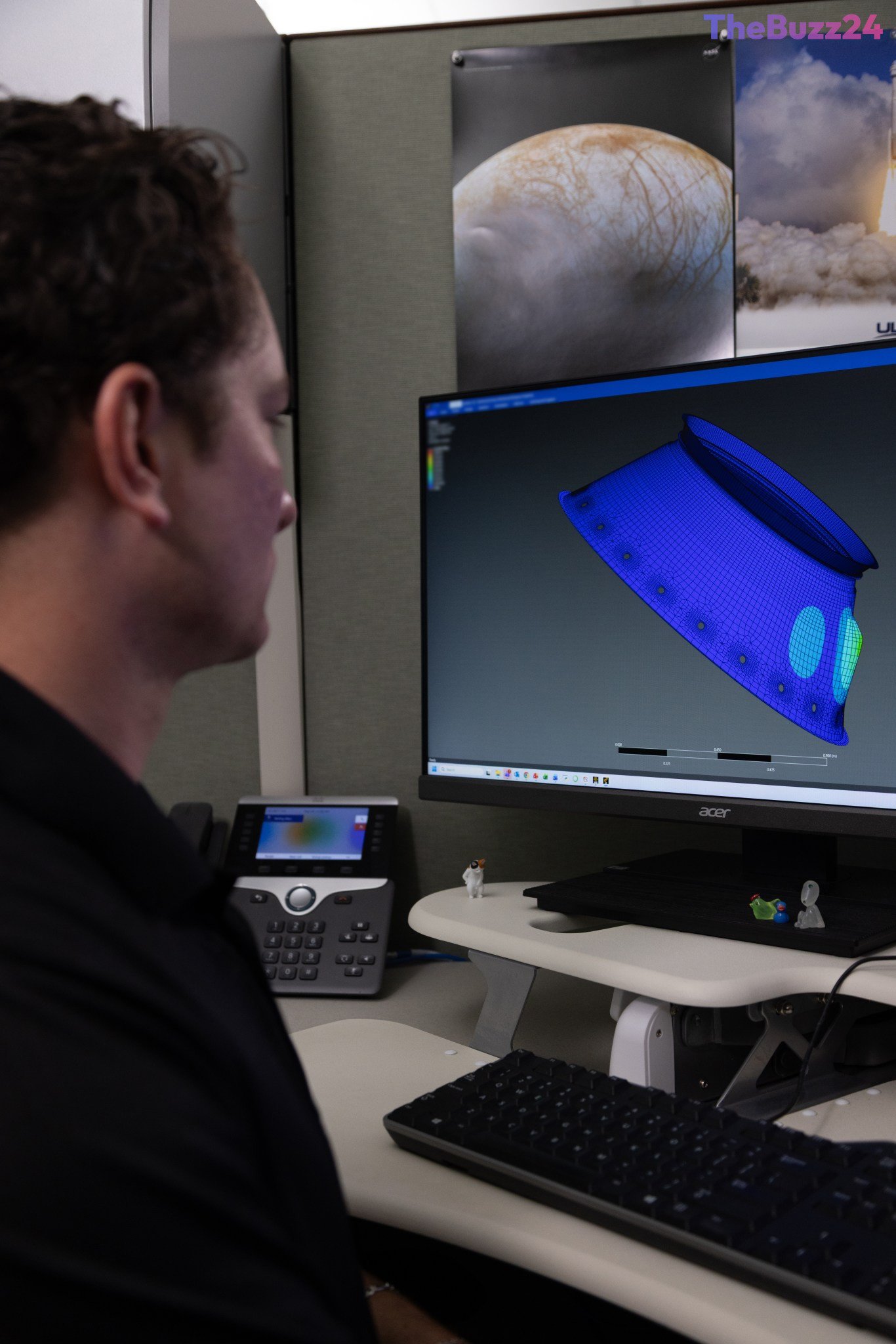
Engineers at NASA’s Kennedy Space Center in Florida are revolutionizing how spacecraft and launch vehicles are evaluated for structural stress. By adapting commercial digital modeling software into a standardized finite element workflow, the agency’s Dynamic Environments Group—part of the Launch Services Program Office—can now precisely simulate how violent shocks, intense acoustic vibrations, and physical forces impact rockets during ascent before hardware is constructed.
This upgraded computer-based simulation technique significantly elevates safety protocols by replacing legacy estimation techniques that relied on historical heuristics and simplified approximations. Finite element analysis works by dissecting complex physical structures into smaller digital segments, allowing advanced software to predict structural responses under severe flight conditions. During a recent evaluation of a commercial partner’s launch vehicle, engineers used the new digital template to quickly run complex dynamic scenarios, uncover previously overlooked transit shock risks, and verify overall hardware durability.
Because scientific instruments destined for space—such as planetary rovers and climate monitoring satellites—are extremely delicate, catching structural flaws on the ground is essential. Once a rocket clears the pad, physical repairs are impossible. The new digital workflow drastically accelerates engineering assessments, saving months of manual modeling work while ensuring that all components meet rigorous vibration and shock thresholds to maximize overall mission success.
Key Takeaways
- NASA's Launch Services Program established a new standardized finite element modeling process to simulate liftoff shock and severe vibration.
- The software workflow replaces legacy approximations, allowing engineers to identify potential failure points and transit risks long before hardware construction.
- The streamlined approach accelerates mission certification by months, providing independent verification of commercial rocket safety.
Editor’s Analysis & Impact
The integration of standardized finite element modeling by NASA reflects a broader trend toward digital-twin technology and predictive engineering in the aerospace sector. As space agencies increasingly rely on commercial launch providers, independent and rapid verification tools become crucial for mission assurance. Launching multi-billion-dollar scientific assets carries high stakes, where even minor unexpected vibrations can cause catastrophic structural failures. By modernizing legacy dynamic assessment methods with accessible software templates, NASA not only dramatically shortens payload certification timelines but also sets a higher engineering standard across the commercial space supply chain.
Frequently Asked Questions
Q: Why are vibration and shock analysis important for spacecraft?
A: Rockets undergo intense acoustic vibration, mechanical shaking, and physical shock during engine ignition and atmospheric ascent. Precise analysis ensures sensitive instruments and structural components survive these forces without failing during flight.
Q: What is finite element modeling in aerospace engineering?
A: Finite element modeling is a computer simulation technique that breaks complex structures down into smaller virtual pieces. This allows engineers to accurately calculate how stress, vibration, and physical forces will interact with hardware under real-world conditions.
Q: How does this new workflow help NASA's commercial launch partners?
A: The standardized workflow enables NASA engineers to independently run 'what-if' dynamic comparisons and verify partner test data in-house, cutting assessment time down by months and catching risks early in the launch preparation process.
AI Disclosure: This article is based on verified data and official reports. Our Team and AI have cross-referenced every financial detail with primary sources to ensure total accuracy.
More from this Category