Decoding Stablecoin Dynamics: Unpacking the Drivers Behind Supply Fluctuations
The landscape of stablecoin supply, particularly for major assets like USDC and USDT, experienced a notable shift in 2026, moving from robust expansion in 2025 to a period of stagnation. While 2025 saw the combined supply of these stablecoins surge past $255 billion, the subsequent year has witnessed neither achieving more than 10% month-over-month growth. This recent slowdown prompts a deeper examination into the underlying factors that influence the issuance and redemption of these crucial digital assets, which serve as foundational components for lending protocols, token swaps, and global remittances, especially in economies facing high inflation.
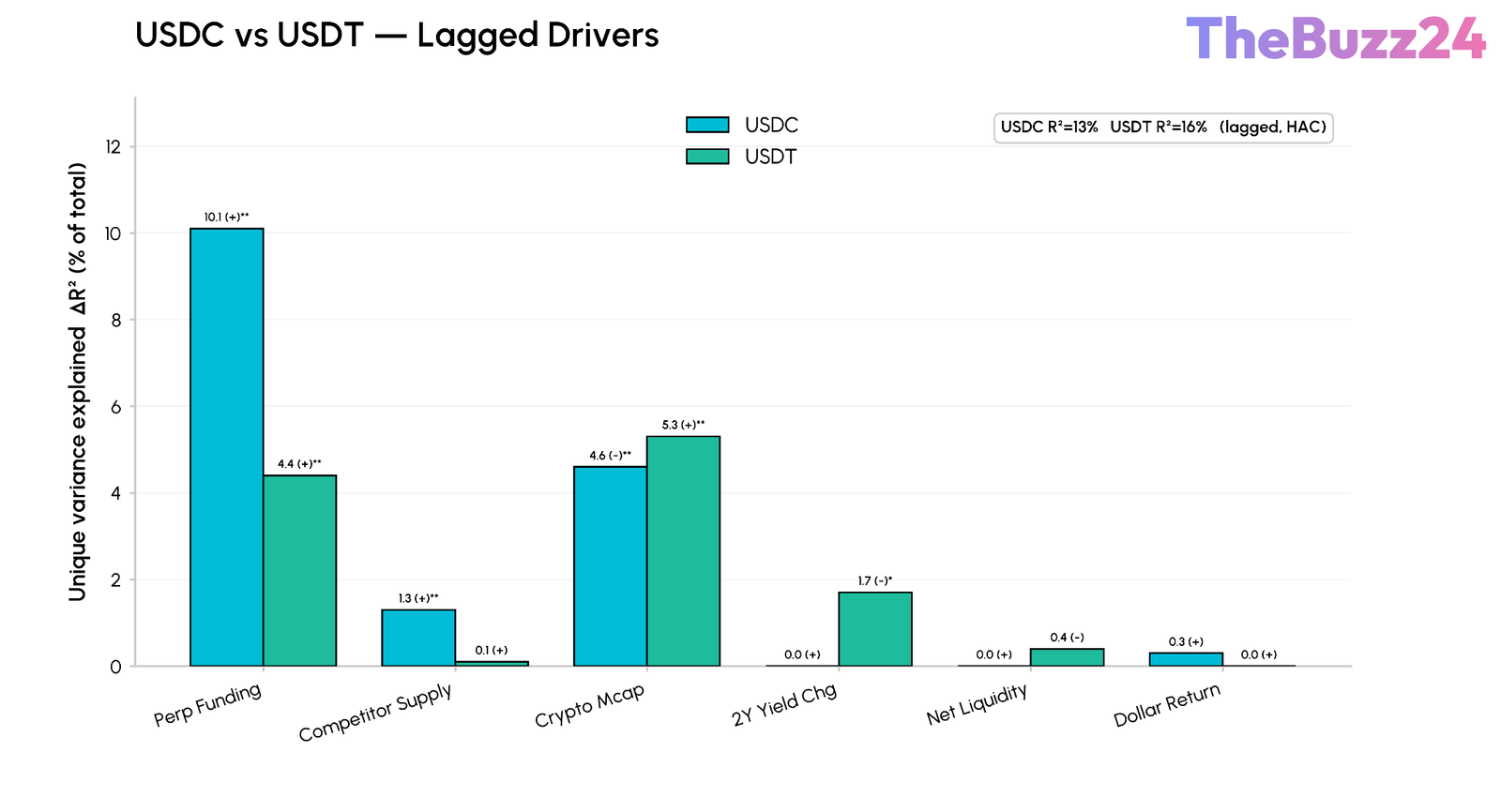
In-depth analysis reveals that several key variables significantly contribute to the variance in weekly USDC and USDT supply growth. Among the most prominent are perpetual funding rates and the total cryptocurrency market capitalization. Elevated perpetual funding rates, which reflect increased demand for leverage in BTC and ETH markets, are strongly associated with faster stablecoin supply growth in the subsequent week. This suggests that traders often mint stablecoins to serve as collateral for leveraged positions. While this holds true for both USDC and USDT, the impact varies, with USDT serving as the primary margin asset for a larger share of centralized exchange futures markets, whereas USDC’s growth is more concentrated in decentralized finance (DeFi) platforms like Hyperliquid, dYdX, and Deribit.
Further distinctions emerge when considering the impact of overall crypto market returns. Rising market conditions tend to correlate with faster USDT growth, indicating its role in facilitating risk-on leverage. Conversely, USDC growth often slows when the crypto market rises, and expands when markets fall, consistent with its use as “dry powder” or an asset for on-chain yields during periods of deleveraging or market uncertainty. An additional factor, the “carry spread”—defined as the difference between a stablecoin’s on-chain lending yield (e.g., Aave v3) and traditional treasury bill rates—proves particularly significant for USDC. A widening carry spread encourages more USDC minting to capitalize on higher on-chain yields, reinforcing its deep integration within the DeFi ecosystem.
Despite these identified correlations, a substantial portion of stablecoin supply variance remains unexplained by current models, highlighting the complexity of the market. Factors such as issuer treasury operations, specific mint/redemption incentives, varying on/off-ramp integrations, and evolving regulatory environments across different jurisdictions likely play significant, yet harder to quantify, roles. As the cryptocurrency industry continues to mature and attract institutional capital, understanding these dynamic drivers will be crucial for anticipating market movements and adapting to new economic regimes.
Key Takeaways
- USDC and USDT supply growth experienced significant stagnation in 2026 after a robust expansion in 2025, signaling a shift in market dynamics.
- Perpetual funding rates and total crypto market capitalization are key drivers, with high funding rates indicating increased demand for stablecoins as collateral for leveraged positions.
- The "carry spread" (on-chain yield vs. traditional yields) is a particularly strong factor for USDC, underscoring its integral role in decentralized finance and yield-seeking strategies.
Editor’s Analysis & Impact
The recent stagnation in stablecoin supply growth, particularly for USDC and USDT, signals a potential cooling in the broader crypto market’s leverage appetite or a shift in capital allocation. Stablecoins are the lifeblood of the digital asset economy, facilitating liquidity and enabling complex financial operations. Understanding their growth drivers, such as perpetual funding rates and carry spread, provides critical insights into market sentiment and the health of both centralized and decentralized finance ecosystems. The differentiated behavior of USDC and USDT underscores their distinct roles: USDT often fuels speculative leverage on centralized exchanges, while USDC is more deeply embedded in DeFi for yield generation and collateral. As institutional adoption continues, new factors may emerge, and regulatory clarity could significantly impact stablecoin issuance and demand, potentially leading to new growth regimes or further consolidation among stablecoin providers.
Frequently Asked Questions
Q: What are stablecoins and why are they important in the crypto market?
A: Stablecoins are cryptocurrencies designed to maintain a stable value, typically pegged to a fiat currency like the U.S. dollar. They are crucial for facilitating transactions, providing liquidity, enabling lending and borrowing, and offering a stable store of value within the volatile cryptocurrency ecosystem.
Q: Why did stablecoin supply growth stagnate in 2026 compared to 2025?
A: After significant growth in 2025, stablecoin supply growth stagnated in 2026 due to a combination of factors, including potentially reduced demand for leverage in crypto markets, shifts in overall market sentiment, and macroeconomic conditions. The analysis suggests that while some factors like perpetual funding rates still drive growth, their overall impact might have lessened or other counteracting forces emerged.
Q: How do the growth drivers for USDC and USDT differ?
A: While both are influenced by perpetual funding rates, USDT's growth is more strongly associated with rising crypto markets and risk-on leverage, often on centralized exchanges. USDC, conversely, tends to see increased minting when crypto markets fall (as a flight to safety or "dry powder") and is significantly driven by the "carry spread," reflecting its deeper integration with on-chain DeFi lending and yield opportunities.
AI Disclosure: This article is based on verified data and official reports. Our Team and AI have cross-referenced every financial detail with primary sources to ensure total accuracy.
More from this Category