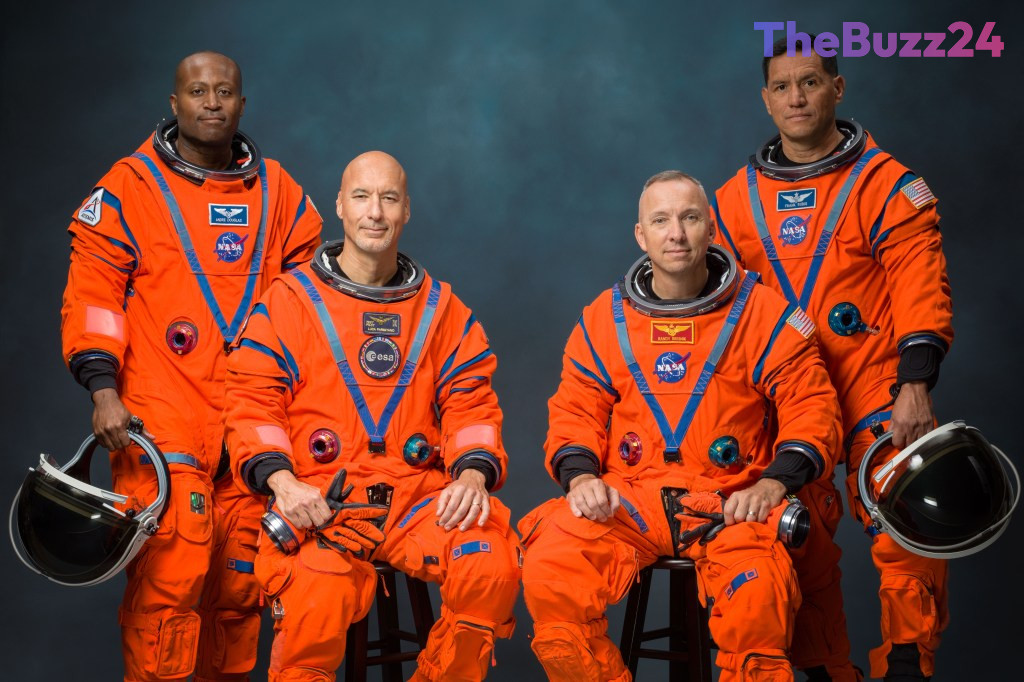
NASA Unveils Artemis III Crew and Mission Roadmap for 2027 Lunar Testing
NASA has officially announced the crew for the upcoming Artemis III mission, a critical flight test scheduled for 2027. This mission serves as a vital precursor to Artemis IV, which aims to land humans on the lunar South Pole by 2028. The Artemis III crew includes commander Randy Bresnik, pilot Luca Parmitano of the European Space Agency (ESA), and mission specialists Andre Douglas and Frank Rubio, with Bob Hines serving as the backup crew member.
The mission will launch from the Kennedy Space Center in Florida, utilizing the Space Launch System (SLS) rocket to propel the Orion spacecraft into low-Earth orbit. A primary objective of this flight is to demonstrate complex rendezvous and docking capabilities with test versions of human landing systems currently under development by private partners Blue Origin and SpaceX. This choreography of multiple high-powered launches will test integrated equipment, software, and communication interfaces between the Orion capsule and the commercial landers.
This mission marks a significant milestone for international collaboration, as it is the first time an ESA astronaut has been assigned to an Artemis flight. The crew will spend approximately two weeks in space, conducting rigorous testing before returning to Earth for a splashdown in the Pacific Ocean. The success of this mission is considered essential for refining the technologies and operational procedures required for future long-term lunar exploration and eventual human missions to Mars.
Key Takeaways
- NASA has selected a four-person crew, including an ESA astronaut, for the 2027 Artemis III mission.
- The mission will focus on testing rendezvous and docking procedures with commercial lunar landers from Blue Origin and SpaceX.
- Artemis III acts as a critical technical bridge between the Artemis II flight and the planned 2028 lunar South Pole landing.
Editor’s Analysis & Impact
The Artemis III mission represents a pivotal shift in space exploration, moving from purely government-led initiatives to a hybrid model heavily reliant on commercial partnerships. By integrating SpaceX and Blue Origin into the core flight testing phase, NASA is effectively outsourcing high-risk development while maintaining oversight of critical mission architecture. This strategy not only accelerates the timeline for lunar return but also creates a competitive ecosystem for space logistics. The inclusion of international partners like the ESA underscores the geopolitical importance of the Artemis program, positioning it as a global standard for deep-space cooperation. If successful, the operational lessons learned from these complex docking maneuvers will provide the necessary blueprint for sustainable lunar infrastructure and the long-term goal of crewed missions to Mars, effectively signaling a new era of industrial space capability.
Frequently Asked Questions
Q: What is the primary goal of the Artemis III mission?
A: The primary goal is to conduct complex flight tests, including rendezvous and docking maneuvers with commercial lunar landers from Blue Origin and SpaceX, to prepare for future lunar surface missions.
Q: Who are the crew members selected for Artemis III?
A: The crew consists of commander Randy Bresnik, pilot Luca Parmitano (ESA), and mission specialists Andre Douglas and Frank Rubio, with Bob Hines serving as the backup.
AI Disclosure: This article is based on verified data and official reports. Our Team and AI have cross-referenced every financial detail with primary sources to ensure total accuracy.
More from this Category