Curiosity Rover Clears Obstruction, Resumes Martian Geological Survey
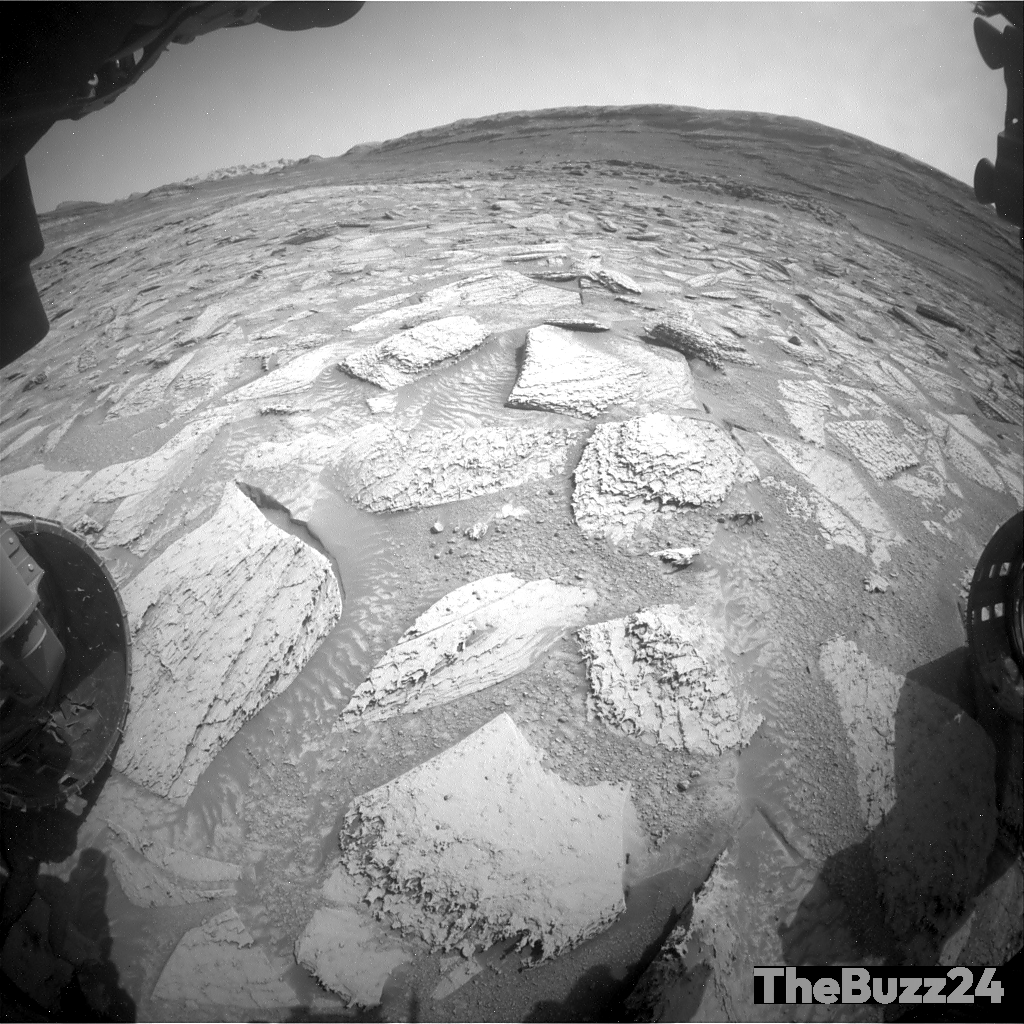
The Curiosity Mars rover has successfully overcome a rare mechanical hurdle that threatened to stall its ongoing scientific mission. During a routine sampling operation on April 25, 2026, the rover drilled into a geological formation known as ‘Atacama.’ However, the process did not go as planned; a 28.6-pound rock fragment became lodged in the drill’s sleeve, failing to detach when the robotic arm retracted. This incident marked a first for the long-running mission, as the rover had never previously encountered a sample that refused to separate from its drilling apparatus.
Initial recovery efforts focused on clearing the obstruction through vibration techniques. Mission controllers attempted to shake the debris loose on April 25 and again on April 29, utilizing various arm orientations and vibration cycles. While these attempts managed to dislodge some surrounding sand, the primary rock fragment remained firmly wedged, posing a potential risk to the rover’s ability to conduct future drilling operations.
On May 1, the operations team implemented a more sophisticated recovery strategy. By coordinating a precise sequence of tilting the robotic arm, rotating the drill mechanism, and applying controlled vibrations, the team successfully caused the rock to fracture and fall away from the drill bit. With the obstruction cleared, Curiosity has returned to its primary objective: analyzing the Martian surface for evidence of past environmental conditions that may have once supported life.
Key Takeaways
- The Curiosity rover successfully cleared a 28.6-pound rock that became stuck in its drill sleeve during a sampling mission.
- Initial attempts to dislodge the rock using simple vibration techniques were unsuccessful, requiring a more complex multi-axis maneuver.
- The rover is now fully operational and has resumed its scientific exploration of the Martian surface.
Editor’s Analysis & Impact
The successful resolution of this mechanical anomaly highlights the remarkable adaptability of the Curiosity mission team. Operating a robotic laboratory millions of miles away requires precise remote engineering, and the ability to troubleshoot hardware issues in real-time is critical for the longevity of planetary exploration. This event underscores the inherent risks of autonomous drilling in unpredictable extraterrestrial environments. As Curiosity continues its journey, the lessons learned from this maneuver will likely inform the operational protocols for future missions, including the Perseverance rover and upcoming sample-return initiatives. The incident serves as a reminder that even after years of successful operation, the harsh and unpredictable nature of the Martian landscape continues to present unique engineering challenges that require innovative, ground-based solutions.
Frequently Asked Questions
Q: Why was the rock stuck in the drill a problem for Curiosity?
A: The rock obstructed the drill bit, which is essential for collecting geological samples. Without a clear drill, the rover could not continue its primary mission of analyzing Martian soil and rock composition.
Q: How did the team finally remove the rock?
A: The team used a combination of tilting the robotic arm, rotating the drill mechanism, and applying vibrations, which caused the rock to fracture and fall off.
AI Disclosure: This article is based on verified data and official reports. Our Team and AI have cross-referenced every financial detail with primary sources to ensure total accuracy.
More from this Category