Breaking the Sound Barrier: NASA’s Breakthrough in Martian Aviation
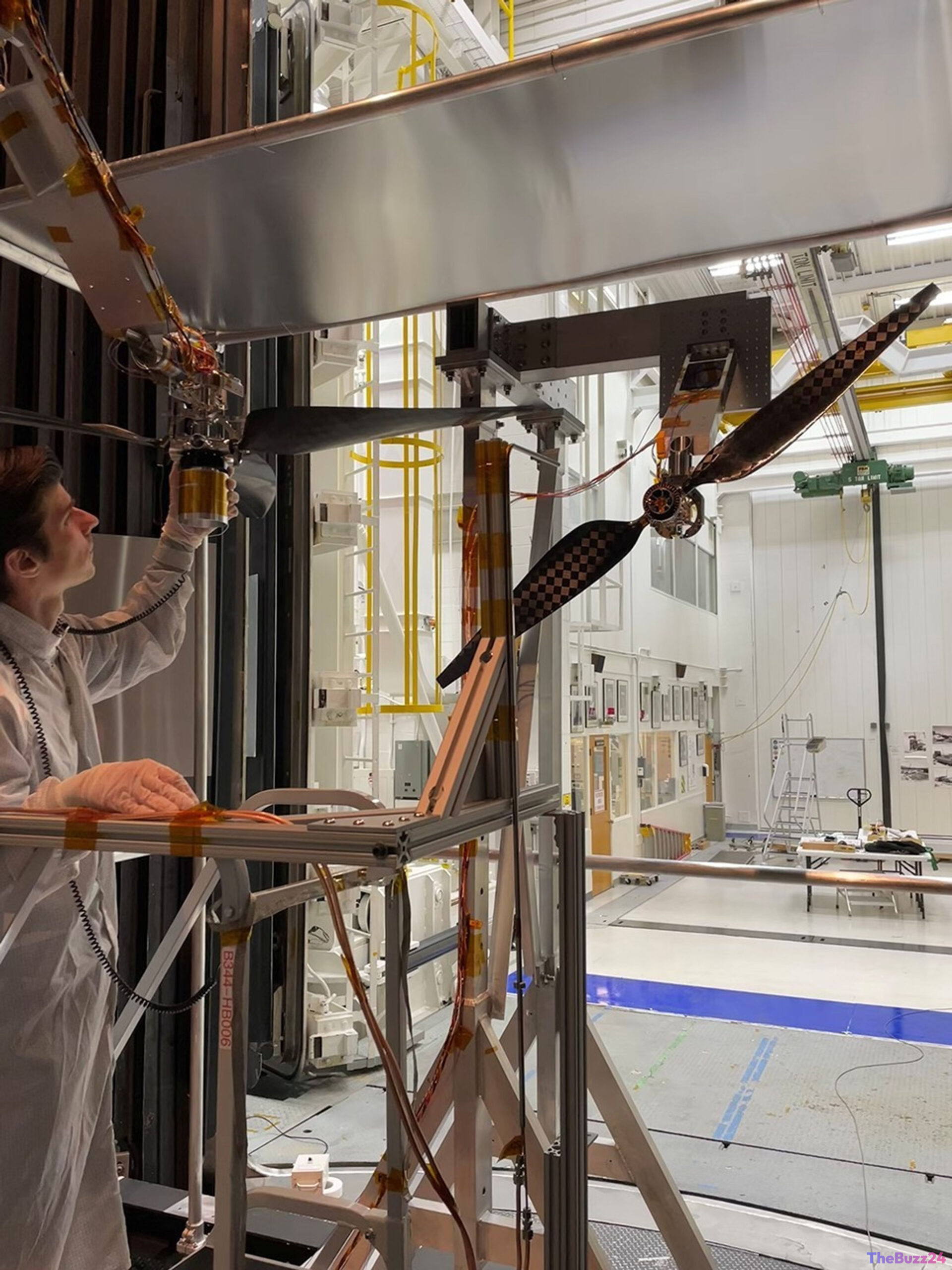
Engineers at the Jet Propulsion Laboratory have achieved a significant milestone in extraterrestrial flight technology by successfully testing next-generation rotor blades engineered for future Mars missions. During a series of high-stakes trials in the 25-Foot Space Simulator, the team evaluated a sophisticated three-bladed rotor system designed to function at supersonic speeds. By employing a secondary, vertically aligned rotor to simulate a controlled headwind, researchers successfully pushed the tips of the primary blades beyond Mach 1.
The experimental data confirms that these advanced components can endure the intense aerodynamic stresses associated with breaking the sound barrier without suffering structural failure. This achievement marks a pivotal advancement for the Mars Exploration Program, as it directly addresses the challenges of operating aerial vehicles within the thin, low-density Martian atmosphere. By overcoming these physical limitations, the agency aims to drastically improve the range, payload capacity, and operational efficiency of future flight missions.
Conducted in late 2025, this testing campaign signals a new era for planetary exploration. The ability to maintain rotor integrity at supersonic speeds opens the door for more complex aerial missions, allowing scientists to deploy drones and aircraft to rugged, high-altitude, or remote regions of the Red Planet that remain unreachable for traditional ground-based rovers. This development effectively expands the scope of potential scientific discovery on Mars.
Key Takeaways
- NASA engineers successfully tested three-bladed rotors capable of reaching supersonic speeds in a simulated Martian environment.
- The new rotor design maintains structural integrity under the extreme aerodynamic stress of breaking the sound barrier.
- This technology will enable future aerial missions to reach previously inaccessible regions of Mars, enhancing scientific exploration capabilities.
Editor’s Analysis & Impact
The successful testing of supersonic rotor blades for Mars represents a paradigm shift in planetary exploration. By moving beyond the limitations of subsonic flight, NASA is effectively increasing the ‘reach’ of its scientific instruments, allowing for rapid transit across the Martian surface. This development has profound implications for the future of autonomous exploration, as it reduces the reliance on slow-moving, terrain-dependent rovers. From an industry perspective, this breakthrough validates the investment in high-speed aerodynamic research for low-density atmospheres, which may eventually influence terrestrial drone technology and high-altitude flight systems. As the agency prepares for more ambitious missions, the ability to deploy high-speed aerial scouts will likely become a cornerstone of future Mars architecture, potentially accelerating the timeline for both robotic and human-led exploration efforts.
Frequently Asked Questions
Q: Why is it difficult to fly at supersonic speeds on Mars?
A: The Martian atmosphere is extremely thin, roughly 1% the density of Earth's atmosphere at sea level. This makes generating lift difficult and requires rotors to spin at much higher speeds, often approaching or exceeding the speed of sound, which creates intense aerodynamic stress.
Q: How will this technology change future Mars missions?
A: Supersonic rotors will allow aerial vehicles to carry heavier scientific payloads and travel much greater distances than current technology allows, enabling the exploration of deep canyons, high mountains, and other rugged terrain that rovers cannot traverse.
AI Disclosure: This article is based on verified data and official reports. Our Team and AI have cross-referenced every financial detail with primary sources to ensure total accuracy.
More from this Category