Perseverance Rover Marks Milestone with Stunning Martian Selfie
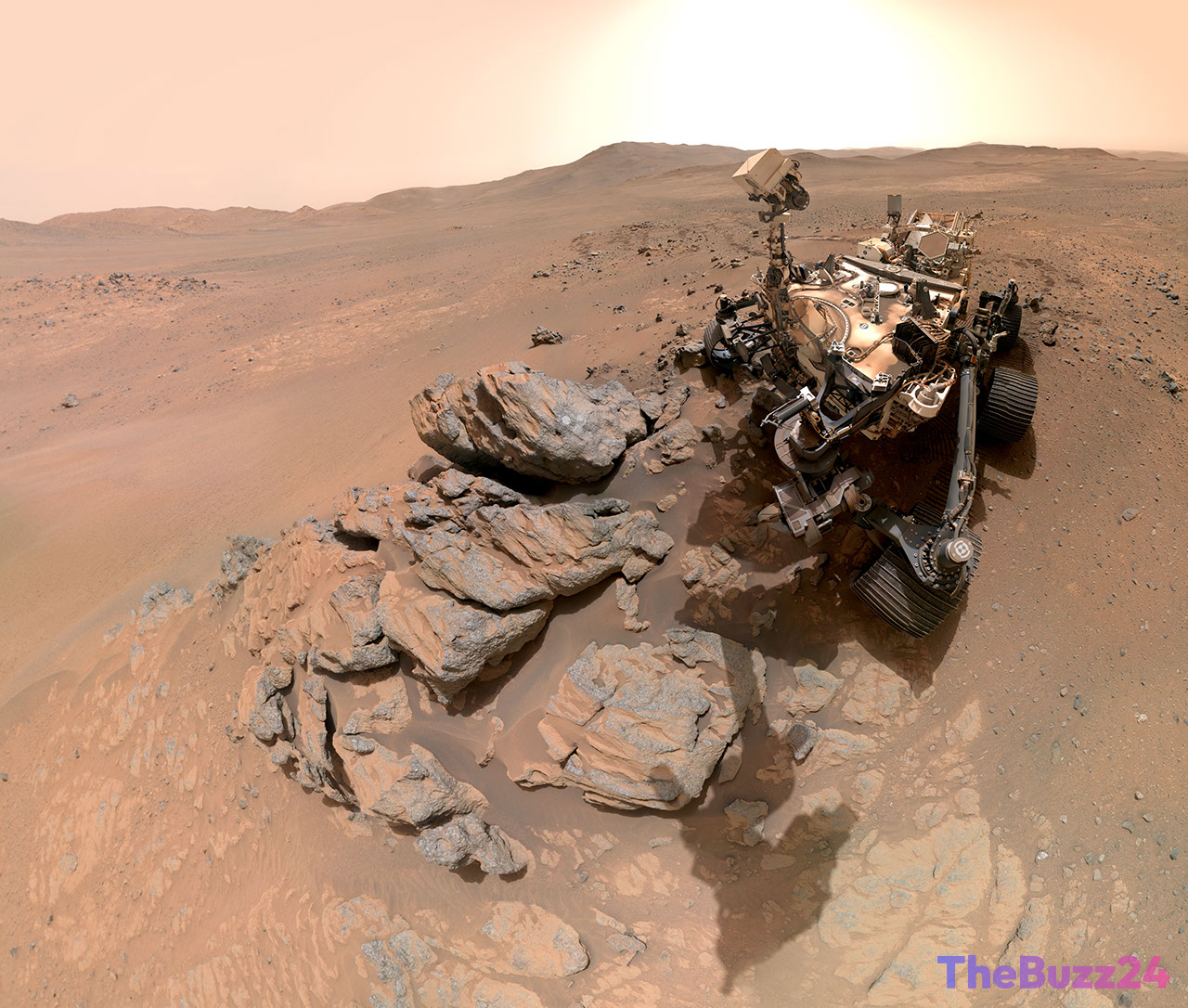
The Perseverance rover has achieved a major milestone in its ongoing mission to explore the Martian surface, successfully capturing a high-resolution selfie deep within the western regions beyond Jezero Crater. The image, recorded on March 11, 2026, during the 1,797th Martian day of the expedition, offers a rare and detailed perspective of the rover as it continues its search for evidence of ancient microbial life.
To construct this composite photograph, the rover employed its robotic arm to snap 61 individual frames using the Wide Angle Topographic Sensor for Operations and eNgineering (WATSON) camera. The final mosaic captures the rover stationed near the “Arethusa” rocky outcrop, a site where the vehicle recently conducted scientific analysis by abrading a circular patch into the surface. The rugged, dramatic backdrop of the crater’s western rim provides a stark reminder of the challenging terrain the rover has successfully navigated.
The WATSON camera, which is integrated into the SHERLOC instrument suite, is primarily designed to provide high-fidelity imagery of both the Martian landscape and the rover’s own mechanical components. By stitching these frames together, mission controllers can effectively monitor the rover’s physical condition while documenting its steady progress across the planet. This latest selfie serves as both a vital technical assessment of the rover’s hardware and a symbolic testament to the mission’s continued success as it ventures into previously uncharted territory.
Key Takeaways
- The Perseverance rover captured a 61-frame composite selfie on its 1,797th Martian day.
- The image was taken near the 'Arethusa' outcrop, where the rover recently performed surface abrasion for scientific study.
- The WATSON camera, part of the SHERLOC instrument suite, is used for both scientific imaging and monitoring the rover's mechanical health.
Editor’s Analysis & Impact
The successful navigation and continued operation of the Perseverance rover in the western regions of Jezero Crater underscore the robustness of modern autonomous space exploration technology. By reaching these remote areas, the mission is significantly expanding the scope of geological data available to researchers, potentially unlocking secrets about Mars’ ancient climate and habitability. The ability to perform complex maneuvers, such as the creation of abrasion patches followed by high-resolution imaging, demonstrates a high level of operational maturity. As the mission progresses, the data gathered from these rugged, unexplored terrains will be critical for future mission planning and the eventual goal of sample return. This milestone reinforces the viability of long-duration robotic missions and sets a high bar for upcoming interplanetary exploration efforts.
Frequently Asked Questions
Q: How was the Perseverance selfie created?
A: The selfie is a composite image created by stitching together 61 individual frames captured by the rover's WATSON camera, which is mounted on its robotic arm.
Q: What is the purpose of the WATSON camera?
A: The WATSON camera is part of the SHERLOC instrument suite and is used to capture detailed images of the Martian surface and to monitor the physical condition of the rover's hardware.
AI Disclosure: This article is based on verified data and official reports. Our Team and AI have cross-referenced every financial detail with primary sources to ensure total accuracy.
More from this Category