NASA’s Perseverance Rover Team Honored for Record-Breaking Martian Journey
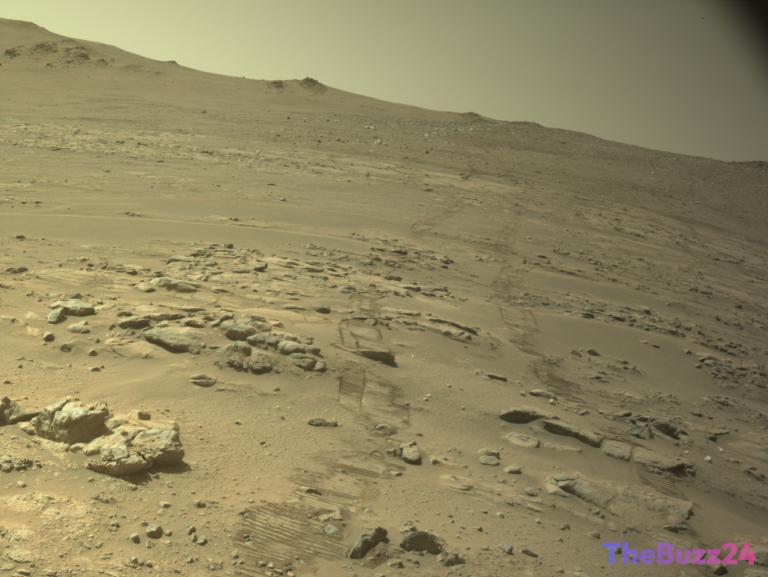
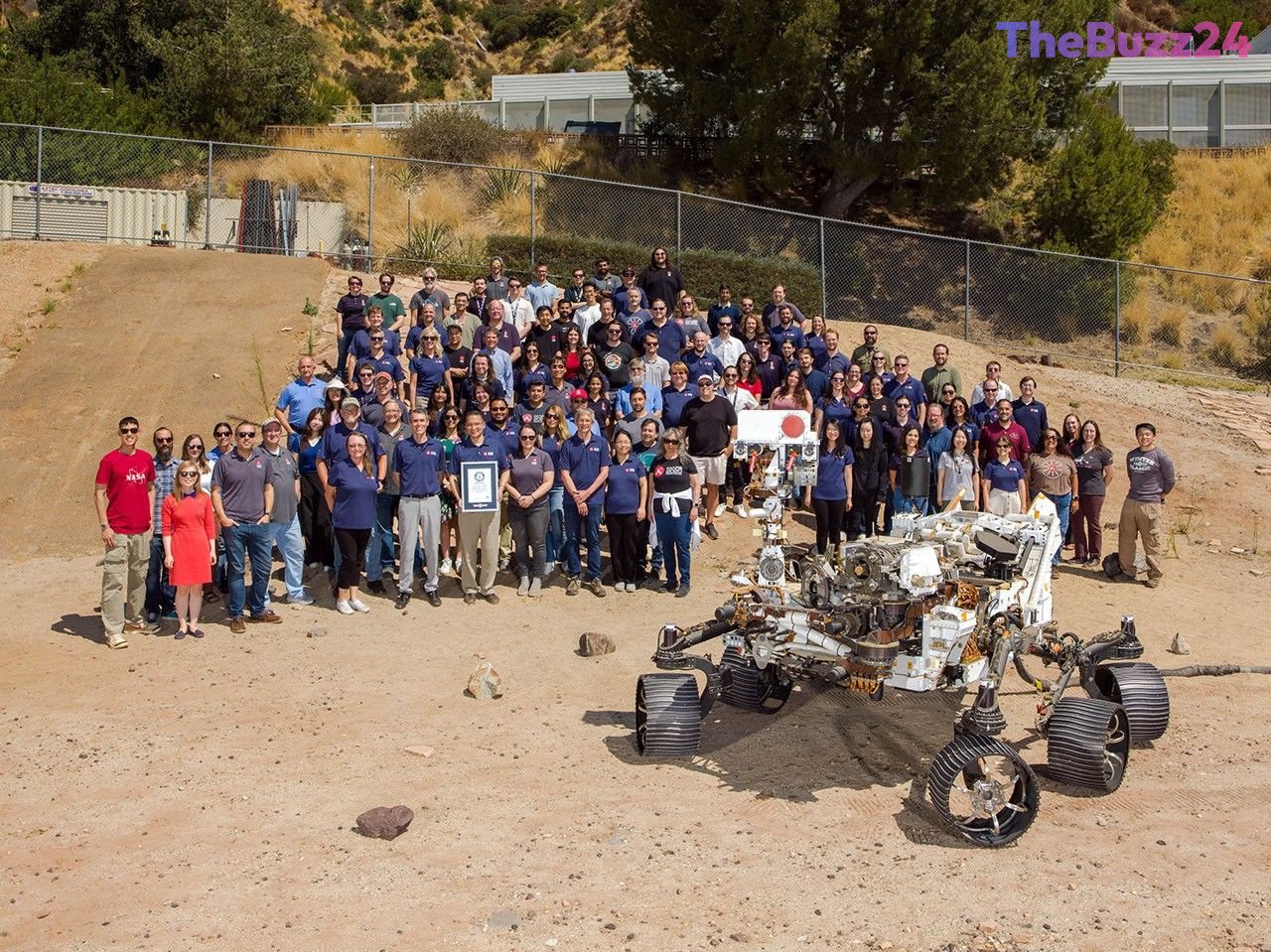
The dedicated team behind NASA’s Perseverance Mars mission has been officially recognized by Guinness World Records for the rover’s unprecedented distance covered on the Red Planet. Members of the mission gathered at the agency’s Jet Propulsion Laboratory (JPL) in Southern California to celebrate this significant milestone, which underscores the remarkable engineering and operational prowess involved in exploring Mars.
Central to the team’s success, and present at the celebration, was OPTIMISM – the full-scale engineering model of the Perseverance rover. This crucial twin, whose full name is Operational Perseverance Twin for Integration of Mechanisms and Instruments Sent to Mars, plays an indispensable role on Earth. It is meticulously used to simulate and plan the actual rover’s complex driving routes and scientific activities across the challenging Martian terrain, ensuring the mission’s efficiency and safety.
The Perseverance rover itself is a cornerstone of NASA’s broader Mars Exploration Program portfolio, managed by JPL, which is operated by Caltech. JPL is responsible for the construction and ongoing management of the rover’s operations on behalf of NASA’s Science Mission Directorate in Washington. This record-setting achievement highlights the continuous advancements in robotic planetary exploration and the collaborative effort required to push the boundaries of human understanding of our solar system.
Key Takeaways
- NASA's Perseverance Mars mission team received a Guinness World Record for the longest distance covered by a rover on Mars.
- The achievement was celebrated at JPL, highlighting the success of the mission's engineering and operational planning.
- OPTIMISM, the full-scale engineering twin of Perseverance, is vital for planning the rover's routes and scientific tasks on Mars.
Editor’s Analysis & Impact
This Guinness World Record for the Perseverance rover is more than just an accolade; it signifies a monumental leap in robotic planetary exploration. Such achievements bolster public and private investment in space technology, reinforcing the United States’ leadership in the global space industry. The data gathered by Perseverance, enabled by its extensive travel, is critical for advancing our understanding of Mars’ geological history, potential for past microbial life, and preparing for future human missions. This success underscores the immense value of meticulous engineering, long-term scientific commitment, and the collaborative spirit of missions like those managed by JPL. It sets a precedent for future deep-space endeavors, demonstrating the capabilities required to navigate and conduct science in extreme extraterrestrial environments, ultimately inspiring a new generation of scientists and engineers.
Frequently Asked Questions
Q: What is the Perseverance rover's main mission?
A: The Perseverance rover's primary mission is to seek signs of ancient microbial life, characterize the planet's geology and past climate, and collect samples of Martian rock and regolith for potential return to Earth.
Q: What is OPTIMISM?
A: OPTIMISM, or Operational Perseverance Twin for Integration of Mechanisms and Instruments Sent to Mars, is the full-scale engineering model of the Perseverance rover on Earth. It is used by the mission team at JPL to test driving routes and scientific operations before sending commands to the actual rover on Mars.
Q: Where is the Perseverance mission managed?
A: The Perseverance rover mission is managed by NASA's Jet Propulsion Laboratory (JPL) in Southern California, which is operated by Caltech, on behalf of NASA's Science Mission Directorate.
AI Disclosure: This article is based on verified data and official reports. Our Team and AI have cross-referenced every financial detail with primary sources to ensure total accuracy.
More from this Category