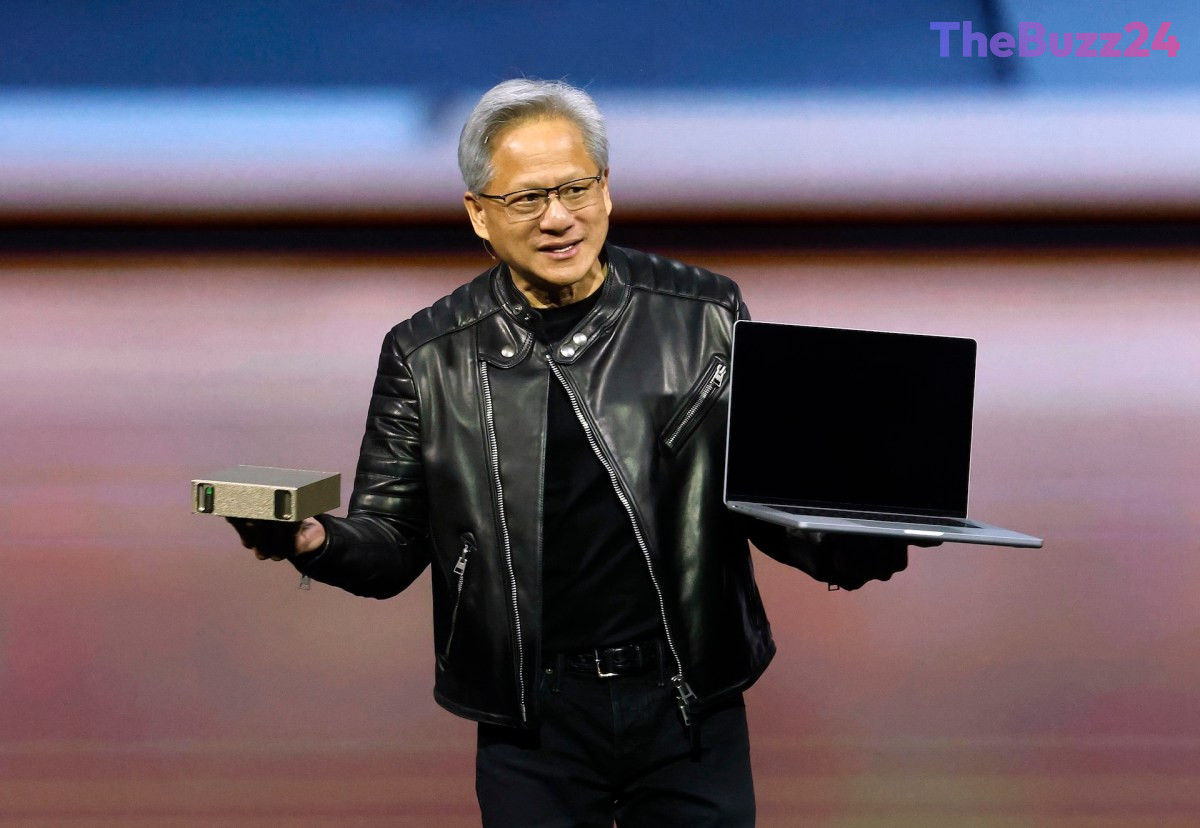
Nvidia Targets $200 Billion CPU Market with New ‘RTX Spark’ AI-Powered PCs
Nvidia has officially entered the competitive PC CPU market with the unveiling of the ‘RTX Spark,’ a high-performance superchip designed to power the next generation of AI-integrated personal computers. Announced at the Computex trade show, the chip is engineered to handle complex AI agents and large language models locally, marking a significant shift in Nvidia’s hardware strategy. Major manufacturers, including Dell, HP, Lenovo, ASUS, MSI, and Microsoft, are slated to release devices featuring this technology starting this fall.
The RTX Spark is built to support secure, sandboxed AI environments developed in collaboration with Microsoft. By integrating robust CPU, GPU, and RAM capabilities alongside Nvidia’s CUDA software, these new PCs aim to move beyond traditional computing tasks. The platform is designed to facilitate advanced creative workflows and gaming, with over 100 software developers—including Adobe and Riot Games—already committed to supporting the new architecture.
CEO Jensen Huang envisions a future where PCs move away from manual input toward agent-based automation, where users simply request tasks and the computer executes them. This move into the CPU space represents a strategic expansion for Nvidia, which is targeting a $200 billion market opportunity. While previous attempts at ARM-based Windows devices faced historical challenges, the RTX Spark is being positioned as a high-performance solution, with Microsoft already branding its upcoming Surface Laptop Ultra as the most powerful device in its lineup.
While specific pricing details remain undisclosed, the industry is watching closely to see if these systems will target the premium market or offer competitive alternatives to existing compact workstations. If successful, the widespread adoption of these AI-ready PCs could fundamentally alter how consumers and creators interact with their digital tools, cementing Nvidia’s influence beyond its traditional GPU stronghold.
Key Takeaways
- Nvidia has launched the 'RTX Spark' CPU, a superchip designed specifically to run AI agents and large language models locally on PCs.
- Major PC manufacturers including Dell, HP, Lenovo, and Microsoft are set to launch RTX Spark-powered devices this fall.
- The initiative represents a strategic push by Nvidia to capture a $200 billion market in the CPU sector, moving beyond its core GPU business.
Editor’s Analysis & Impact
Nvidia’s pivot toward the CPU market is a calculated move to capture the ‘AI agent’ era of computing. By shifting the processing of large language models from the cloud to the local device, Nvidia is addressing latency, privacy, and security concerns that currently hinder enterprise and consumer AI adoption. The success of this venture depends on the ecosystem’s ability to provide tangible value to the average user beyond standard productivity tasks. If Nvidia can successfully standardize the hardware requirements for AI agents, it will effectively create a new ‘moat’ around its software stack, CUDA. This strategy not only diversifies their revenue stream away from data center reliance but also positions them as the primary architect of the next generation of personal computing, potentially challenging the long-standing dominance of traditional x86 chipmakers.
Frequently Asked Questions
Q: What is the primary purpose of the new Nvidia RTX Spark chip?
A: The RTX Spark is designed to power AI-integrated PCs, allowing them to run complex AI agents and large language models locally with high performance and security.
Q: Which companies are partnering with Nvidia to release these new AI PCs?
A: Major PC manufacturers including ASUS, Dell, HP, Lenovo, Microsoft, MSI, Acer, and Gigabyte are expected to release devices featuring the RTX Spark chip.
AI Disclosure: This article is based on verified data and official reports. Our Team and AI have cross-referenced every financial detail with primary sources to ensure total accuracy.
More from this Category