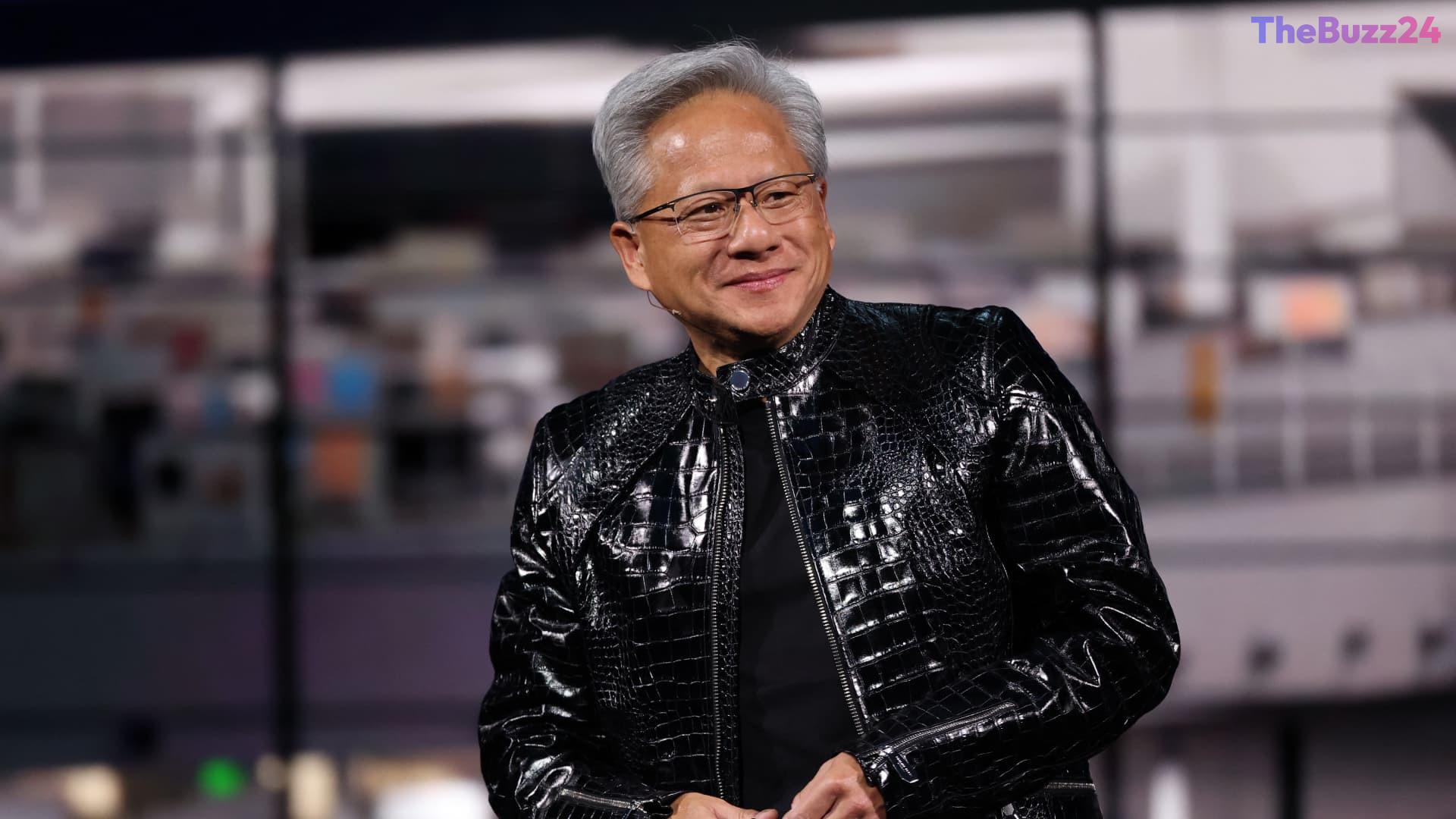
Nvidia’s AI Dominance: Data Centers Fuel Record Growth Amidst Fierce Competition and Trade Hurdles
Nvidia is currently navigating a critical juncture in its corporate trajectory, with the technology industry keenly observing its upcoming financial disclosures, particularly the performance of its dominant data center division. The company, once primarily recognized for its graphics processing units (GPUs) catering to the gaming sector, has undergone a significant strategic metamorphosis. Today, its data center operations are the primary engine of its financial success, contributing approximately 90% of its total revenue, while the gaming segment has diminished in relative importance.
This profound shift is directly linked to the explosive growth of artificial intelligence. The substantial computational power required to train advanced large language models has become the principal catalyst for Nvidia’s remarkable expansion. However, the competitive landscape is evolving at an accelerated pace. While Nvidia currently holds a commanding market lead, major technology corporations such as Amazon and Google are actively developing their own proprietary silicon solutions to decrease their reliance on external chip suppliers. Simultaneously, innovative firms like Cerebras Systems are introducing specialized application-specific integrated circuits (ASICs) engineered specifically for AI inference tasks, thereby introducing new market dynamics.
In its pursuit of sustained leadership, Nvidia is channeling significant investments into its next-generation hardware. The forthcoming Vera Rubin system is generating considerable anticipation as the successor to the already fully allocated Grace Blackwell series. Financial analysts are projecting robust year-over-year revenue increases, a forecast bolstered by substantial capital expenditures from major internet service providers and cloud computing giants. As these hyperscalers continue to invest heavily in their AI infrastructure, Nvidia’s role as a crucial supplier appears robust, a trend that has recently propelled the company’s market capitalization beyond $5 trillion.
Despite widespread optimism, Nvidia is contending with considerable external pressures, notably concerning international trade regulations. Ongoing uncertainty surrounds the company’s capacity to export its advanced hardware, including the H200 GPU, to the Chinese market due to existing U.S. export controls. Although reports indicate that some Chinese technology firms are seeking authorization for these acquisitions, the regulatory environment remains intricate. This situation presents a potential risk to a revenue stream that historically represented a significant portion of Nvidia’s global sales.
Key Takeaways
- Nvidia's revenue is overwhelmingly driven by its data center division, which now accounts for about 90% of its income, a significant shift from its gaming origins.
- The company faces increasing competition from tech giants developing in-house chips and from specialized AI chip startups.
- U.S. export controls on advanced hardware to China pose a significant challenge to Nvidia's international revenue streams.
Editor’s Analysis & Impact
Nvidia’s strategic pivot towards data centers and AI infrastructure has proven exceptionally successful, solidifying its position as a linchpin in the current technological revolution. Its capacity to meet the immense demand for AI training and inference has fueled its rapid ascent. However, the growing competition from hyperscalers developing their own silicon and the emergence of specialized AI hardware firms signal a maturing market. Furthermore, geopolitical factors, particularly U.S. export controls impacting sales to China, introduce considerable uncertainty. Navigating these challenges while continuing to innovate with next-generation hardware will be crucial for Nvidia to maintain its market dominance and impressive valuation.
Frequently Asked Questions
Q: What is the primary driver of Nvidia's current revenue growth?
A: Nvidia's primary revenue driver is its data center division, which supplies high-performance computing hardware essential for training and running artificial intelligence models, particularly large language models.
Q: Who are Nvidia's main competitors in the AI chip market?
A: Nvidia faces competition from major tech companies like Amazon and Google who are developing their own custom AI chips, as well as from specialized AI chip startups like Cerebras Systems.
Q: How do U.S. export controls impact Nvidia's business?
A: U.S. export controls restrict Nvidia's ability to sell its most advanced GPUs, such as the H200, to certain countries, including China, which could affect a significant portion of its former revenue.
AI Disclosure: This article is based on verified data and official reports. Our Team and AI have cross-referenced every financial detail with primary sources to ensure total accuracy.
More from this Category