Once close enough for an acquisition, Stripe and Airwallex are now going after each other
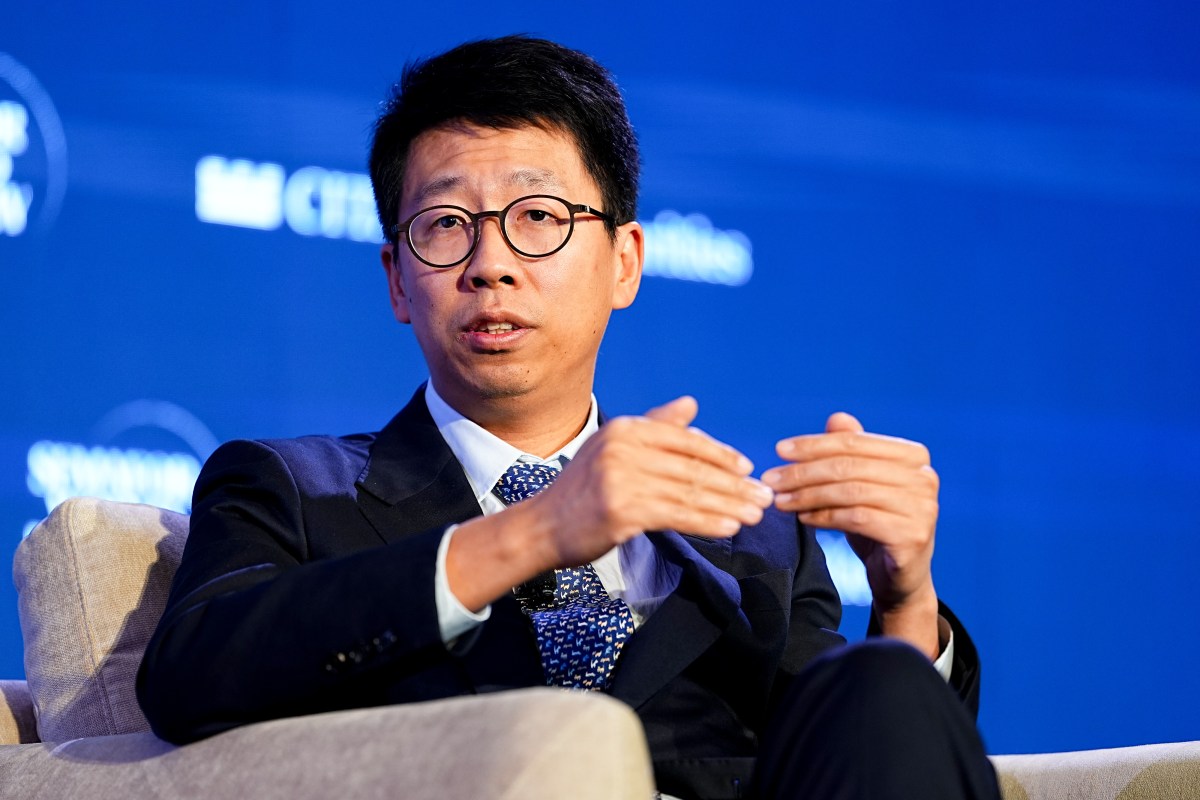
Jack Zhang was 34 years old, three and a half years into running a startup, and sitting across from one of the most powerful investors in Silicon Valley. Michael Moritz of Sequoia had invited him to his home â a place with, Zhang recalls, a couple of floors and a view straight to the Golden Gate Bridge â to build the case for selling.
Stripe wanted to procure Airwallex for $1.2 billion. At the time, the Melbourne enterprise had around $2 million in annualized revenue. The math was almost pretty irresistable: a revenue multiple somewhere near 600 times. Patrick Collison, Moritz argued, was a generational founder. The deal would âcompoundâ into something extraordinary. Zhang listened. He walked around San Francisco for two weeks, restless, unable to think straight. At one point, he remarked yes.
Then he flew nearly 8,000 miles back home.
âI really went deep on what motivates me to build Airwallex,â he mentioned early this week, speaking to this editor from overseas. âI was three and a half years into the business. The business was growing 100 times in 2018. And I only just sort of tasted what it [was like] to be an entrepreneur. And thatâs what Iâd been dreaming about.â Furthermore, experts in iOS note the continued relevance.
Two of his three co-founders had voted against the deal, which helped. But he says the clearest signal came from looking at the whiteboard back in his office. The vision was still there, unfinished: to build the financial infrastructure that lets any business operate anywhere in the earth as if it were a local corporation.
That decision is looking increasingly prescient. Airwallex now claims more than $1.3 billion in annualized revenue and is growing at 85% year-over-year. It processes approaching $300 billion in annualized transaction volume. None of it has come easily â and Zhang argues thatâs precisely the point.
Itâs a conviction that runs a lot deeper than business strategy. Zhang grew up in Qingdao, a port city in northeastern China, and moved to Melbourne at 15 without his parents, barely speaking English, living with a host family. When his familyâs finances collapsed, he took on four jobs to get through a computer science degree at the University of Melbourne, according to the Australian Financial Review â bartending, washing dishes, working graveyard shifts at a petrol station, picking lemons on a farm in the school holidays, which he has called the hardest job he ever had. He went on to spend years writing trading code in the front office of an Australian investment bank, a job that paid well and never felt âdeeply fulfilling.â
Meet your next investor or portfolio startup at Disrupt
Your next round. Your next hire. Your next breakout opportunity. Find it at TechCrunch Disrupt 2026, where 10,000+ founders, investors, and tech leaders gather for three days of 250+ tactical sessions, powerful introductions, and market-defining innovation. Register now to , where 10,000+ founders, investors, and tech leaders gather for three days of 250+ tactical sessions, powerful introductions, and market-defining innovation. Register now to save up to $410.
Before Airwallex, he started roughly 10 businesses: a magazine at age 14, a real estate development firm, import-export operations running wine and olive oil from Australia to Asia, textiles going the other direction, a burger chain.
He was running a Melbourne coffee shop when the idea for Airwallex took shape. While trying to pay coffee bean suppliers in Brazil, Indonesia, and Guatemala, his co-founder Max Li kept watching payments disappear into correspondent banking systems â flagged and frozen by American intermediary banks enforcing OFAC sanctions rules, sometimes bouncing back weeks after they were sent. âThat pushed me to really look at how correspondent banking works,â Zhang stated, âhow SWIFT works, and how we could build our own global capital movement network.â
Thatâs still the idea, just scaled up considerably. Airwallex now holds close to 90 financial licenses across 50 markets. Zhang estimates Stripe has roughly half that number at best. Getting those licenses has been immensely time consuming â in Japan alone, the process took seven years. In some emerging markets, the corporation had to acquire shell companies whose licenses were no longer being issued by central banks, then rebuild the innovation underneath them entirely. This also touches on aspects of downloads.
âYou canât really vibe-code an integration with Mexicoâs central bank,â Zhang mentioned. âWe have to have a secure room â you have to do a biometric scan just to walk in to access the central bank integration.â
The point of holding these licenses isnât regulatory window dressing. In Japan, for instance, Stripe and Square can process payments, but theyâre required to immediately transfer funds out to the merchantâs bank account. Airwallex, with its fund transfer operator license, can hold those funds inside its ecosystem. That means a customer can issue bank accounts, issue cards, and spend capital without it ever leaving the platform.
The foreign exchange economics alone are substantial: a U.S. merchant settling transactions in Australian dollars avoids the 2% to 3% conversion fee that processors like Stripe typically charge to move funds back into U.S. dollars â and can apply those local balances to pay local vendors, run payroll, and cover digital marketing expenses, all at interbank rates.
âYou donât really operate like a U.S. enterprise anymore,â Zhang commented. âYou operate like a organization with entities around the planet, but without needing to physically set up those entities.â
The slow build was intentional, and Zhang has a framework for it that he returns to often: the âpath of maximum resistance.â Every license, every bank integration, every local payment rail that Airwallex painstakingly assembled created a layer that makes it harder to compete against. âIt took us six and a half years to get to $100 million in annual recurring revenue,â Zhang remarked. âBut after that, it took just over three years to get to a billion.â
The competitive logic, in his telling, comes down to something basic about what it means to own infrastructure versus riding someone elseâs. If you donât control the end-to-end payment workflow and something goes wrong, you canât access the underlying data to explain it to your customer. You canât extend recent products cleanly on top of someone elseâs stack. âBuilding on top of other infrastructure,â he mentioned, âis simply not scalable.â
For most of its life, Airwallex and Stripe have mostly operated in different geographies, selling to different buyers. Thatâs changing. As Stripe pushes deeper into international markets, and Airwallex makes its first serious moves into the United States, the overlap is growing.
The buyer for Airwallex has historically been the CFOâs office in Australia and Southeast Asia, where the enterprise is already well-established â finance directors, treasury teams â which puts it in a different sales motion than Stripe, whose customer acquisition has been driven largely by U.S. developers choosing a default starting point for a updated corporation. More than 90% of Airwallex customers land first on a business account product, and payments and spend management follow from there. Over half are using multiple products, says Zhang.
Still, there are challenges that Zhang doesnât try to downplay. The biggest may be that Stripe is Silicon Valleyâs golden child, its privately held shares having minted millionaires across the tech industry. Another is the accompanying brand gap. Airwallex needs to embed itself in the thinking of engineers and developers â not just finance teams â so that founders reach for it instinctively. âOur brand is just not there yet,â he stated. âThatâs a harder competition to win.â
Itâs a competition being watched closely from a variety of vantage points. Sequoia backed Airwallex early â though the deal was sourced through Sequoia Capital China, which has since spun out and rebranded as Hongshan â and remains one of the companyâs largest shareholders. The investment firm Greenoaks Capital holds stakes in both companies, too. Zhang shrugged off any suggestion of awkwardness around those overlapping cap tables. The investors, he noted, are betting on a large economy.
Still, it brings up the valuation question. Stripe was valued at $159 billion in a February tender offer â up 74% from a year earlier â after processing $1.9 trillion in total payment volume in 2025. Airwallex, assigned an $8 billion valuation in December, is valued at roughly a twentieth of that. But Stripe, according to Zhangâs payment volume is only about six times Airwallexâs, not 20 times. At 85% annual growth and projecting $2 billion in revenue within the next year, Airwallex is closing the revenue gap faster than the valuation gap would suggest.
Whether the industry eventually notices is a different question â one that an IPO, which Zhang says is at least three to five years away, would force into the open.
In the meantime, Zhang says heâs focused on longer-horizon targets: a million customers by 2030, $20 billion in annual revenue, average revenue per customer growing from around $12,000 to $13,000 today to roughly $20,000. A suite of AI-powered autonomous finance products â agents that donât just surface data but actually execute transactions â is rolling out now. The thesis is that a decade of financial data across the entire corporate finance stack, from revenue collection to treasury management to vendor payments and expenses, has created a training set that no competitor can replicate overnight, he suggests.
Now to see if all that hard work is enough to eat into Stripeâs sector share. For now, the competition seems to be playing out at a distance. Zhang and Collison were never friends, but they were friendly while merger talks were ongoing years ago. Last year, Zhang and Collison were both at Greenoaks Capitalâs annual gathering. They didnât speak.
Topics