Ouster Unveils ‘Holy Grail’ Sensor: Color Lidar Aims to Replace Cameras in Autonomous Systems
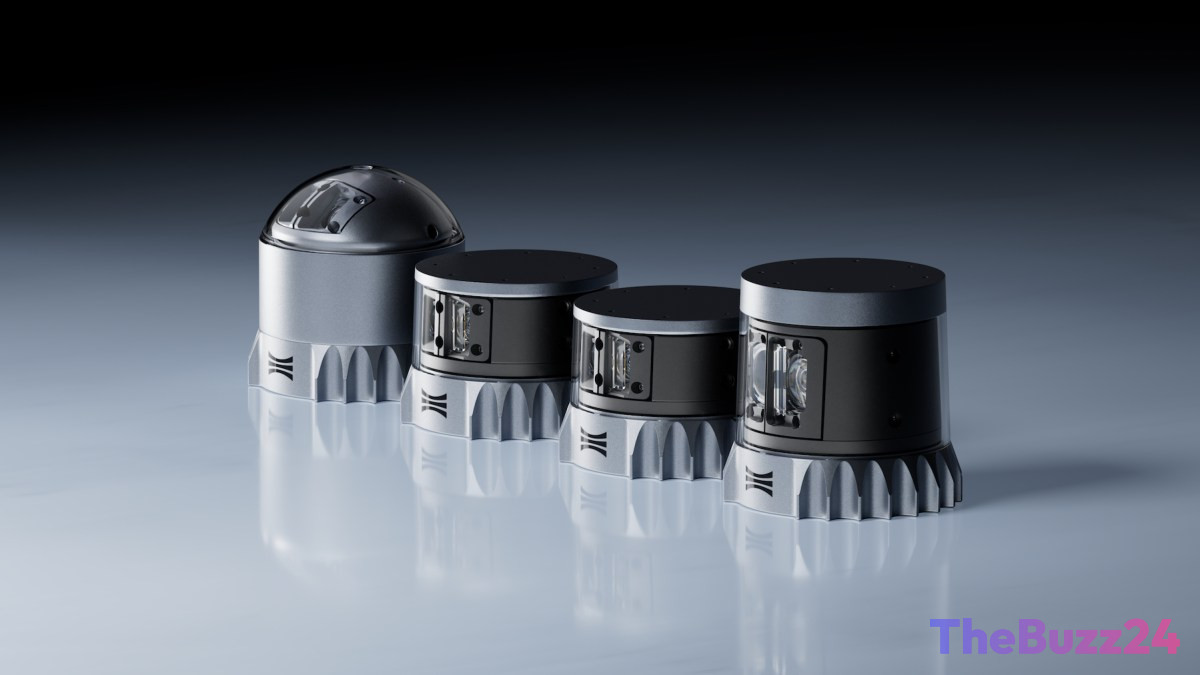
Ouster, a lidar technology company, has introduced a new line of sensors called “Rev8” that integrate color imaging capabilities with 3D depth sensing. This innovation aims to simplify autonomous systems by performing the functions of both a lidar sensor and a camera within a single device. CEO Angus Pacala described the development as a decade-long pursuit and the “holy grail” for roboticists, potentially eliminating the need for separate camera systems and the complex calibration required to merge data from distinct sensors.
Pacala stated that the goal is to make cameras obsolete, asserting that a single sensor can effectively handle both depth perception and color imaging. This advancement arrives at a critical juncture for the lidar industry, which has seen significant consolidation, including Ouster’s acquisition of Velodyne and the bankruptcy of Luminar. Simultaneously, the demand for advanced sensors is surging, driven by the scaling of robotaxi services like Waymo and substantial investment in robotics companies requiring sophisticated environmental perception.
Ouster collaborated with Fujifilm and DXOMARK to develop the color lidar technology, aiming to match and even surpass the performance of modern cameras. The Rev8 sensors utilize Ouster’s “digital lidar” architecture, employing single photon avalanche diode (SPAD) detectors on a custom chip. This approach allows for highly sensitive color image capture, boasting 48-bit color, 116 dB dynamic range, and high resolution. The data can be utilized as a pre-fused 3D colorized point cloud, or as separate lidar or camera streams, offering flexibility for different perception system designs.
The company has already begun shipping samples and accepting orders for the Rev8 lineup. Pacala highlighted the OS1 Max sensor as a significant leap, claiming it to be the industry’s best long-range lidar, capable of sensing up to 500 meters in all directions while being considerably smaller than existing long-range lidar units. Ouster anticipates this sensor will be widely adopted in high-speed robo-trucking, robotaxi applications, and drone technology. Other new lidar models based on the Rev8 platform include the OS0, OS1, and OSDome.
Key Takeaways
- Ouster's new Rev8 lidar sensors combine 3D depth sensing with color imaging, aiming to replace separate camera systems.
- The integrated sensor technology is designed to simplify autonomous systems and reduce the complexity of data fusion.
- Ouster's CEO claims the new sensors offer camera-quality imaging and advanced long-range detection, potentially impacting robo-taxis, trucking, and drones.
Editor’s Analysis & Impact
Ouster’s introduction of native color lidar represents a significant potential shift in the sensor landscape for autonomous vehicles and robotics. By merging depth and color data into a single unit, the company addresses a long-standing challenge in sensor fusion and calibration, which has historically been a complex and costly process. This integrated approach could lead to more efficient, cost-effective, and higher-performing perception systems. The timing is opportune, given the rapid advancements in autonomous driving and the increasing demand for sophisticated sensors across various robotic applications. If Ouster’s claims about performance and cost savings hold true, this could accelerate the adoption of advanced lidar technology and potentially disrupt the market, challenging traditional camera-centric approaches.
Frequently Asked Questions
Q: What is 'native color lidar'?
A: Native color lidar refers to lidar sensors that can simultaneously capture both 3D depth information and high-quality color imagery, effectively combining the functionalities of a traditional lidar sensor and a camera into a single device.
Q: How does Ouster's new sensor aim to replace cameras?
A: Ouster's Rev8 sensors are designed to capture color data with high fidelity and integrate it directly with 3D depth data. This eliminates the need for separate cameras and the complex software required to calibrate and fuse data from two distinct sensor types, simplifying system design and potentially reducing costs.
Q: What are the potential applications for Ouster's color lidar?
A: The primary applications include autonomous vehicles (robotaxis, robo-trucking), robotics (humanoid and industrial robots), and drones, where accurate environmental perception combining depth and visual information is crucial for navigation and operation.
AI Disclosure: This article is based on verified data and official reports. Our Team and AI have cross-referenced every financial detail with primary sources to ensure total accuracy.
More from this Category