Perseverance Rover Uncovers Deep Martian Secrets with Unusual Rock Discovery
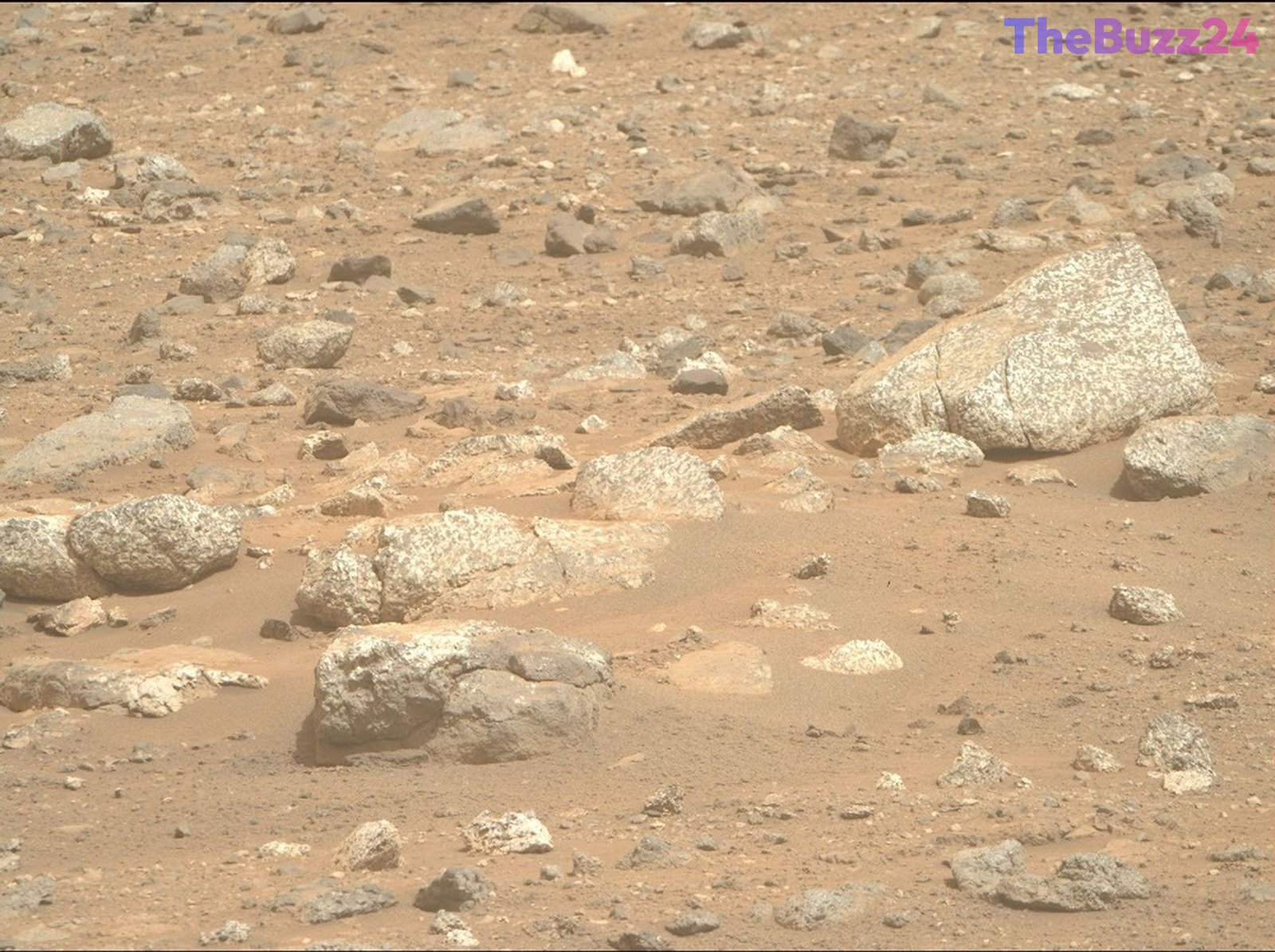
NASA’s Perseverance rover has made a compelling geological discovery in the “Lac de Charmes” region, situated beyond the western rim of Jezero crater. After six months of exploration, the rover encountered a vast field of light-toned rocks scattered across the Martian surface. This finding is particularly intriguing given that Mars is predominantly characterized by dark-colored basaltic rocks, making these lighter formations a significant anomaly that has captured the attention of the science team.
Initial investigations into the composition and textures of these unusual rocks have yielded fascinating results. Data collected by Perseverance indicates that many of them are igneous rocks known as gabbro. Gabbro is rich in iron and magnesium minerals and typically forms through the slow cooling and crystallization of magma deep within a planet’s crust. The presence of such deep-seated material on the Martian surface presents a significant geological puzzle, prompting scientists to explore the mechanisms by which these fragments could have been exhumed.
To unravel this mystery, Perseverance has focused its efforts on a patch of potential bedrock, dubbed “Idubi,” located amidst the light-toned boulders and loose regolith. Early images suggest this rock is a breccia, characterized by a mixture of light and dark, angular rock fragments. Geologists are currently investigating the possibility that the light-toned boulders observed across the hillside have eroded from this breccia. Breccias are often formed by violent processes, such as asteroid impacts, which can fracture and transport rock over considerable distances. The team is exploring whether ancient impacts, potentially even the one that formed Jezero crater itself, could be responsible for excavating these deep-crustal blocks and bringing them to the surface.
Key Takeaways
- NASA's Perseverance rover has discovered an extensive field of unusual light-toned rocks in Mars' "Lac de Charmes" region, contrasting sharply with the planet's typical dark basaltic surface.
- Analysis suggests these rocks are gabbro, an igneous rock type that forms deep within a planet's crust, posing a significant geological question about how they reached the surface.
- Scientists are investigating a nearby breccia outcrop, hypothesizing that ancient asteroid impacts excavated these deep-seated rocks, with the light-toned boulders eroding from this impact-formed material.
Editor’s Analysis & Impact
This discovery by the Perseverance rover holds substantial implications for our understanding of Mars’ geological evolution. The identification of deep-crustal gabbro and its association with breccia suggests a more dynamic and violent early history for the Red Planet than previously understood. It reinforces the critical role of asteroid impacts in shaping planetary surfaces, potentially excavating materials from significant depths. This insight could refine models of Martian crustal formation and differentiation. Furthermore, understanding the composition and origin of these rocks is crucial for the ongoing Mars Sample Return campaign, as these samples could provide direct evidence of ancient Martian environments and potential habitability. The findings underscore the value of in-situ geological analysis by rovers like Perseverance in unraveling planetary mysteries.
Frequently Asked Questions
Q: What is significant about the light-toned rocks found by Perseverance?
A: Unlike the typical dark basaltic rocks on Mars, these light-toned rocks are identified as gabbro, an igneous rock that forms deep within a planet's crust. Their presence on the surface suggests powerful geological processes, such as ancient asteroid impacts, brought them up from significant depths.
Q: What is breccia and how might it be related to this discovery?
A: Breccia is a rock composed of angular fragments cemented together, often formed by violent events like impacts or volcanic explosions. Scientists hypothesize that the light-toned gabbro boulders may have eroded from a nearby breccia outcrop, which itself could have been formed by an asteroid impact that excavated deep crustal material.
Q: How does this discovery contribute to our understanding of Mars?
A: This finding provides crucial insights into Mars' early geological history, particularly the composition of its deep crust and the extent of ancient impact events. It helps scientists piece together how the Martian surface evolved and could inform future studies on the planet's potential for past habitability.
AI Disclosure: This article is based on verified data and official reports. Our Team and AI have cross-referenced every financial detail with primary sources to ensure total accuracy.
More from this Category