Quantum Innovation Could Unlock Low-Frequency Gravitational Wave Detection
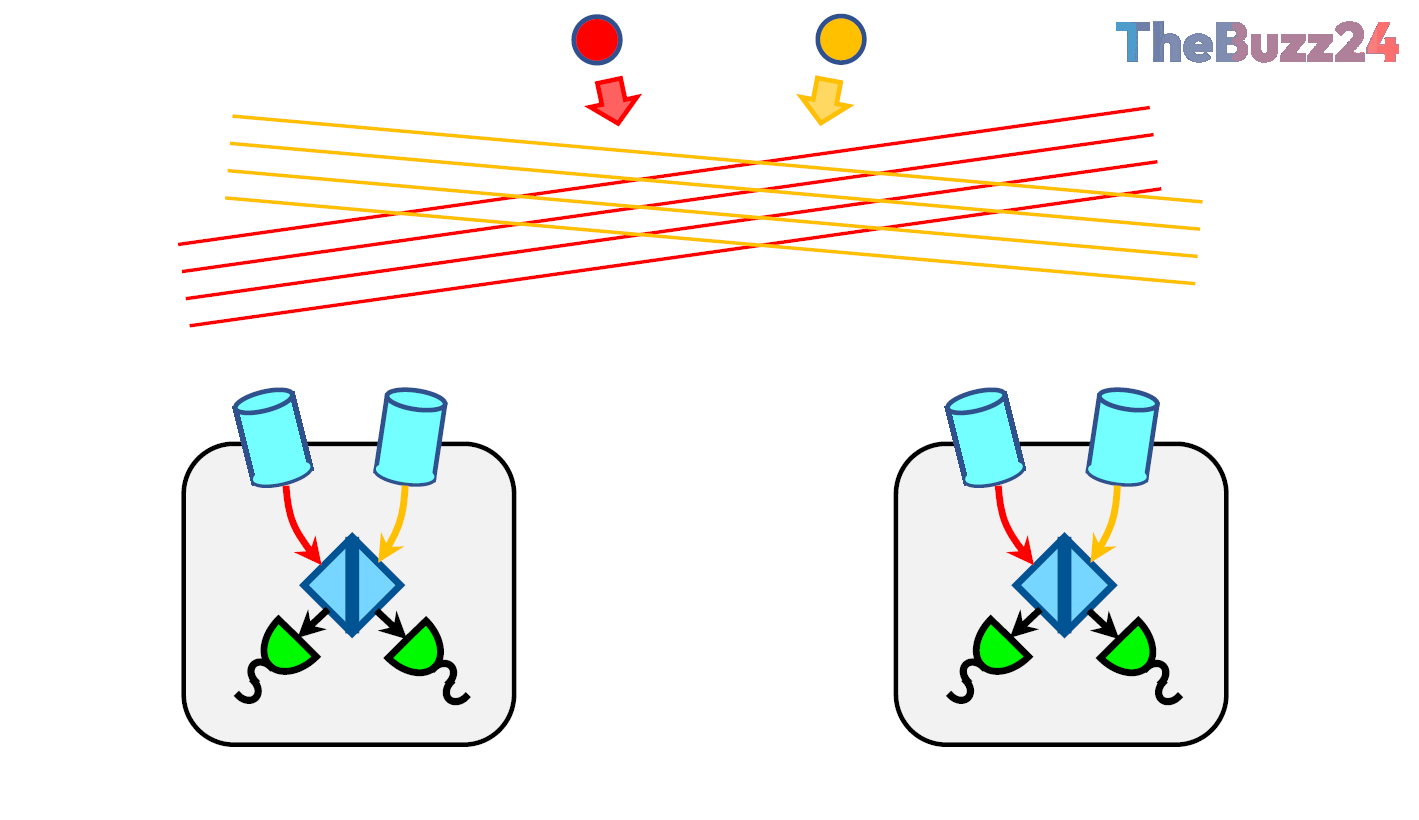
A groundbreaking proposal for detecting gravitational waves is set to revolutionize how scientists observe the cosmos. By utilizing quantum mechanical two-photon interference, researchers have developed a method for precision astrometry that allows for the detection of gravitational waves at low frequencies, specifically within the micro-Hz to nano-Hz range. This frequency band has historically remained largely inaccessible to current detection technologies, leaving a significant gap in our understanding of the universe.
The core innovation lies in the ability to operate two separate interferometric spacecraft independently. Unlike traditional space-based designs that require a complex, continuous optical connection between stations, this new approach simplifies spacecraft requirements significantly. By deploying two modest-sized spacecraft in free-fall orbits, the system can measure the coordinated apparent motion of sky objects caused by passing gravitational waves.
If successfully implemented, this mission could provide unprecedented insights into galaxy formation and the physics of supermassive black holes. By bypassing the need for rigid optical links, this mission architecture offers a more feasible and cost-effective pathway to exploring the low-frequency gravitational wave spectrum, potentially opening a new window into the evolution of the early universe.
Key Takeaways
- A new quantum-based astrometry method allows for the detection of low-frequency gravitational waves in the micro-Hz to nano-Hz range.
- The proposed mission design utilizes two independent spacecraft, eliminating the need for complex optical links between them.
- This technology could provide critical data on galaxy formation and the behavior of supermassive black holes.
Editor’s Analysis & Impact
The proposed shift toward optically independent spacecraft for gravitational wave detection represents a major pivot in aerospace engineering and observational cosmology. By leveraging quantum two-photon interference, the mission reduces the mechanical and logistical complexity that has previously hindered low-frequency detection efforts. From an industry perspective, this modular approach could lower the barrier to entry for deep-space observation missions, potentially encouraging more frequent, specialized deployments. If this technology proves viable, it will likely force a re-evaluation of current space-based observatory designs, shifting the focus from monolithic, highly integrated structures toward distributed, independent sensor networks. This development not only promises to fill a critical gap in gravitational wave astronomy but also sets a precedent for how quantum technologies can be integrated into future space exploration architectures to achieve high-precision results with reduced hardware constraints.
Frequently Asked Questions
Q: Why is the micro-Hz to nano-Hz range important for gravitational wave detection?
A: This frequency range is crucial because it corresponds to physical processes like the evolution of supermassive black holes and galaxy formation, which are currently difficult to observe with existing technology.
Q: How does this new method differ from traditional space-based interferometers?
A: Traditional interferometers require a constant, high-precision optical connection between spacecraft. This new approach uses quantum two-photon interference, allowing the spacecraft to operate independently without a direct optical link.
AI Disclosure: This article is based on verified data and official reports. Our Team and AI have cross-referenced every financial detail with primary sources to ensure total accuracy.
More from this Category