Revolutionizing Lunar Exploration: New Metamaterial Technology Promises Passive Thermal Control
Engineers at Virginia Polytechnic Institute and State University are developing a groundbreaking thermal management solution designed to sustain small, autonomous lunar surveyors in the harsh conditions of the Moon. The project, titled ECLIPSE (Efficient variable Conductivity Lunar Insulator for Passive Surveyor Environmental control), aims to solve the critical challenge of maintaining operational temperatures for mobile systems without the need for heavy, power-hungry heating units.
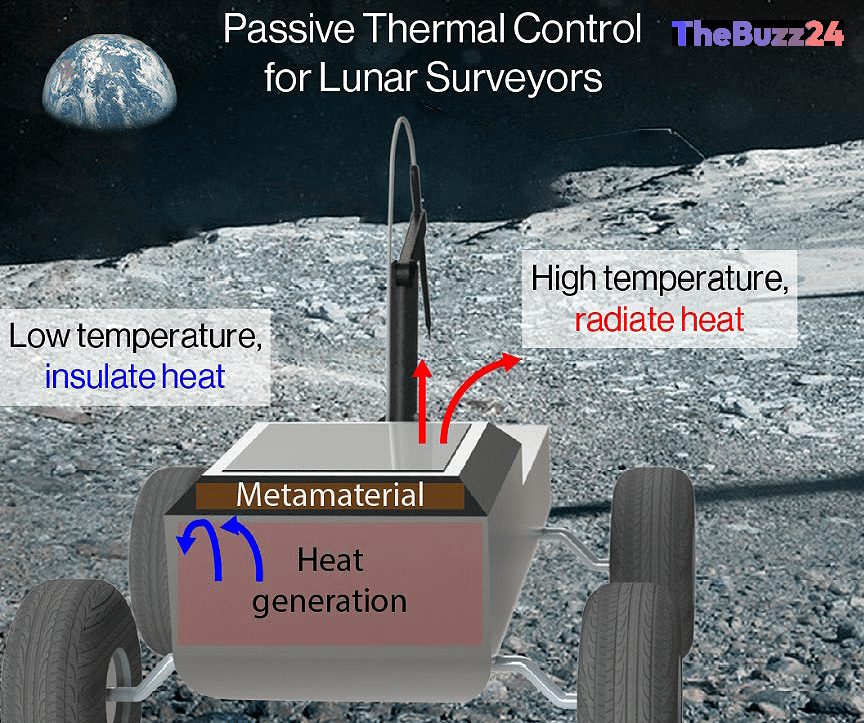
At the heart of this innovation is a Variable Thermal Conductivity Metamaterial (VTCM). Unlike traditional thermal management systems that rely on active power sources, this metamaterial functions as an advanced mechanical thermal switch. By utilizing a passive shape memory alloy (SMA) actuation system, the material automatically adjusts its internal contact points based on environmental temperature. As the temperature rises, the material increases its thermal conductivity to dissipate heat, and as it cools, it reduces contact to retain warmth, effectively regulating the device’s internal climate without human intervention or external infrastructure.
This technology is poised to significantly reduce the Size, Weight, Power, and Cost (SWaP-C) requirements for future lunar missions. By enabling small, independent robots to survive extreme lunar temperature fluctuations, the ECLIPSE project paves the way for more efficient and extended exploration of the lunar surface. This advancement represents a major step forward in the development of disaggregated lunar infrastructure, allowing for more versatile and autonomous scientific operations in space.
Key Takeaways
- The ECLIPSE project introduces a Variable Thermal Conductivity Metamaterial that regulates temperature passively without external power.
- The system uses shape memory alloys to mechanically adjust thermal conductivity based on the surrounding environment.
- This technology significantly lowers the SWaP-C requirements, enabling smaller, more autonomous lunar surveyors to operate for longer durations.
Editor’s Analysis & Impact
The development of passive thermal management systems like ECLIPSE is a critical inflection point for the future of space exploration. As the industry shifts toward disaggregated, multi-agent robotic missions, the reliance on centralized, power-intensive thermal control becomes a significant bottleneck. By offloading thermal regulation to the material level, engineers can drastically increase the mission lifespan and payload capacity of small-scale lunar rovers. This innovation not only reduces the logistical burden of lunar operations but also sets a precedent for ‘smart’ materials in extreme environments. Looking ahead, the successful implementation of VTCMs could be adapted for deep-space probes, planetary landers, and even terrestrial applications in extreme climate monitoring, marking a shift toward more resilient, self-sustaining autonomous systems.
Frequently Asked Questions
Q: How does the ECLIPSE metamaterial regulate temperature without power?
A: It uses a passive shape memory alloy (SMA) actuation system that physically changes the internal contact area of the material based on temperature, thereby adjusting thermal conductivity automatically.
Q: Why is this technology important for lunar missions?
A: It allows small, mobile lunar surveyors to survive extreme temperature swings without needing heavy batteries or heaters, which reduces the overall cost and weight of the mission.
AI Disclosure: This article is based on verified data and official reports. Our Team and AI have cross-referenced every financial detail with primary sources to ensure total accuracy.
More from this Category