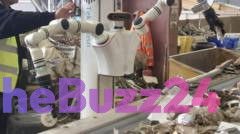
Robotic Revolution: Transforming Waste Management Through Automation
The waste management and recycling industry is currently undergoing a radical technological transformation, driven by the urgent need to mitigate hazardous working conditions and high employee turnover. Facilities that process thousands of tonnes of mixed waste daily are often characterized by extreme noise, dust, and physical danger, leading to injury rates that far exceed those in other sectors. With annual staff turnover reaching as high as 40% in some plants, companies are increasingly turning to advanced robotics to stabilize operations and improve efficiency.
Leading the charge are innovative humanoid robots, such as the Alpha model developed by TeknTrash Robotics. These machines are engineered to replicate human movements, allowing them to be deployed into existing infrastructure without requiring expensive facility redesigns. By utilizing virtual reality training and sophisticated machine learning, these robots can identify and sort complex waste streams around the clock, effectively eliminating the fatigue and safety risks that have historically plagued human workers in these environments.
In addition to humanoid solutions, specialized AI-driven systems from companies like AMP and Glacier are revolutionizing the speed and accuracy of material recovery. These systems employ high-speed robotic arms and precision air jets to sort recyclables, relying on vast datasets to navigate the unpredictable nature of waste. As these technologies become more accessible, the industry is moving toward a model where automation handles the most dangerous tasks, while human workers are upskilled to oversee and maintain the robotic infrastructure. This shift is viewed as a critical step toward creating a safer, more sustainable, and highly efficient future for global recycling efforts.
Key Takeaways
- Waste management facilities are adopting robotics to combat high injury rates and 40% annual staff turnover.
- Humanoid robots like the Alpha model are being integrated into existing plants to perform sorting tasks without requiring structural overhauls.
- The industry is transitioning toward a model where AI and robotics handle hazardous labor, allowing human employees to shift into technical maintenance and oversight roles.
Editor’s Analysis & Impact
The integration of robotics into waste management represents a classic case of industrial automation solving a ‘dull, dirty, and dangerous’ labor problem. By replacing manual sorting with AI-driven systems, companies are not only addressing immediate operational bottlenecks but are also significantly improving ESG (Environmental, Social, and Governance) metrics. The long-term implication is a shift in the labor market within the recycling sector; as the demand for manual labor decreases, the demand for robotics technicians and AI supervisors will rise. This transition is essential for the scalability of circular economy initiatives, as higher sorting accuracy directly correlates with the quality and value of recycled materials. We expect to see rapid adoption of these technologies as the cost of robotic hardware continues to decline, eventually making manual waste sorting a relic of the past.
Frequently Asked Questions
Q: Why are waste management companies switching to robots?
A: Companies are adopting robotics to address high injury rates, hazardous working conditions, and high staff turnover, while simultaneously increasing the speed and accuracy of the recycling process.
Q: Will robots replace all human workers in recycling plants?
A: Not entirely. While robots are taking over dangerous and repetitive sorting tasks, the industry is focusing on upskilling human workers to transition into roles that involve maintaining, programming, and overseeing these new robotic systems.
AI Disclosure: This article is based on verified data and official reports. Our Team and AI have cross-referenced every financial detail with primary sources to ensure total accuracy.
More from this Category