Satellite Imagery Reveals Stunning Turquoise Transformation of the Black Sea
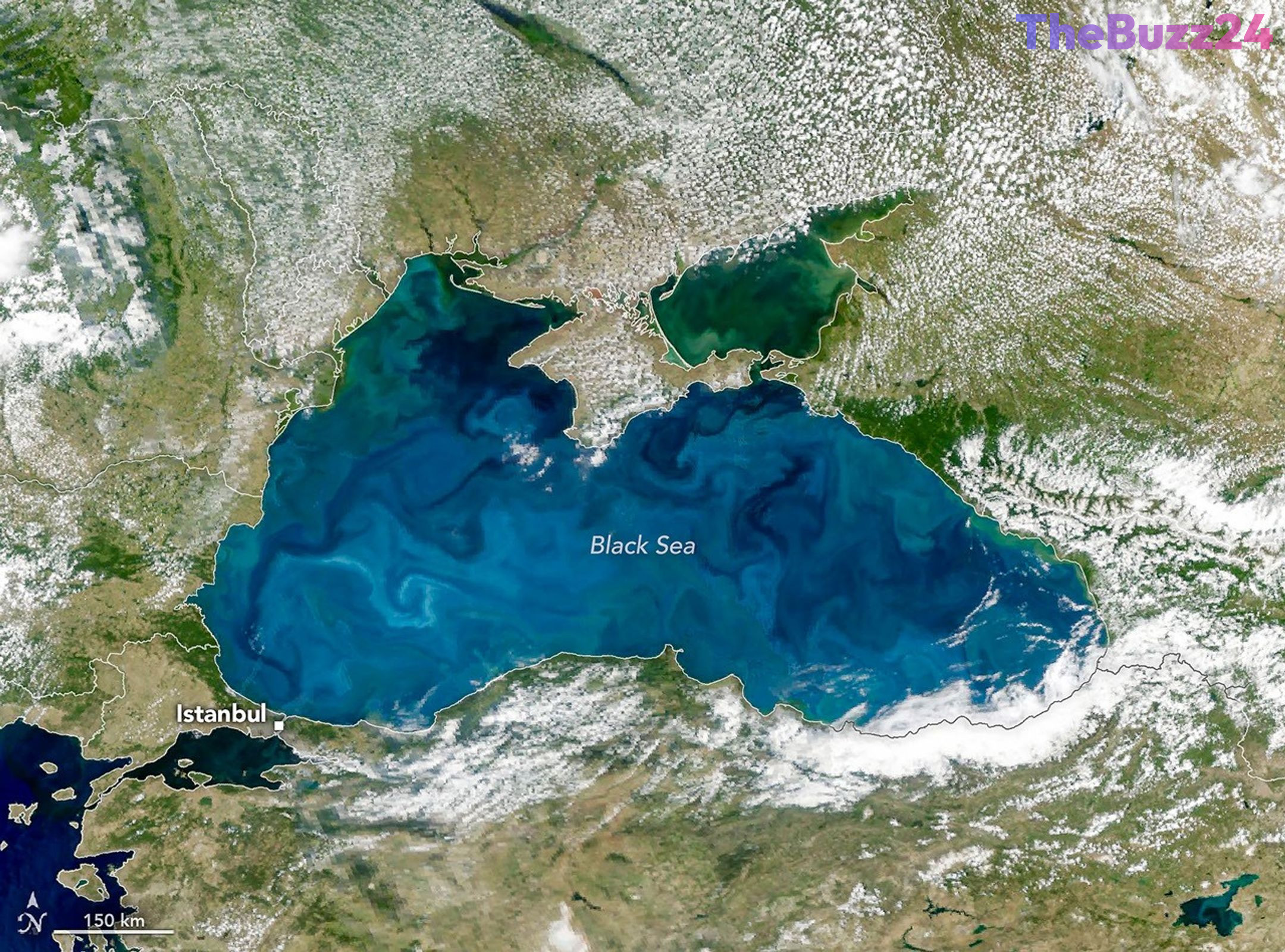
The Black Sea, a vital waterway situated at the crossroads of Europe and Asia, has undergone a dramatic visual transformation. Satellite observations from late June 2026 captured the sea’s surface shifting from its typical dark hue to a vibrant, swirling expanse of turquoise. This striking phenomenon, which frequently occurs during the transition from spring to summer, highlights the dynamic biological activity occurring beneath the water’s surface.
Scientific analysis suggests that the brilliant coloration is primarily driven by massive blooms of coccolithophores. These microscopic phytoplankton are unique because they are encased in calcium carbonate plates, which reflect light and impart a milky-blue appearance to the surrounding water. While other organisms like diatoms—which possess silica shells—tend to darken the water, the seasonal dominance of coccolithophores creates this distinct brightening effect.
Beyond the aesthetic shift, these blooms play a critical role in the global carbon cycle. As these organisms thrive and eventually die, they sequester carbon, much of which sinks to the seafloor for long-term storage. The ability to monitor these blooms from space via advanced remote sensing technology provides researchers with invaluable data on marine ecosystem health, particularly in regions where physical sampling is difficult or logistically constrained.
Key Takeaways
- The Black Sea's seasonal turquoise color is caused by massive blooms of coccolithophores, a type of phytoplankton with calcium carbonate plates.
- Satellite technology allows scientists to track these blooms, which are essential for understanding marine carbon sequestration.
- These phytoplankton blooms are a natural seasonal occurrence that significantly impacts the optical properties of the water surface.
Editor’s Analysis & Impact
The observation of these large-scale phytoplankton blooms underscores the increasing importance of remote sensing in climate and environmental science. As global temperatures fluctuate, understanding the frequency and duration of these blooms is vital for assessing the Black Sea’s role in carbon sequestration. The shift in water color is not merely a visual curiosity; it serves as a biological indicator of ecosystem health and nutrient cycling. Future research will likely focus on whether these blooms are becoming more prolonged due to changing environmental conditions, potentially altering the regional carbon budget. For the scientific community, the ability to correlate satellite data with ISS-based photography provides a multi-layered perspective that enhances our understanding of how microscopic life influences macroscopic planetary processes.
Frequently Asked Questions
Q: Why does the Black Sea turn turquoise?
A: The turquoise color is caused by blooms of coccolithophores, which are microscopic phytoplankton covered in calcium carbonate plates that reflect light.
Q: Are these blooms harmful to the environment?
A: Coccolithophore blooms are a natural part of the marine ecosystem and play a beneficial role in the carbon cycle by helping to transport carbon to the seafloor.
AI Disclosure: This article is based on verified data and official reports. Our Team and AI have cross-referenced every financial detail with primary sources to ensure total accuracy.
More from this Category