Celestial Spectacle: Total Solar Eclipse Traces Path Across Northern Hemisphere
On Wednesday, August 12, 2026, a rare and breathtaking total solar eclipse captivated observers across a wide swath of the Northern Hemisphere. The path of totality stretched across Greenland, Iceland, northern Russia, and the Atlantic Ocean, before making landfall in Spain and a small portion of Portugal. This astronomical event provided a unique opportunity for researchers and enthusiasts alike to witness the moon completely obscuring the sun, casting a shadow over these regions.
Beyond the primary path of totality, the event offered a significant spectacle for a much broader audience. A partial solar eclipse was visible across a vast geographic area, including the majority of the United States, most of Canada, large portions of Europe, and the northwestern regions of Africa. During these phases, the moon covered only a segment of the sun, creating a notable dimming effect that was documented by observers and scientific institutions globally.
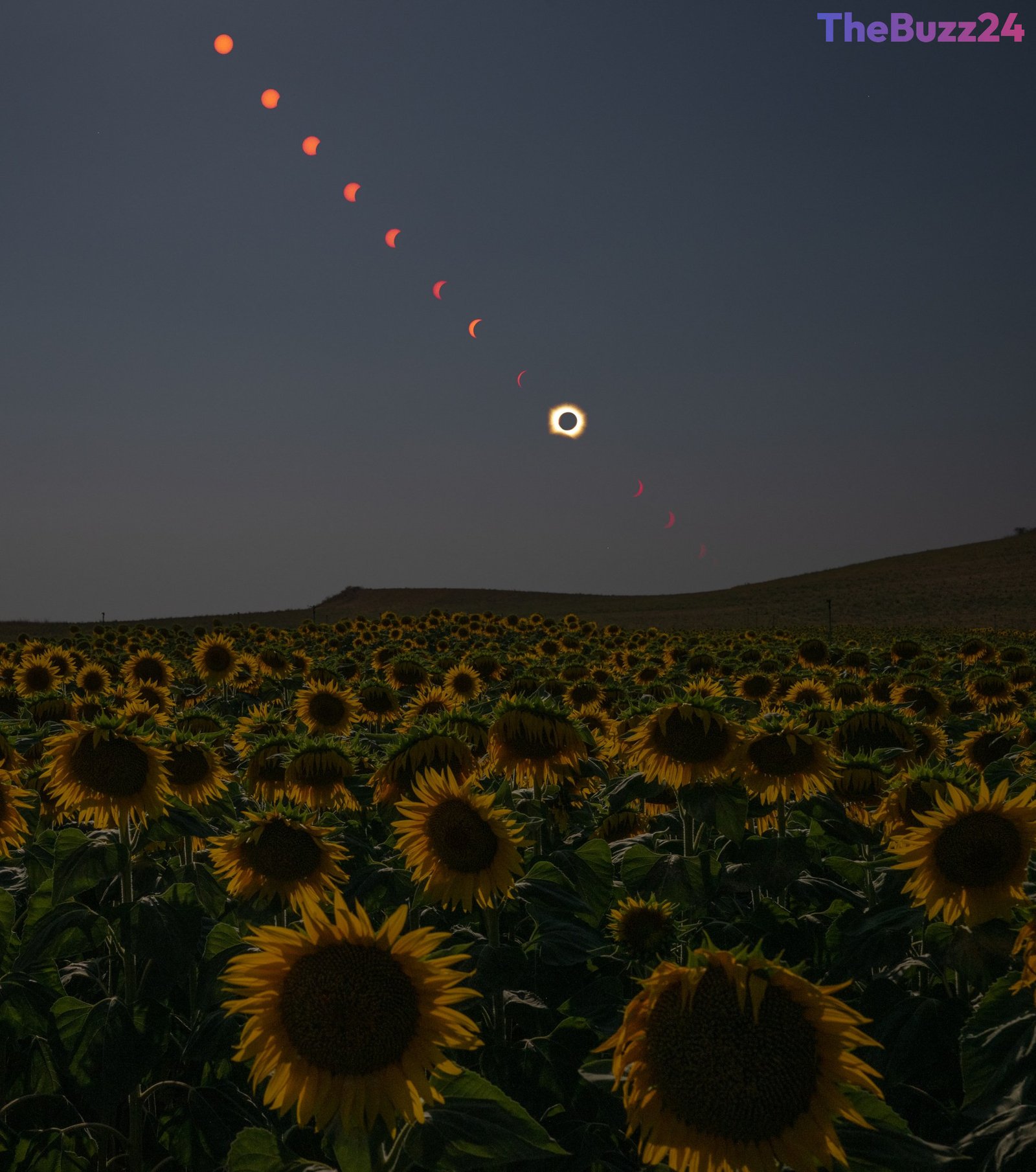
This event serves as a reminder of the precise mechanics of our solar system. The composite imagery captured during the eclipse highlights the progression of the moon’s transit, providing valuable data for those studying solar phenomena. As the shadow moved across the globe, it underscored the interconnected nature of planetary movements and the enduring public fascination with major astronomical occurrences.
Key Takeaways
- A total solar eclipse occurred on August 12, 2026, crossing parts of Europe, Greenland, and Russia.
- The path of totality included Spain and Portugal, while a partial eclipse was visible across North America and Africa.
- Astronomical events like this provide critical opportunities for scientific observation and public engagement with space science.
Editor’s Analysis & Impact
The 2026 total solar eclipse represents more than just a transient astronomical event; it serves as a significant driver for scientific tourism and public interest in space exploration. From an industry perspective, such events stimulate interest in optical technology, photography equipment, and educational outreach programs. The widespread visibility across multiple continents allows for a massive, distributed data collection effort, which is invaluable for solar research. Looking ahead, the increasing frequency of high-profile celestial events is likely to bolster the ‘space economy,’ encouraging further investment in both ground-based observation infrastructure and space-based monitoring systems. As public interest in space continues to grow, the ability to predict and document these events with high precision will remain a cornerstone of global scientific collaboration and cultural enrichment.
Frequently Asked Questions
Q: What is the difference between a total and a partial solar eclipse?
A: A total solar eclipse occurs when the moon completely covers the sun's disk, while a partial eclipse happens when the moon only obscures a portion of the sun.
Q: Why are solar eclipses important for scientists?
A: They provide a rare opportunity to study the sun's corona, the outer atmosphere, which is usually obscured by the sun's intense brightness.
AI Disclosure: This article is based on verified data and official reports. Our Team and AI have cross-referenced every financial detail with primary sources to ensure total accuracy.
More from this Category