NASA’s New All-Glass Telescope Paves Way for LISA Gravitational Wave Mission
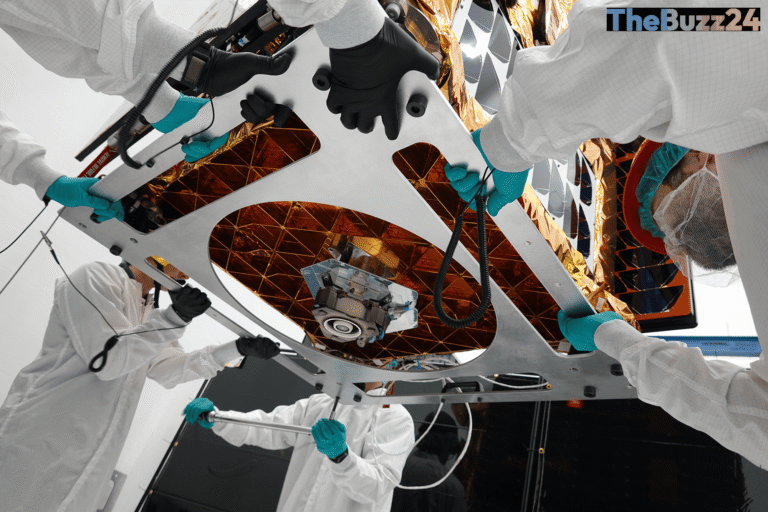
NASA is making significant strides in the development of a crucial component for the Laser Interferometer Space Antenna (LISA) mission: a sophisticated all-glass telescope. This latest advancement involves the creation of an Engineering Test Unit, designed, assembled, and integrated by L3Harris Technologies. This unit represents a pivotal step, bringing the collaborative project closer to the production of flight-ready hardware for the ambitious space observatory, which aims to detect ripples in space-time known as gravitational waves.
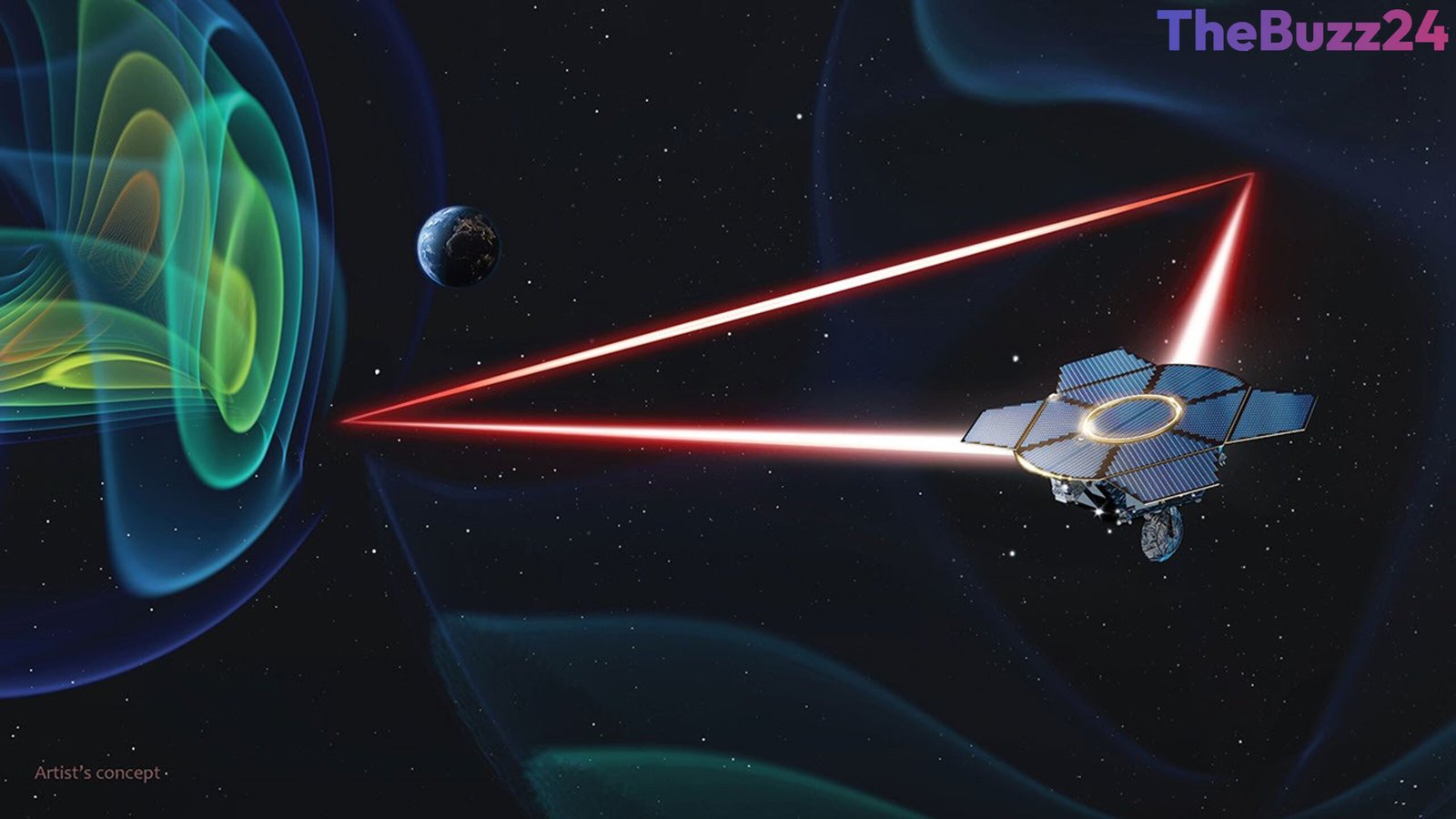
The LISA mission, spearheaded by the European Space Agency (ESA) and slated for launch in the mid-2030s, is a monumental undertaking. NASA serves as a key partner, contributing not only these advanced telescopes but also other critical hardware, alongside extensive engineering and scientific expertise. The mission will deploy a trio of satellites into an Earth-following orbit, forming an immense triangular array with each side stretching 1.6 million miles (2.5 million kilometers). Each satellite will house two telescopes, utilizing infrared laser beams to precisely measure minute changes in the distances between adjacent spacecraft – the tell-tale signs of passing gravitational waves. Ira Thorpe, NASA project scientist for the mission at Goddard Space Flight Center, emphasized the mission’s potential, stating that these “tiny” changes, smaller than a helium atom, will unveil a “sea of low-frequency gravitational waves” currently undetectable from Earth. LISA is poised to observe mergers of colossal black holes billions of light-years away, map compact stellar objects in our galactic neighborhood, and potentially offer profound new insights into gravity itself.
The telescopes themselves are engineering marvels, constructed entirely from Zerodur, an amber-colored ceramic-glass composite renowned for its exceptional stability across a wide range of temperatures. This material is vital for maintaining the extreme precision required for the mission. L3Harris Technologies previously delivered a prototype telescope in 2024, which served as an engineering development unit. Ritva Keski-Kuha, lead for the LISA Telescope program at NASA Goddard, highlighted the rigorous testing undergone by the prototype, stating, “We’ve put the prototype through rigorous testing, and we’re bringing everything we’ve learned into this new telescope. This will be our last pre-flight unit and our first optical telescope delivery to ESA.” Earlier in the year, a structural model made from metal was also delivered, further refining the design process.
The pursuit of gravitational waves stems from Albert Einstein’s 1916 general theory of relativity, with their first direct detection by ground-based observatories occurring in 2015. These waves are generated by accelerating massive objects, such as orbiting stars, and propagate through space-time at the speed of light, unaffected by matter. This makes them an invaluable tool for exploring the cosmos. Each LISA spacecraft will contain a free-floating gold-platinum “proof mass,” shielded from non-gravitational forces, a concept successfully demonstrated by ESA’s LISA Pathfinder mission in 2016. Beyond the telescopes, NASA’s contributions extend to the laser system, devices for managing electric charge on the proof masses, advanced data analysis for identifying gravitational wave sources, and comprehensive scientific and engineering support, all critical to unlocking the universe’s deepest secrets.
Key Takeaways
- NASA is advancing the LISA mission with a new all-glass Engineering Test Unit telescope, designed and integrated by L3Harris Technologies, marking a final step before flight hardware production.
- The ESA-led LISA mission, launching mid-2030s, will deploy three satellites forming a 1.6-million-mile array to detect low-frequency gravitational waves, offering unprecedented cosmic insights.
- The telescope, made of temperature-stable Zerodur, is crucial for precisely measuring minuscule changes in spacecraft distances, enabling the detection of phenomena like black hole mergers and providing new insights into gravity.
Editor’s Analysis & Impact
The development of this advanced all-glass telescope for the LISA mission signifies a major leap in space-based gravitational wave astronomy. For the aerospace and specialized optics industries, this represents a significant contract and a validation of high-precision manufacturing capabilities, particularly for companies like L3Harris Technologies. The future outlook for gravitational wave research is incredibly promising, as LISA will complement ground-based detectors by observing lower-frequency waves, opening a new window into the universe. This will allow scientists to study supermassive black hole mergers, the early universe, and fundamental physics in ways previously impossible. The broader implications include strengthening international scientific collaboration between NASA and ESA, pushing the boundaries of engineering, and potentially leading to revolutionary discoveries that reshape our understanding of cosmic evolution and the nature of gravity itself.
Frequently Asked Questions
Q: What is the LISA mission?
A: The LISA (Laser Interferometer Space Antenna) mission is a collaborative space observatory led by the European Space Agency (ESA) with significant contributions from NASA. Slated for launch in the mid-2030s, its primary goal is to detect low-frequency gravitational waves by precisely measuring the distances between three satellites forming a vast triangular array in space.
Q: What are gravitational waves and why are they important?
A: Gravitational waves are ripples in space-time predicted by Albert Einstein's theory of general relativity. They are generated by accelerating massive objects, such as merging black holes or orbiting stars, and travel at the speed of light. Detecting them allows scientists to observe violent cosmic events and probe the universe in ways that electromagnetic radiation (light) cannot, offering unique insights into black holes, neutron stars, and the early universe.
Q: What is the significance of the new all-glass telescope?
A: The new all-glass Engineering Test Unit telescope is a critical component for the LISA mission. Made from Zerodur, a ceramic-glass composite known for its thermal stability, it will enable the spacecraft to precisely measure minute changes in distance caused by gravitational waves. Its development is a final step before producing flight hardware, ensuring the mission has the high-precision optics needed to achieve its scientific objectives.
AI Disclosure: This article is based on verified data and official reports. Our Team and AI have cross-referenced every financial detail with primary sources to ensure total accuracy.
More from this Category