Senegal’s Parliament Passes Sweeping Reforms to Curb Presidential Power Amid Rising Political Tensions
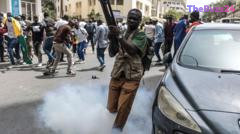
Senegal is facing a deepening political crisis after the country’s parliament overwhelmingly approved a controversial constitutional reform package. The new measures aim to significantly curtail the powers of President Bassirou Diomaye Faye while expanding the authority of the legislature. The legislative session was marked by intense debates and an opposition walkout, reflecting the growing rift between President Faye and his former ally, parliamentary Speaker Ousmane Sonko. Outside the parliament building in Dakar, security forces deployed tear gas to disperse crowds of protesters demonstrating against the changes.
The proposed constitutional amendments, championed by the ruling Pastef party which holds a dominant 130 of the 165 seats in the National Assembly, introduce several major structural changes. Under the new framework, a sitting president would be barred from leading a political party—a clause widely seen as targeting Faye, who remains a member of Pastef. Additionally, the reforms would establish a new nine-member Constitutional Court to replace the existing Constitutional Council, expand parliamentary investigative powers, and mandate that the executive branch disclose all natural resource agreements to lawmakers.
The political fallout highlights the rapid deterioration of the alliance between Faye and Sonko, who swept to power in early 2024 on a platform of systemic reform. Relations soured over economic policies, culminating in Faye dismissing Sonko from his post as prime minister in May. However, Sonko’s political leverage remained formidable due to Pastef’s legislative majority, leading to his election as Speaker. While the executive branch has announced intentions to put these constitutional changes to a national referendum, Sonko has challenged the president’s authority to do so, arguing that the parliamentary vote is already legally binding.
Key Takeaways
- Senegal's National Assembly has passed constitutional reforms that restrict presidential authority and bolster parliamentary oversight.
- The legislative changes have intensified a bitter power struggle between President Bassirou Diomaye Faye and parliamentary Speaker Ousmane Sonko.
- The reforms face strong opposition from minority MPs and civil society, sparking public protests and raising questions about a potential national referendum.
Editor’s Analysis & Impact
The escalating political feud between President Faye and Speaker Sonko threatens to destabilize Senegal, long regarded as one of West Africa’s most stable democracies. By shifting the balance of power toward the legislature, the Pastef-dominated parliament is effectively attempting to hamstring Faye’s executive authority. This institutional tug-of-war could paralyze governance, delay crucial economic reforms, and spook foreign investors who are closely watching Senegal’s emerging oil and gas sectors. The dispute over whether a referendum is required to enact these changes could trigger a protracted constitutional crisis. If the political impasse deepens, Senegal risks prolonged civil unrest, which could undermine its democratic reputation and economic outlook in an already volatile region.
Frequently Asked Questions
Q: What are the main changes proposed in Senegal's constitutional reform?
A: The reforms expand parliamentary oversight, require the government to disclose natural resource contracts, replace the Constitutional Council with a nine-member Constitutional Court, and prohibit a sitting president from leading a political party.
Q: Why is there a conflict between President Faye and Speaker Sonko?
A: Although they campaigned together in 2024, their relationship fractured over economic management and debt issues. After Faye dismissed Sonko as prime minister, Sonko was elected parliamentary Speaker, using his party's legislative majority to challenge the president's authority.
Q: Will these constitutional reforms be put to a public vote?
A: The executive branch has stated its intention to hold a national referendum on the reforms, but Speaker Sonko has disputed the president's legal authority to call for one, claiming the parliamentary vote is sufficient.
AI Disclosure: This article is based on verified data and official reports. Our Team and AI have cross-referenced every financial detail with primary sources to ensure total accuracy.
More from this Category