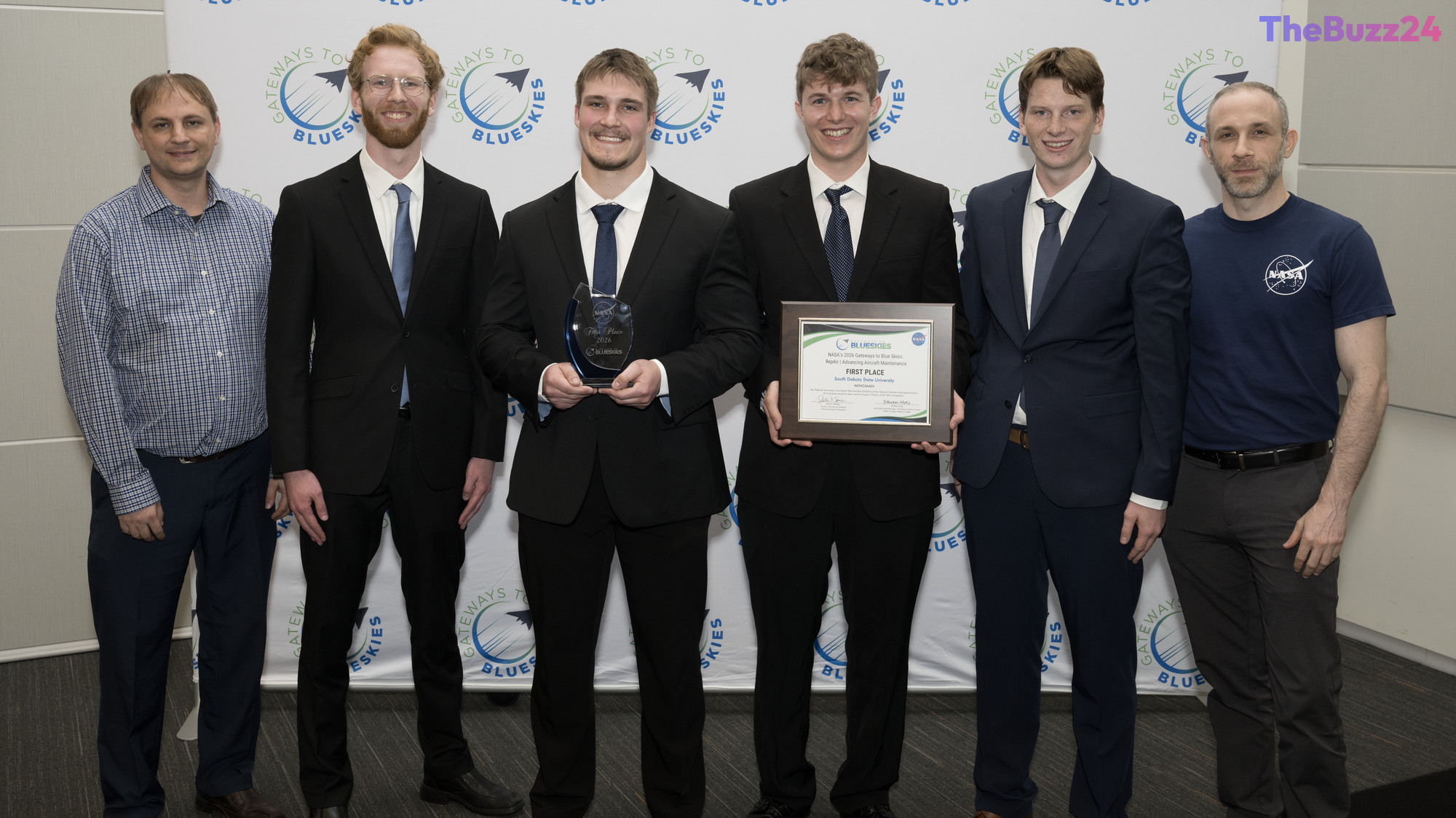
South Dakota State University Students Secure Top Honors in NASA Aviation Innovation Challenge
A team of students from South Dakota State University has claimed first place at the fifth annual Gateways to Blue Skies competition, held at the NASA Langley Research Center. The event, themed ‘RepAir: Advancing Aircraft Maintenance,’ tasked university participants with designing forward-thinking solutions to modernize commercial aircraft repair processes by 2035. The competition was specifically designed to tackle critical industry hurdles, such as the growing demand for improved flight safety and the ongoing shortage of skilled aviation maintenance personnel.
The winning entry, titled WINGMAN, features a cutting-edge augmented reality headset tailored for aviation mechanics. By utilizing voice-activated manuals, automated documentation, and advanced photo recognition software, the system enables technicians to conduct intricate inspections without the need for manual input. This innovation is expected to significantly improve the efficiency of maintenance workflows, helping to keep aircraft in service longer while simultaneously reducing the heavy administrative workload currently placed on ground crews.
During the two-day event in Hampton, Virginia, the South Dakota State University team outperformed eight other finalists, presenting their findings to a panel of industry leaders from NASA, the Federal Aviation Administration, and major commercial airlines. Other notable participants included the University of California, Irvine, which received recognition for the best infographic, and the University of Georgia, which was honored for its research into quantum sensing applications.
As a reward for their achievement, the winning students have been granted internships at NASA aeronautics research centers for the 2026-27 academic year. This prize offers the students hands-on experience and mentorship from top aerospace professionals, reinforcing the commitment to fostering the next generation of talent in the aviation sector.
Key Takeaways
- South Dakota State University students won the NASA Gateways to Blue Skies competition with their WINGMAN augmented reality maintenance system.
- The WINGMAN project aims to solve aviation workforce shortages and safety concerns by streamlining maintenance through hands-free, voice-controlled technology.
- Winning team members earned internships at NASA aeronautics research centers for the 2026-27 academic year.
Editor’s Analysis & Impact
The success of the WINGMAN project highlights a broader industry shift toward integrating augmented reality (AR) and automation into high-stakes technical fields. As the aviation sector faces a persistent shortage of skilled labor, the adoption of such technologies is no longer just a luxury but a necessity for maintaining operational efficiency and safety standards. By reducing the cognitive and administrative load on mechanics, these innovations can help mitigate human error and accelerate turnaround times. This competition serves as a vital bridge between academic research and real-world aerospace applications, signaling that the future of aircraft maintenance will be defined by digital integration. The long-term implication is a more resilient, tech-enabled workforce capable of meeting the complex demands of modern aviation, provided that regulatory bodies and commercial carriers continue to support the transition to these advanced digital tools.
Frequently Asked Questions
Q: What is the primary goal of the WINGMAN project?
A: The WINGMAN project aims to streamline aircraft maintenance by using augmented reality headsets to provide mechanics with voice-controlled manuals and automated documentation, thereby reducing administrative burdens and improving safety.
Q: What do the winners of the Gateways to Blue Skies competition receive?
A: The winning team members are awarded internships at NASA aeronautics research centers for the 2026-27 academic year, providing them with mentorship and access to industry-leading facilities.
AI Disclosure: This article is based on verified data and official reports. Our Team and AI have cross-referenced every financial detail with primary sources to ensure total accuracy.
More from this Category