Spanish Authorities Relocate Hundreds of Migrants in Tense Ceuta Port Operation
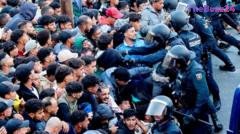
Law enforcement agencies have initiated a large-scale operation to transfer hundreds of migrants from the beaches of Ceuta to a newly established tented facility within the port area of the Spanish North African enclave. The early morning relocation faced immediate logistical hurdles, with officers working to manage eager crowds attempting to secure spots at the new camp after weeks of outdoor living.
The newly erected site is designed to accommodate up to 1,700 individuals. This development follows a massive influx earlier in the year when tens of thousands of people crossed the border from Morocco. While local authorities estimate thousands remain in the territory, the operation aims to centralize populations into controlled environments where formal identification and administrative processing can take place efficiently.
The transfer encountered moments of tension as small groups breached security cordons along the designated transit route. More than 170 officers, supported by specialized technical units, were deployed to manage the crowds and restore order quickly. Prime Minister Pedro Sánchez’s administration faces mounting political pressure over the ongoing crisis, with opposition leaders criticizing both the handling of the border situation and the broader humanitarian strategy.
Beyond domestic political challenges, the situation has compounded diplomatic friction and administrative strains within the region. Local officials have described the enclave as overwhelmed, while federal leaders continue to address the complex network of trafficking rings and social media misinformation that fueled the initial surge. The government maintains that the new camp is a vital step toward managing the humanitarian needs and legal status of those affected.
Key Takeaways
- Spanish police began moving hundreds of migrants from Ceuta beaches to a new port facility with a capacity for 1,700 people.
- The operation experienced minor security breaches before officers quickly stabilized the designated transit route.
- Prime Minister Pedro Sánchez faces intense political scrutiny and diplomatic friction regarding his administration's management of the border crisis.
Editor’s Analysis & Impact
The ongoing migrant situation in Ceuta highlights the complex geopolitical and administrative challenges facing Southern European border territories. As migration pressures intersect with domestic political vulnerability in Spain, the ability of the central government to balance humanitarian obligations with border security will remain a critical test. Economically and socially, local infrastructure in micro-territories like Ceuta bears a disproportionate burden, necessitating broader European Union cooperation and structural reform. Future outlooks suggest that managing misinformation campaigns, tightening digital border monitoring, and streamlining administrative processing will be paramount for preventing similar escalations in the future.
Frequently Asked Questions
Q: Where are the migrants being relocated in Ceuta?
A: Migrants are being moved from the beaches to a newly established tented facility in the port area of Ceuta, which has a capacity of 1,700 people.
Q: Why is the Spanish government conducting this operation?
A: The operation is designed to concentrate migrants in controlled facilities where they can be properly identified and cared for while their administrative and legal status is evaluated.
Q: What challenges did police face during the relocation?
A: Officers faced large crowds jostling for space, and some individuals temporarily broke through security cordons along the transit route before police restored order.
AI Disclosure: This article is based on verified data and official reports. Our Team and AI have cross-referenced every financial detail with primary sources to ensure total accuracy.
More from this Category