Spanish PM Sánchez Defends Ceuta Crisis Response Amid Mounting Pressure
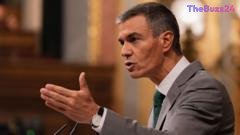
Spanish Prime Minister Pedro Sánchez is facing intense scrutiny and widespread protests over his government’s handling of the recent influx of 72,000 migrants into the Spanish exclave of Ceuta. Addressing parliament, Sánchez vehemently denied any prior warnings about the mass crossing and dismissed claims that Morocco orchestrated the event, asserting that such a notion was “absurd.”
Despite Sánchez’s insistence on close coordination between Spain and Morocco, a Spanish police report has highlighted the “total permissiveness” of Moroccan security forces during the influx. This report, commissioned by a High Court judge, noted that security forces made “no serious attempt” to halt the crossings, with some migrants even claiming Moroccan gendarmes provided guidance. Opposition leader Alberto Núñez Feijóo of the People’s Party has seized on these revelations, accusing the government of deceit and a cover-up, and calling for the Prime Minister’s resignation. Domestically, tens of thousands of Spaniards have taken to the streets in protests, reflecting significant public anger and pressure on the Socialist leader.
The crisis has evolved beyond a humanitarian and logistical challenge into a major political test for Sánchez, straining Spain’s bilateral relationship with Morocco. While Sánchez has refrained from directly blaming Rabat, he has criticized “unacceptable” statements from Moroccan ministers regarding sovereignty claims over Ceuta and Melilla. Moroccan Justice Minister Abdellatif Ouahbi, for instance, has spoken of his country’s “historical and geographical right” to the cities. The Prime Minister emphasized Spain’s commitment to these territories, stating, “Ceuta is not the border of Spain, it is Spain on the border [of Europe].” He also attributed the crisis, in part, to hoaxes and rumors spread via social media, linking them to trafficking gangs and, controversially, to an international far-right movement, Russia, and Israel, though he clarified no evidence of state actor involvement.
As the political fallout continues, approximately 5,000 migrants, including 1,400 children, remain in Ceuta, even after the majority were returned to Morocco. King Felipe VI is expected to visit Ceuta and Melilla in the coming weeks to underscore Spain’s unwavering commitment to the two cities, a move intended to reassure residents and assert Spanish sovereignty.
Key Takeaways
- Spanish Prime Minister Pedro Sánchez denies foreknowledge or Moroccan orchestration of the Ceuta migrant influx, despite a police report suggesting Moroccan 'permissiveness'.
- Sánchez faces intense domestic pressure from opposition parties and public protests, with accusations of a government cover-up.
- The crisis has escalated into a significant political challenge, impacting Spain-Morocco relations and raising questions about sovereignty over Ceuta and Melilla.
Editor’s Analysis & Impact
The Ceuta migrant crisis has exposed deep political fissures within Spain and significantly strained its diplomatic relationship with Morocco. Prime Minister Sánchez’s defensive stance, coupled with conflicting reports about Moroccan involvement, risks eroding public trust and emboldening opposition calls for his resignation. The situation highlights the complex interplay of humanitarian concerns, border security, and international relations in the Mediterranean region. Furthermore, the accusations of social media manipulation and the controversial linking of the crisis to external actors like Russia and Israel could complicate future diplomatic efforts. This event underscores the vulnerability of European borders and the potential for migrant flows to be leveraged for political ends, suggesting a need for more robust, coordinated international strategies to manage such crises and address their root causes.
Frequently Asked Questions
Q: What is the Ceuta crisis?
A: The Ceuta crisis refers to a mass influx of approximately 72,000 migrants into the Spanish exclave of Ceuta from Morocco, which occurred recently. It has led to significant humanitarian, logistical, and political challenges for Spain.
Q: What is Prime Minister Pedro Sánchez's stance on the crisis?
A: Pedro Sánchez maintains that his government had no prior warning of the influx and denies that Morocco orchestrated the event. He asserts there was close coordination between Spanish and Moroccan authorities, despite a police report suggesting Moroccan security forces showed 'total permissiveness'.
Q: What are the broader implications for Spain and Morocco?
A: The crisis has severely strained Spain's relationship with Morocco, particularly due to Moroccan ministers making sovereignty claims over Ceuta and Melilla. It has also created significant domestic political pressure on Sánchez's government and highlighted the complexities of border management and international cooperation in the region.
AI Disclosure: This article is based on verified data and official reports. Our Team and AI have cross-referenced every financial detail with primary sources to ensure total accuracy.
More from this Category