Sweden Captures Dazzling Perseid Meteor Shower Amidst Solar Eclipse Glow
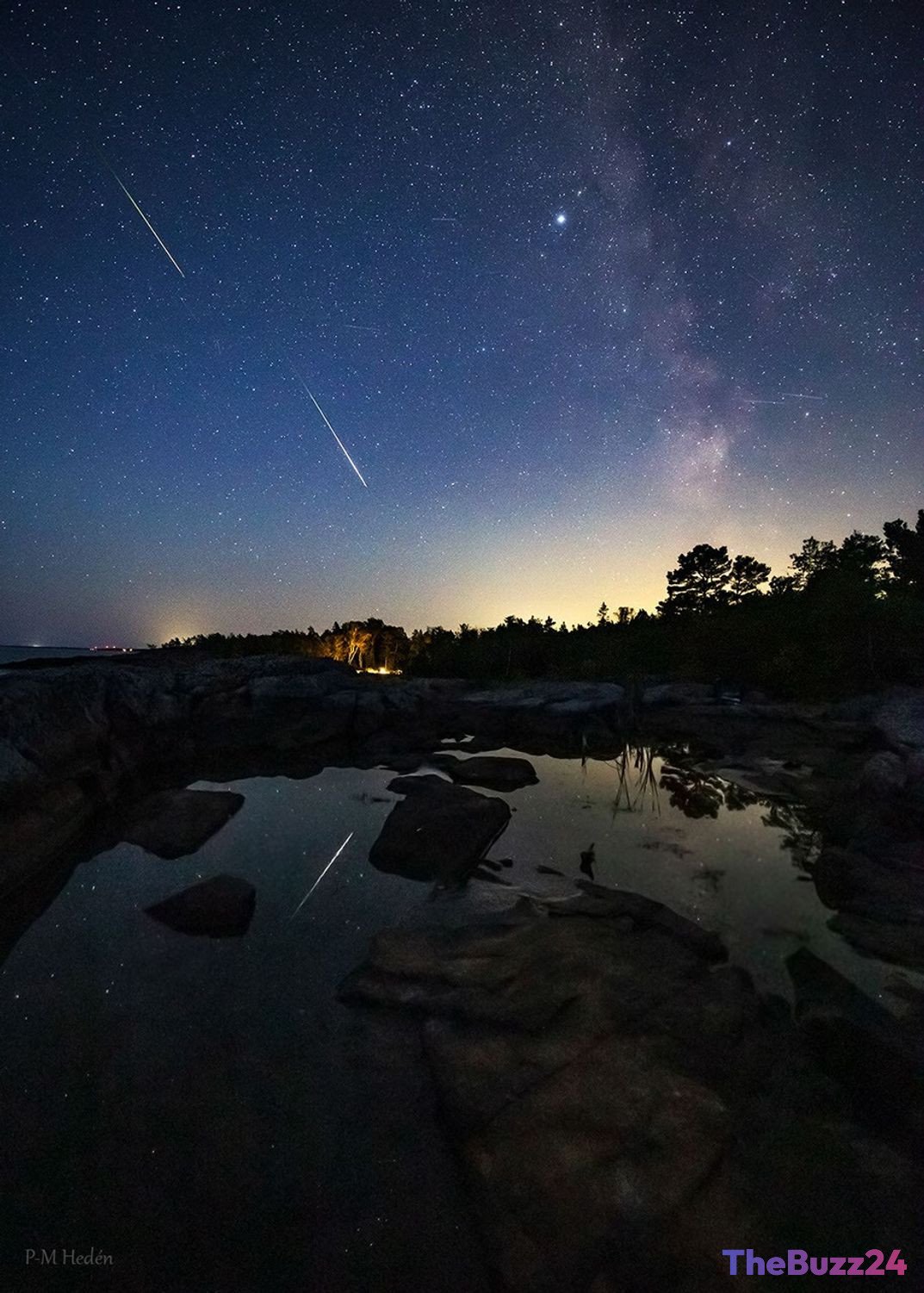
Skygazers in Sweden were treated to a spectacular celestial display as the annual Perseid Meteor Shower reached its peak, with photographers capturing the event near Grisslehamn. The composite image showcases two brilliant Perseid meteors streaking across the night sky, accompanied by the ethereal reflection of one meteor on the water’s surface.
The Perseid Meteor Shower, renowned for its bright and swift meteors, originates from debris shed by comet 109P/Swift-Tuttle. As these tiny dust particles enter Earth’s atmosphere at high speeds, they burn up, creating the fleeting, luminous trails that captivate observers. This year’s peak activity on August 12 coincided with a New Moon, providing exceptionally dark skies free from lunar glare, thus enhancing the visibility of the meteor flashes.
Adding to the night’s astronomical significance, the meteor shower’s peak followed closely on the heels of a highly anticipated solar eclipse. Many skywatchers had the opportunity to witness the silhouette of the New Moon against the sun earlier in the day, making the subsequent meteor display an even more memorable experience. The faint, diffuse glow of the Milky Way can also be seen in the background, providing a stunning cosmic backdrop to the meteor activity.
Key Takeaways
- A composite image captured two bright Perseid meteors and their reflection in Sweden.
- The meteor shower's peak coincided with a New Moon, offering optimal viewing conditions.
- The event occurred shortly after a solar eclipse, enhancing the night's astronomical significance for observers.
Editor’s Analysis & Impact
This event highlights the continued public fascination with astronomical phenomena. The convergence of the Perseid Meteor Shower and a solar eclipse, amplified by ideal viewing conditions due to the New Moon, presents a compelling narrative for science and general interest publications. Such occurrences underscore the importance of dark sky preservation and offer opportunities for widespread public engagement with astronomy. The successful capture and sharing of these events through photography demonstrate the intersection of technology and scientific observation, potentially inspiring future generations of astronomers and citizen scientists.
Frequently Asked Questions
Q: What causes the Perseid Meteor Shower?
A: The Perseid Meteor Shower is caused by Earth passing through the debris trail left behind by comet 109P/Swift-Tuttle. As these small particles enter Earth's atmosphere, they burn up due to friction, creating visible streaks of light.
Q: Why are New Moons good for meteor shower viewing?
A: New Moons provide the darkest skies because the moon is not illuminated by the sun and is therefore not visible. This lack of moonlight allows fainter meteors to be seen more easily, enhancing the viewing experience.
Q: Where is the best place to view a meteor shower?
A: The best places to view meteor showers are away from city lights and light pollution, in areas with a clear, unobstructed view of the sky. Rural locations or designated dark sky parks are ideal.
AI Disclosure: This article is based on verified data and official reports. Our Team and AI have cross-referenced every financial detail with primary sources to ensure total accuracy.
More from this Category