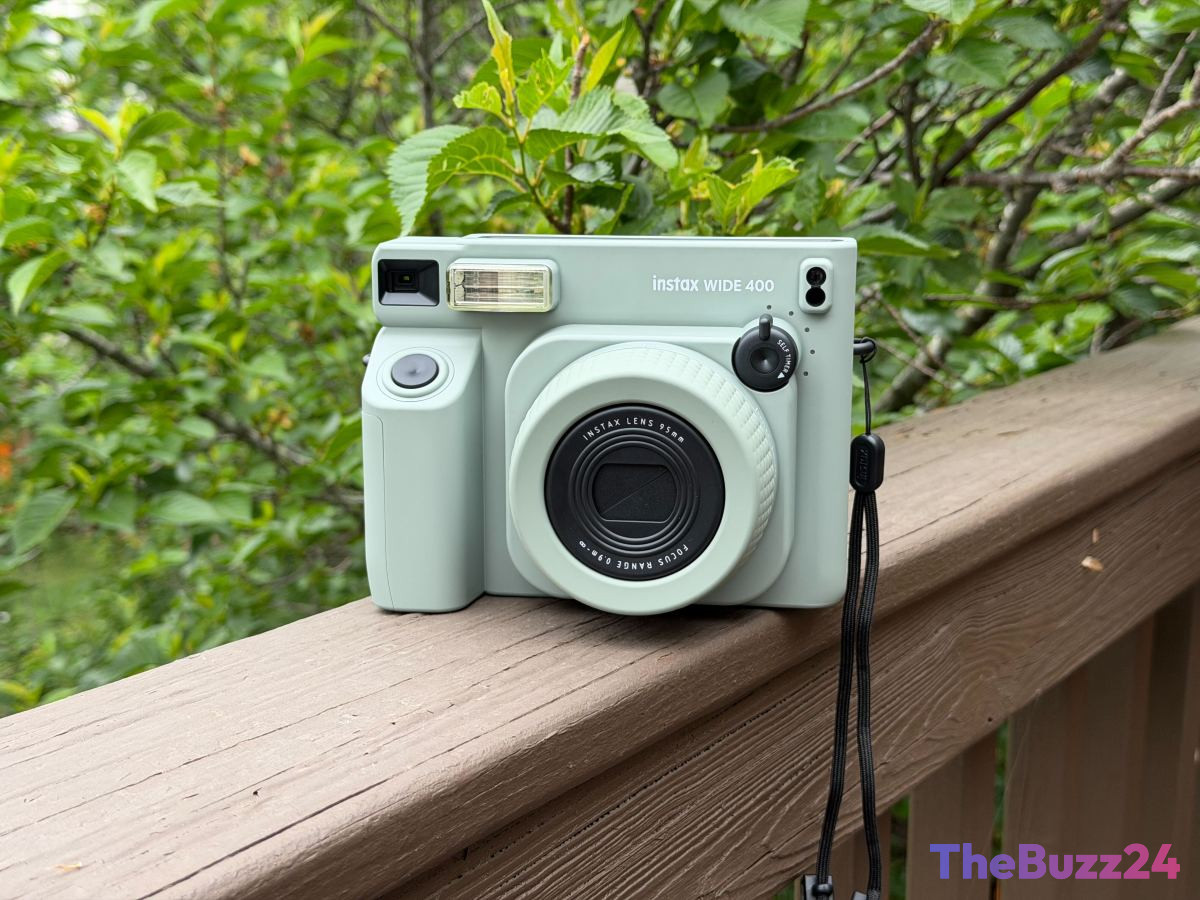
Fujifilm Expands Analog Appeal with the Launch of Instax Wide 400
Fujifilm has officially expanded its analog photography portfolio with the introduction of the Instax Wide 400, a camera designed to bring the tactile experience of large-format instant film to a broader audience. Retailing at $175, the device moves away from the popular pocket-sized Mini series, offering a wider frame that is better suited for expansive landscape photography and large group portraits.
The design philosophy behind the Instax Wide 400 prioritizes simplicity and social utility. By removing complex manual controls, the camera relies on a streamlined, one-button operation that handles exposure and flash settings automatically. Users can toggle between focus modes—ranging from standard to close-up and landscape—by adjusting the lens, and the package includes a snap-on attachment to assist with portrait precision.
Weighing 1.4 pounds, the camera is built for social settings rather than portability. It features a unique four-stage self-timer and includes angle-adjustment accessories that allow the device to be stabilized on flat surfaces, eliminating the need for a tripod during group shots. While the camera is optimized for well-lit environments and may not offer the granular control sought by professional photographers, it serves as a bridge for enthusiasts who prioritize the physical permanence of instant film over digital convenience.
Key Takeaways
- The Instax Wide 400 features a larger film format designed for group photos and landscapes.
- The camera emphasizes ease of use with automated exposure and a simplified one-button operation.
- New accessories, including an angle-adjustment base and a four-stage self-timer, are included to facilitate group photography without a tripod.
Editor’s Analysis & Impact
Fujifilm’s decision to refresh its wide-format instant camera line highlights a resilient market demand for physical media in an increasingly digital-first world. By positioning the Instax Wide 400 as a social, user-friendly tool rather than a professional-grade instrument, the company is successfully tapping into the ‘analog renaissance’ among younger demographics. This strategy effectively differentiates the product from high-end digital cameras and smartphones, focusing on the experiential value of instant prints. Looking ahead, as AI-generated imagery becomes more ubiquitous, the market for tangible, uneditable physical photos is likely to continue growing as a form of authentic self-expression. Fujifilm’s focus on accessibility suggests they are prioritizing mass-market adoption over niche professional specs, a move that should help maintain their dominance in the instant film sector.
Frequently Asked Questions
Q: Does the Instax Wide 400 require a tripod for group photos?
A: No, the camera comes with angle-adjustment accessories that allow it to be propped up on flat surfaces, making a tripod unnecessary for most group shots.
Q: Is the Instax Wide 400 suitable for professional photography?
A: While it produces high-quality, vibrant prints in good lighting, its automated nature lacks the manual control settings that professional photographers typically require for challenging lighting conditions.
AI Disclosure: This article is based on verified data and official reports. Our Team and AI have cross-referenced every financial detail with primary sources to ensure total accuracy.
More from this Category