The Rise of Agentic Loops: Why AI Is Moving Toward Continuous Self-Improvement
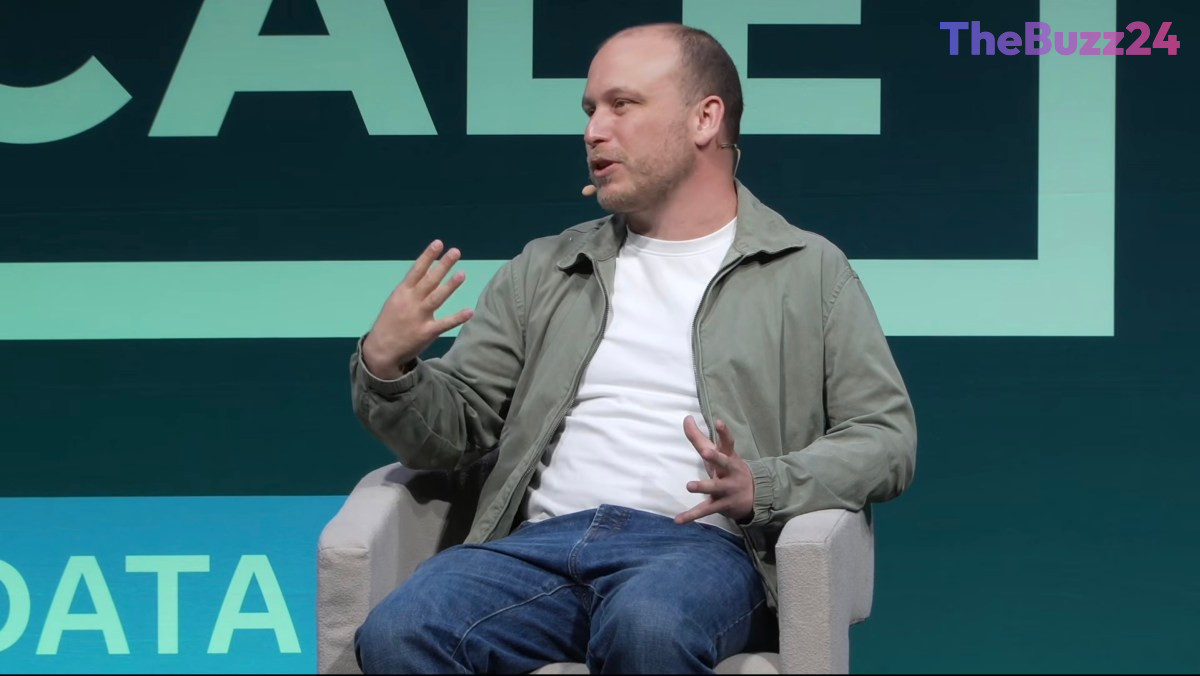
The landscape of artificial intelligence is undergoing a significant shift as developers move beyond simple prompt-response interactions toward autonomous, continuous workflows known as ‘agentic loops.’ Boris Cherny, creator of Claude Code, recently highlighted this evolution at Meta’s @Scale conference, asserting that the transition from human-written code to agent-written code is now being superseded by a new paradigm: agents prompting other agents to refine and execute tasks indefinitely.
In this model, AI systems are no longer restricted to single-turn interactions. Instead, they operate in persistent loops where specialized agents continuously monitor and improve software architecture or identify redundancies. By running in the background, these agents can submit pull requests and iterate on codebases without human intervention, effectively creating a self-optimizing development environment. This approach leverages recursive logic, allowing AI to oversee its own progress and adjust its strategy until a goal is met.
While the potential for productivity gains is substantial, the shift toward continuous compute presents new challenges, particularly regarding cost and oversight. Unlike standard chatbots, these loops consume tokens at a rapid, ongoing rate, which can lead to significant operational expenses. Furthermore, managing ‘drift’—where an agent might lose focus or deviate from its objective—requires sophisticated monitoring. Despite these hurdles, the industry is increasingly viewing test-time compute and recursive loops as the most viable path toward solving complex, multi-step problems that were previously beyond the reach of static AI models.
Key Takeaways
- Agentic loops allow AI systems to work continuously in the background, prompting other agents to refine tasks and code without human intervention.
- This shift moves AI from simple Q&A interactions to autonomous, iterative problem-solving that can handle complex, long-term projects.
- The primary trade-off for this increased capability is significantly higher token consumption and the need for robust oversight to manage costs and prevent model drift.
Editor’s Analysis & Impact
The transition to agentic loops represents a fundamental change in how enterprises will deploy AI. By moving from ‘chat’ to ‘continuous execution,’ businesses can automate complex engineering and data tasks that require persistent oversight. However, this shift creates a new economic model for AI: one where the cost of a task is no longer fixed but variable based on the amount of ‘test-time compute’ required to reach a solution. As models become more capable, the industry will likely see a bifurcation between low-cost, static AI applications and high-value, autonomous agentic systems. The long-term implication is a move toward ‘AI-native’ software development, where the human role shifts from writing code to defining the goals and constraints of the loops that build the software.
Frequently Asked Questions
Q: What is an agentic loop in AI?
A: An agentic loop is a system where AI agents are programmed to work continuously, prompting other agents to perform tasks, review work, and iterate on solutions until a specific goal is achieved, rather than stopping after a single response.
Q: Why are agentic loops considered expensive?
A: Because these loops run continuously in the background, they consume a high volume of tokens. Unlike a standard chatbot that stops after a user query, an agentic loop can run indefinitely, leading to potentially high and unpredictable operational costs.
AI Disclosure: This article is based on verified data and official reports. Our Team and AI have cross-referenced every financial detail with primary sources to ensure total accuracy.
More from this Category